




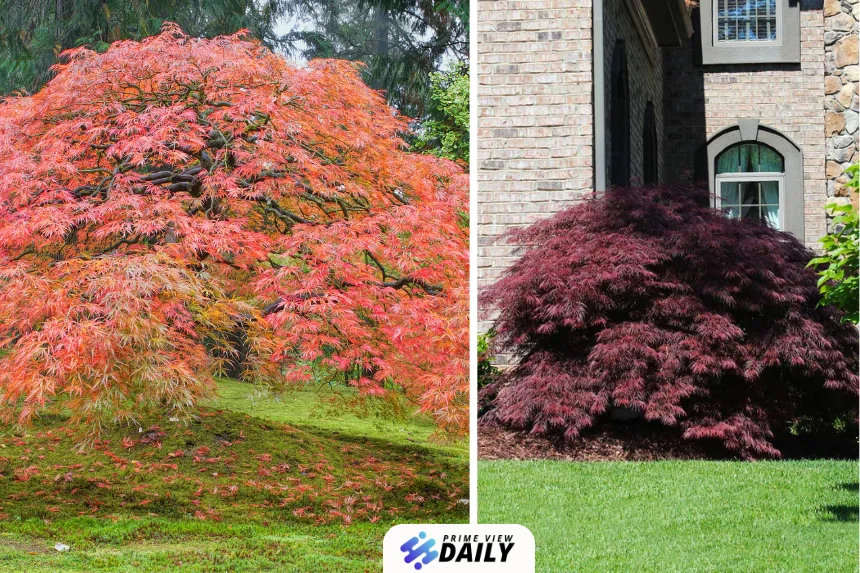
A tree that has survived more than 300 years of cultivation rarely needs much convincing to earn a spot in the garden. The Tamukeyama Japanese maple has done exactly that. Its cascading branches, lace-like leaves, and deep burgundy color have made it one of the most admired ornamental trees in the world.
This guide explains everything needed to grow a healthy Tamukeyama. It covers sunlight, soil, watering, pruning, and the most common problems gardeners run into. Whether planting one for the first time or troubleshooting an established tree, this guide offers the depth needed to grow it well.
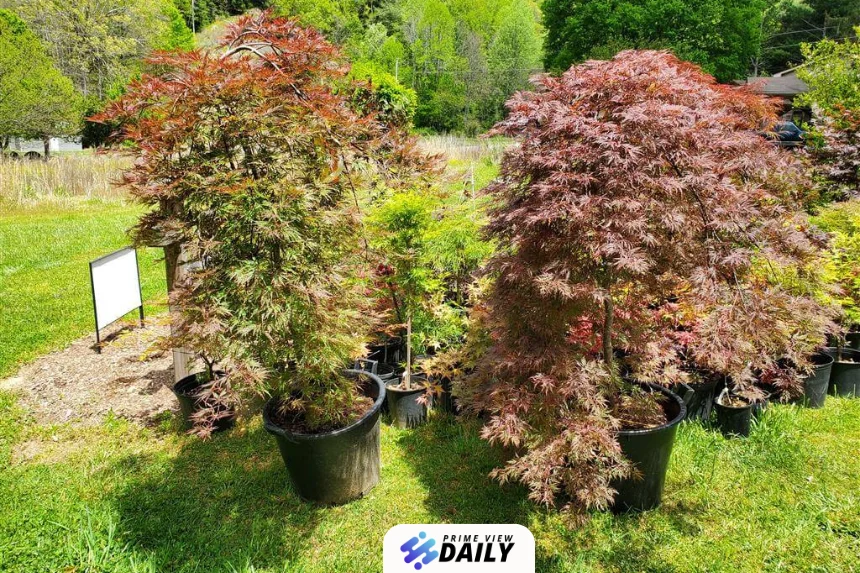
What Makes the Tamukeyama Japanese Maple So Special?
The Tamukeyama Japanese maple, botanically named Acer palmatum var. dissectum ‘Tamukeyama,’ stands out among ornamental trees for good reason. According to PlantingTree, this cultivar received the Gold Medal from the Pennsylvania Horticultural Society. Many horticulturists consider it one of the finest Japanese maple varieties available today.
Its history adds even more weight to that reputation. New Blooms Nursery notes that Tamukeyama is at least 300 years old as a cultivar. Few ornamental trees carry that kind of staying power. This longevity speaks to its reliability, hardiness, and enduring visual appeal across centuries of cultivation.
How Does Tamukeyama Differ From Other Japanese Maples?
Comparing Tamukeyama to other popular varieties highlights what makes it unique. According to World of Garden Plants, Bloodgood Japanese maple features larger, simpler leaves split into 5 to 7 lobes. Tamukeyama, by contrast, has more deeply cut, intricate lobes that create a finer, lacier appearance.
Size differences matter too. Bloodgood can reach up to 25 feet tall and wide, making it a substantial tree. Tamukeyama stays much smaller, typically growing to around 7 feet tall and 10 feet wide. Its weeping form also sets it apart, since Bloodgame grows upright while Tamukeyama cascades gracefully downward.
Understanding the Growth Habit and Mature Size
Most sources agree on the general size range for a mature Tamukeyama, though small variations exist. According to Trees.com, this tree typically reaches 6 to 8 feet tall with a spread of 10 to 12 feet wide. Perfect Plants reports a similar range, citing 6 to 10 feet in height and 10 to 12 feet in width.
This growth habit creates a distinctive shape. The Missouri Botanical Garden’s Plant Finder describes the tree as forming a mound or dome through its weeping and cascading branching pattern. This dome shape develops gradually over many years, since the tree grows at a slow to moderate pace rather than shooting up quickly.
Why Does Tamukeyama Stay So Compact?
Genetics drive this compact growth pattern. The variety belongs to the dissectum group of Japanese maples, a category known for smaller, shrubby, slow-growing forms. According to the Missouri Botanical Garden, dissectum varieties rarely mature beyond 12 feet tall, even though their spread can extend somewhat wider.
This compact size makes Tamukeyama useful in spaces where larger trees would overwhelm the landscape. Small yards, container gardens, and tightly designed spaces near patios or entryways all benefit from a tree that stays proportional. Gardeners working with limited space often choose Tamukeyama specifically because it delivers dramatic color without dramatic size.
What Does the Foliage Look Like Throughout the Year?
Foliage color is arguably the single biggest reason gardeners choose this tree. According to Perfect Plants, the leaves emerge bright red in early spring before gradually deepening into crimson and burgundy tones through summer. This shift in color gives the tree a sense of seasonal movement that static, single-color trees cannot match.
Fall brings yet another transformation. Trees.com describes the autumn color as scarlet, distinct from the deeper purple tones of summer. By winter, the tree loses its leaves entirely, since it is fully deciduous, revealing the bare cascading branch structure underneath.
How Does Climate Affect Leaf Color?
Climate plays a real role in how vibrant the foliage appears. New Blooms Nursery notes that Tamukeyama is heat tolerant and holds its red coloration well even in full sun, unlike many other Japanese maple varieties. The color does soften slightly toward green as summer winds down, but the red tones generally persist longer than in comparable cultivars.
Cold climates affect the tree differently. According to New Blooms Nursery, Tamukeyama tends to leaf out later in cold or variable climates. This delayed leaf emergence actually works in the tree’s favor, helping it avoid the late spring freezes that damage other Japanese maple varieties that leaf out earlier in the season.
How to Choose the Right Planting Location
Sunlight requirements for Tamukeyama differ slightly depending on climate, and getting this right matters enormously for long-term health. According to World of Garden Plants, the ideal placement offers 6 to 8 hours of direct morning sunlight followed by full or partial shade for the rest of the day. Completely shaded locations should be avoided entirely.
Climate zone changes this equation somewhat. Perfect Plants notes that Tamukeyama can tolerate full sun in cooler climates, but in hotter zones, especially Zones 8 and 9, partial shade becomes important to prevent leaf scorch. Morning sun paired with afternoon shade tends to produce the most vibrant, healthy foliage across most growing regions.
What Soil Conditions Does This Tree Need?
Soil quality directly affects how well a Tamukeyama performs over time. According to the Missouri Botanical Garden, this tree grows best in moist, organically rich, slightly acidic, well-drained soil. Sandy loams work particularly well, since they balance moisture retention with proper drainage.
Drainage deserves special attention during site selection. Standing water around the root zone creates serious problems for this species, since Japanese maples in general are sensitive to soggy conditions. Raised beds or sloped planting areas can help when natural drainage in a yard tends to be poor.
Watering and Fertilizing for Healthy Growth
Watering needs shift depending on the tree’s age and the season. According to Trees.com, newly planted trees should be watered every few days until established. Once the tree settles into its location, watering once per week during the growing season generally provides sufficient moisture.
Container-grown Tamukeyama maples need closer attention to watering than those planted in the ground. According to Greg App’s plant care guide, this variety is sensitive to dry soil, so choosing a potting mix that retains moisture without staying soggy matters significantly. Organic materials like coco coir or sphagnum moss help strike that balance effectively.
What Fertilizer Schedule Works Best?
Fertilizing this tree requires restraint rather than frequency. World of Garden Plants recommends a balanced, slow-release fertilizer applied once annually in early spring. Fertilizing during early summer should be avoided, since it can push out fast new growth that turns green rather than maintaining the desired red coloration.
Winter fertilization carries its own risk. New growth stimulated during winter months is especially vulnerable to frost damage, so skipping fertilizer entirely during this period protects the tree from unnecessary stress. Simply Trees also recommends avoiding high-nitrogen fertilizers altogether, since they encourage excessive foliage growth at the expense of the tree’s structural strength.
Pruning Practices That Protect the Tree’s Shape
Pruning a Tamukeyama requires a light touch. According to PlantingTree, pruning is not generally required for this variety. When pruning does become necessary, it should happen during dormancy to remove dead, dying, or crowded branches, or simply to maintain the tree’s natural shape.
Overpruning creates more problems than it solves. Trees.com warns that excessive pruning can trigger too much new growth, and that growth often comes in weak, detracting from the plant’s overall structure. Light, careful trimming focused only on damaged or diseased wood tends to produce better long-term results than aggressive shaping.
When Is the Best Time to Prune?
Timing affects how well the tree recovers from any pruning cuts. Simply Trees recommends pruning during the dormant season, specifically late fall through early spring. Pruning during this window helps prevent sap loss, which can become a real problem if Japanese maples are cut while actively growing.
Some gardeners also choose to prune lightly during summer dormancy periods within the growing season. Trees.com notes that either summer or winter dormancy pruning can work, as long as cuts remain limited to dead, damaged, or diseased material. Removing healthy wood unnecessarily should always be avoided regardless of timing.
Common Pests, Diseases, and How to Manage Them
Compared to many other Japanese maple cultivars, Tamukeyama holds up reasonably well against pests and disease. According to Trees.com, this cultivated variety shows comparatively higher pest and disease resistance than standard Japanese maples. That said, no plant is entirely immune to problems.
Fungal issues remain the most common concern for this variety. World of Garden Plants notes that fungal infections can cause brown or black spots, along with small holes, on the foliage. Ensuring strong air circulation around the tree, and avoiding planting it too close to buildings or other dense vegetation, helps prevent these infections from taking hold.
What Pests Should Gardeners Watch For?
Several common pests can occasionally affect this tree. PlantingTree lists scale, mites, and aphids as the primary insect concerns for Japanese maples generally. These pests typically respond well to horticultural oil, neem oil, or insecticidal soap, with stronger pesticides like carbaryl reserved for severe infestations.
The Japanese beetle represents another potential threat. PlantingTree suggests parasitic nematodes and Bacillus thuringiensis as effective, organic control methods specifically for this pest. Watching for curling or yellowing leaves provides an early warning sign that pests may be present, allowing for faster treatment before damage spreads significantly.
Frequently Asked Questions
How tall does a Tamukeyama Japanese maple grow?
Most sources agree that mature Tamukeyama trees reach between 6 and 10 feet tall, with a spread of 10 to 12 feet wide. Its slow to moderate growth rate means it can take many years to reach full mature size.
Does Tamukeyama need full sun or shade?
It depends on climate. In cooler regions, Tamukeyama tolerates full sun well. In hotter zones, especially Zones 8 and 9, morning sun paired with afternoon shade helps prevent leaf scorch and keeps the foliage healthy.
What is the difference between Tamukeyama and Bloodgood Japanese maple?
Tamukeyama has finely dissected, lace-like leaves and a weeping growth habit, while Bloodgood has simpler, broader leaves and grows upright. Bloodgood also grows significantly larger, reaching up to 25 feet, compared to Tamukeyama’s more compact 6 to 10 foot height.
How often should I water a Tamukeyama Japanese maple?
Newly planted trees benefit from watering every few days until established. Once established, watering once per week during the growing season is generally sufficient, though container-grown trees may need more frequent attention.
When is the best time to prune a Tamukeyama maple?
Pruning is best done during dormancy, typically late fall through early spring. This timing helps prevent sap loss and reduces stress on the tree compared to pruning during active growth periods.
Why are my Tamukeyama’s leaves turning green instead of staying red?
This usually happens due to fertilization at the wrong time, particularly in early summer, or from insufficient sunlight. Avoiding summer fertilizer and ensuring adequate morning sun exposure helps maintain the desired red and burgundy coloration.
What USDA hardiness zones support Tamukeyama Japanese maple?
This variety grows well outdoors in USDA Hardiness Zones 5a through 8b. Gardeners in colder zones should provide winter protection, while those in hotter zones should prioritize afternoon shade.
Is Tamukeyama Japanese maple resistant to pests and disease?
Yes, relatively speaking. Compared to standard Japanese maple varieties, Tamukeyama shows higher resistance to common pests and diseases, though it can still occasionally be affected by fungal spots, scale, mites, or aphids.
Can Tamukeyama Japanese maple be grown in a container?
Yes. Its compact size makes it well suited to container growth. Container-grown trees do require more attentive watering, since they are more sensitive to drying out than trees planted directly in the ground.
What soil type does Tamukeyama Japanese maple prefer?
This tree prefers moist, organically rich, slightly acidic, well-drained soil. Sandy loams work particularly well, since they balance adequate moisture retention with the drainage this variety needs to avoid root problems.
Read about tyler herro injury