




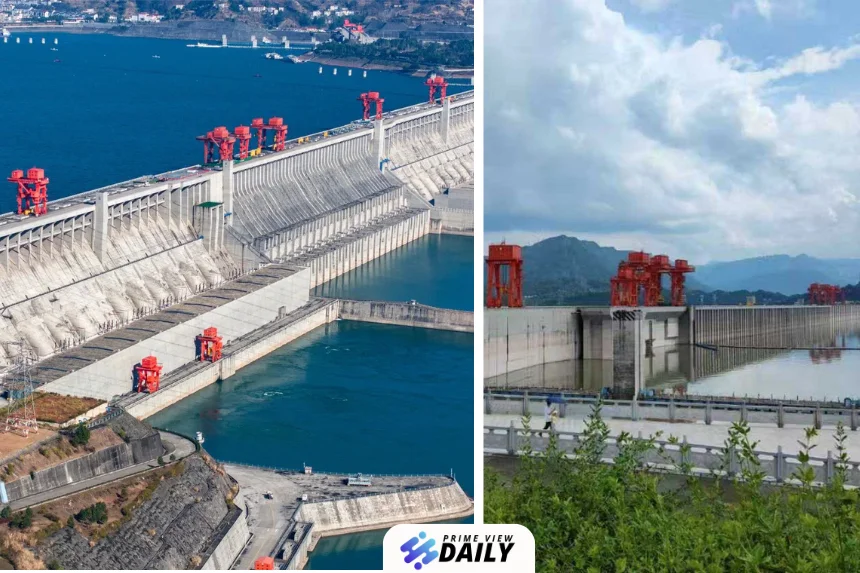
A fish that vanished from the wild in 2022 is spawning again today. That single fact captures the scale of what is happening along one of China’s most important rivers. Yangtze River dams removal is not a small local cleanup. It is one of the largest river restoration efforts ever attempted, and it is already producing results that surprised the scientists who designed it.
This guide explains exactly what is being removed, why officials chose this path, and what the early results suggest about the river’s future. It also covers the species at the center of the story, the engineering reality behind dam removal, and what challenges remain. Readers searching for a complete, accurate picture of Yangtze River dams removal will find it here.
What Is Actually Happening With Yangtze River Dams Removal?
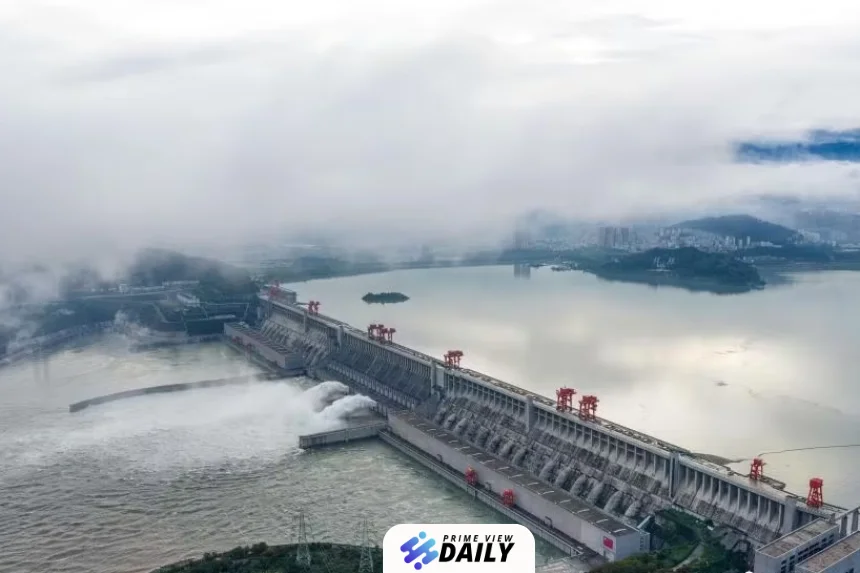
China has dismantled 300 dams along the Chishui River, a major tributary of the upper Yangtze, according to Interesting Engineering’s coverage of the project. The same report states that more than 90 percent of small hydropower stations along this river have also been shut down. This is not a removal of the massive Three Gorges Dam itself. It targets the dense network of smaller dams that fragmented the river over decades.
The Chishui River flows for more than 400 kilometers through Yunnan, Guizhou, and Sichuan provinces. According to Interesting Engineering, this river has long served as one of the last true sanctuaries for rare and endemic fish species in the upper Yangtze basin. Officials chose this tributary specifically because so many of its native species had nowhere else left to survive.
How Many Dams and Power Stations Were Removed?
The numbers behind this project are striking. By the end of 2024, workers had removed 300 of 357 dams that once stood along the Chishui River, according to a report from China’s state-run Xinhua News Agency, cited by Interesting Engineering. Crews also shut down 342 of 373 small hydropower stations during the same period. Demolition work on this scale began in 2020 and continued steadily for four years.
| Restoration Metric | Figure |
|---|---|
| Dams removed (of total) | 300 of 357 |
| Small hydropower stations shut down | 342 of 373 |
| River length affected | Over 400 kilometers |
| Provinces involved | Yunnan, Guizhou, Sichuan |
| Demolition start year | 2020 |
| Sichuan hydropower stations shut down separately | 1,223 of 5,131 rectified |
| Fishing ban duration on the Yangtze | 10 years, started 2020 |
Why Did China Target the Chishui River for Dam Removal?
The Chishui River earned a unique distinction over the decades. It became one of the only major tributaries in the entire Yangtze basin that never received a large hydroelectric dam. Smaller dams still fragmented its flow, however, and that fragmentation steadily choked off the river’s natural rhythms. Removing those smaller structures offered a realistic path back toward something close to the river’s original condition.
Hydropower infrastructure causes specific, well-documented harm to river ecosystems. According to Interesting Engineering, dams and small hydropower stations change water flows, reduce oxygen levels, and sever the connections between spawning grounds and feeding grounds that fish depend on. Each of these effects compounds the others. Reduced oxygen stresses fish populations directly, while blocked migration routes prevent species from completing their natural reproductive cycles.
What Made This River Different From Other Yangtze Tributaries?
Most other tributaries throughout the Yangtze basin underwent heavier industrial damming over the past several decades. The Chishui River avoided large-scale hydropower development, even as smaller dams accumulated across its length. That relative preservation made it the strongest remaining candidate for full ecological recovery.
Researchers at the Chinese Academy of Sciences identified this river specifically because removing its remaining barriers could restore conditions suitable for reproduction among critically endangered species. Liu Fei, a researcher at the academy’s Institute of Hydrobiology in Wuhan, stated that the river’s ecological environment could now support the habitat and reproductive needs of the Yangtze sturgeon, according to Interesting Engineering. That assessment became the foundation for the entire removal strategy.
The Yangtze Sturgeon: The Species at the Center of This Project
Few species illustrate the stakes of this restoration effort better than the Yangtze sturgeon. The International Union for Conservation of Nature declared this species extinct in the wild back in 2022, according to Interesting Engineering’s reporting based on South China Morning Post coverage. That declaration represented a profound loss for one of the river’s most ancient species, one that had survived in these waters for millions of years before modern infrastructure reshaped its habitat.
Conservation teams did not give up after the extinction declaration. Researchers released two batches of hatchery-bred sturgeon into the Chishui River across 2023 and 2024. In April 2025, the team released 20 adult sturgeon into the river’s Guizhou section specifically to test whether natural reproduction could occur in the newly restored habitat.
Did the Sturgeon Actually Reproduce After the Dams Came Down?
Yes, and the timing made the result especially significant. By mid-April 2025, researchers confirmed spawning behavior among the released sturgeon, according to Interesting Engineering. They also documented successful hatching of fry shortly afterward. This marked the first confirmed natural reproduction event of this kind since the year 2000, a 25-year gap that underscores just how degraded conditions had become before the removal project began.
This single reproductive event does not guarantee the species’ long-term survival. However, it offers the clearest evidence yet that removing dams can restore conditions specific enough to trigger natural spawning behavior in a critically endangered fish. Scientists view this as proof of concept for similar restoration work elsewhere along the broader Yangtze system.
Is China Removing Dams Across the Entire Yangtze Basin?
The Chishui River project represents the most dramatic example of Yangtze River dams removal, but it is not isolated. According to Interesting Engineering, Sichuan province separately rectified 5,131 hydropower stations by the end of 2021, ultimately shutting down 1,223 of them. This indicates a broader regional pattern rather than a single isolated initiative limited to one tributary.
Removal efforts work alongside several other conservation policies across the wider basin. China introduced a decade-long fishing ban across the Yangtze starting in 2020, restricting commercial fishing activity to allow populations time to recover. Authorities have also placed new restrictions on sand mining, which previously disrupted riverbed habitats and contributed to erosion throughout the basin.
What Other Conservation Measures Support the Dam Removal Effort?
Dam removal alone cannot restore an ecosystem this large without supporting policies working in tandem. China’s 2023 biodiversity communique reported sustained improvement in aquatic ecosystems throughout the Yangtze and its tributaries, according to Interesting Engineering. The same report noted that fish, invertebrate, and amphibian populations have shown signs of recovery across multiple monitored sites.
Water quality monitoring has produced encouraging results as well. Most river sections now receive an “excellent” rating in official water quality assessments. Sand mining intensity has declined sharply across the basin during the same period these restoration efforts have unfolded, suggesting that multiple interventions are reinforcing each other rather than working in isolation.
Do Dams Always Need to Be Physically Demolished to Help Rivers Recover?
Not necessarily, according to engineering experts studying this project. Professor Zhou Jianjun, a hydraulic engineering specialist at Tsinghua University, explained that decommissioning does not always require full demolition. He stated that the key factor is not whether a structure still physically exists, but whether the water control method changes to meet ecological needs once power generation stops, according to Interesting Engineering.
This distinction matters for understanding the full scope of Yangtze River dams removal. Some structures were fully demolished and removed from the riverbed entirely. Others remain standing but no longer generate power or control water flow in ways that block fish migration or alter natural oxygen levels. Both approaches count toward the broader restoration goal, even though only one involves literal demolition.
Why Does This Distinction Matter for Future Restoration Projects?
Understanding this nuance helps explain why restoration numbers sometimes vary between reports. A dam counted as “decommissioned” may still stand physically while no longer affecting river flow. A dam counted as “removed” or “demolished” has been physically dismantled. Both outcomes support fish migration and improved water quality, but the engineering effort, cost, and timeline required for each differ considerably.
This flexibility likely makes large-scale restoration more achievable across other river systems. Full demolition of every barrier structure would require enormous resources and time. Selectively decommissioning structures while leaving others standing offers a faster, more cost-effective path toward similar ecological gains in future projects elsewhere in China or beyond.
What Challenges Remain for the Yangtze River’s Recovery?
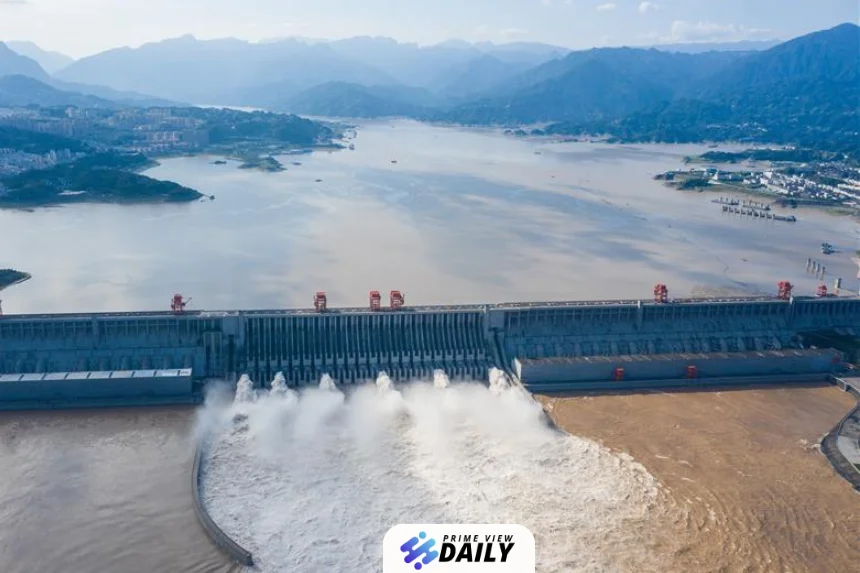
Despite encouraging progress, significant challenges remain for the broader Yangtze ecosystem. The Yangtze sturgeon, despite the recent spawning success, is still classified as struggling to survive in the wild, according to Interesting Engineering. A single successful reproduction event in one river section does not yet translate into a stable, self-sustaining population across the species’ full historic range.
Decades of habitat fragmentation cannot be undone instantly, even with aggressive removal efforts. Many fish populations throughout the broader Yangtze basin experienced severe declines tied to decades of dam construction, altered water flows, and reduced oxygen levels. Reversing this damage requires sustained monitoring and continued investment well beyond the initial demolition phase that concluded in 2024.
What Does Success Look Like for This Restoration Effort?
Long-term success will require more than one promising spawning season. Scientists will need to observe multiple successful reproduction cycles across several years before declaring the Yangtze sturgeon population genuinely stable. Continued habitat monitoring, water quality tracking, and additional hatchery releases will likely remain necessary for years to come.
China’s broader approach signals a meaningful shift in priorities. According to Interesting Engineering, the country’s changing river management strategy now focuses on protecting ecosystems rather than maximizing energy production at any cost. Whether this shift extends further across other major Yangtze tributaries in the coming years will determine how much additional recovery becomes possible throughout the wider river basin.
Frequently Asked Questions
What does Yangtze River dams removal actually involve?
It refers to China’s project removing 300 dams and shutting down over 90 percent of small hydropower stations along the Chishui River, a tributary of the upper Yangtze. The goal is restoring natural water flow and fish migration routes rather than removing major structures like the Three Gorges Dam.
Is the Three Gorges Dam being removed?
No. The Three Gorges Dam remains fully operational and is not part of any removal plan. The dam removal project specifically targets smaller dams along the Chishui River tributary, not the Yangtze’s main stem structures.
How many dams have been removed so far?
By the end of 2024, workers had removed 300 of 357 dams along the Chishui River. Additionally, 342 of 373 small hydropower stations along the same river were shut down during the same period.
Why did officials choose the Chishui River for this project?
The Chishui River remained one of the few major Yangtze tributaries without a large hydroelectric dam, making it the strongest candidate for full ecological recovery. Researchers identified it as one of the last sanctuaries for rare and endangered fish species in the upper Yangtze basin.
Has the dam removal helped endangered fish species?
Yes. Researchers confirmed natural spawning behavior and successful fry hatching among Yangtze sturgeon released into the restored river in April 2025. This marked the first confirmed natural reproduction event for this species since the year 2000.
Is the Yangtze sturgeon still considered endangered?
Yes. The species was declared extinct in the wild by the IUCN in 2022, and despite the recent spawning success, it remains classified as struggling to survive. A single successful reproduction event does not yet guarantee long-term population stability.
Does decommissioning a dam always mean physically removing it?
No. Some structures remain standing but no longer generate power or control water flow in ways that block fish migration. Experts say the key factor is changing how water is managed, not necessarily demolishing every structure completely.
What other conservation measures support the dam removal effort?
China introduced a decade-long fishing ban across the Yangtze starting in 2020, along with restrictions on sand mining and stricter regulation of new infrastructure. These measures work alongside dam removal to support broader ecosystem recovery.
Is this dam removal project limited to just one river?
While the Chishui River project is the most documented example, Sichuan province separately rectified over 5,000 hydropower stations and shut down more than 1,200 of them by the end of 2021. This suggests a broader regional pattern beyond a single tributary.
What challenges remain for the Yangtze River’s full recovery?
Decades of habitat fragmentation and population decline cannot be reversed instantly, even with aggressive dam removal. Scientists will need to observe multiple successful fish reproduction cycles over several years before considering the recovery effort fully successful.
Read about elijah blue allman