


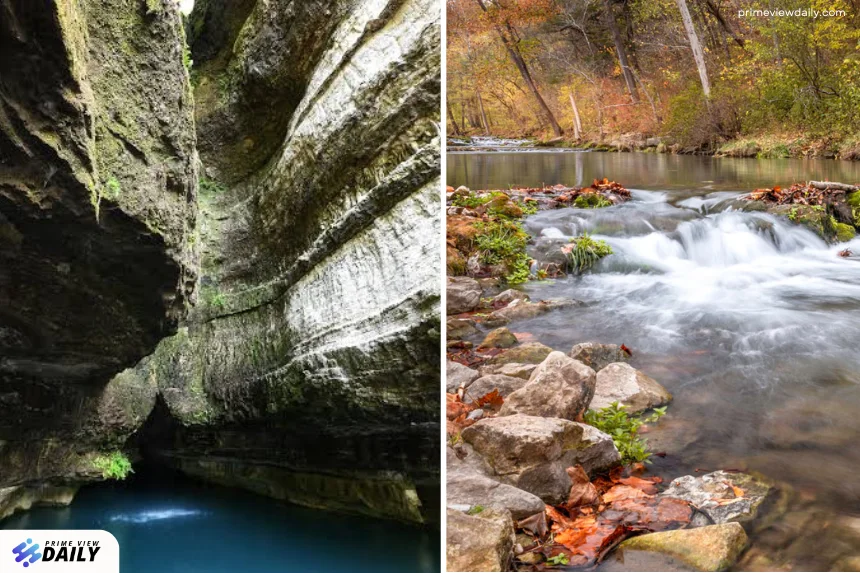
A deep blue spring pushes roughly 20 million gallons of cold, clear water out of a limestone cliff every single day. That’s where Roaring River State Park begins — and why people keep coming back. Located in the southwest Ozark hills, Roaring River draws nearly 2 million visitors each year, making it Missouri’s most popular state park. Whether you’re planning a fishing trip, a family camping weekend, or your first visit and aren’t sure what to expect, this guide covers every practical decision you’ll need to make.
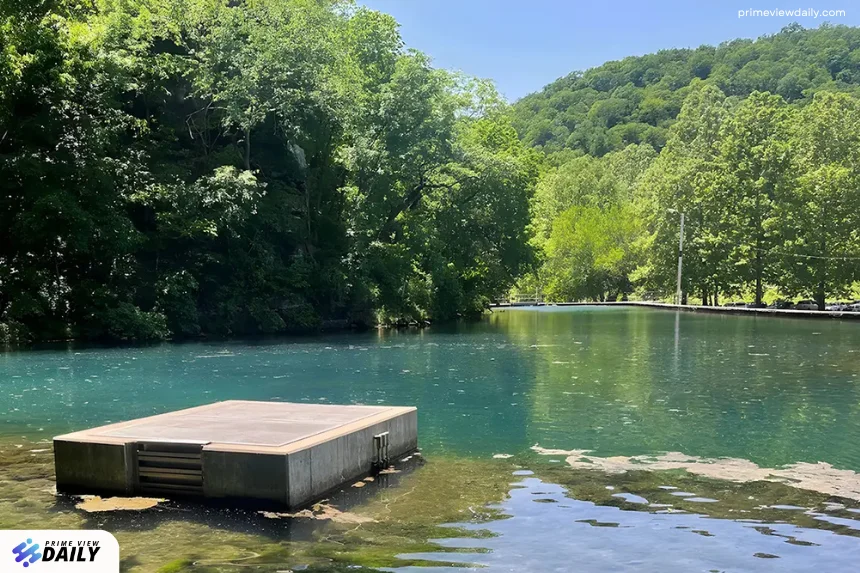
What Makes Roaring River State Park Worth the Trip
Roaring River State Park sits on 4,294 acres in Barry County, Missouri, about 8 miles south of Cassville on Highway 112. The landscape is unlike most of the Midwest — the White River carved deep, steep-walled valleys into the flat plateau over thousands of years, exposing an unusual variety of rock formations for such a small area. More than 600 species of plants grow in the rugged terrain, many of which cannot be found anywhere else in the state.
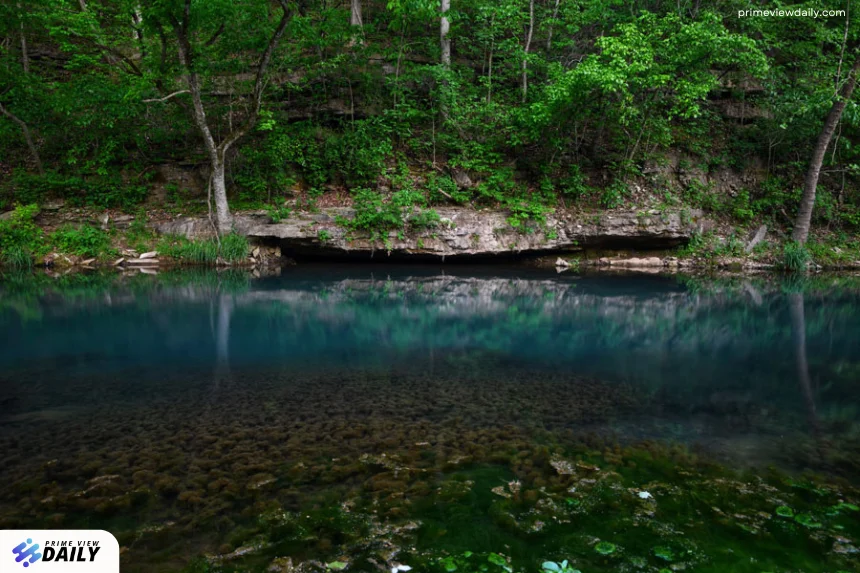
The centerpiece is Roaring River Spring, which originates in a deep canyon-like gorge beneath a high cliff. A trickling flow of water falls from the bluff into a deep blue pool below. That pool feeds the river, which runs through the valley past campgrounds, cabins, and hiking trailheads before eventually joining Table Rock Lake near Eagle Rock.
A Quick History
In 1928, Thomas Sayman, a St. Louis businessman, bought 2,400 acres surrounding the river and, within a month, donated the land to the state. Many of the park’s existing facilities — including some of the buildings that make up Camp Smokey, the organized group camp — were built by the Civilian Conservation Corps in the 1930s. The CCC-built structures still stand today, including the historic stone lodge that anchors the center of the park.
Trout Fishing at Roaring River — The Part Most Visitors Get Wrong
Roaring River State Park is one of only three Missouri state parks stocked with rainbow trout, and the fishing is genuinely excellent. However, many first-time visitors arrive without the right paperwork and lose fishing time at the park store sorting it out.
Here’s what you actually need before casting a line:
- A Missouri state fishing permit — required for most adults. Anglers 15 years and younger, and Missouri residents 65 and older, are exempt.
- A daily trout tag purchased on-site, which must bear your signature. Both licenses and tags are available at the park store.
The fishing season runs daily from March 1 through October 31. A winter catch-and-release season runs Friday through Monday from the second Friday in November through the second Monday in February, with hours from 8:00 a.m. to 4:00 p.m.
The hatchery itself is worth noting. Constructed in 1910, the Roaring River Hatchery is one of the oldest trout hatcheries in the state. It includes 40 raceways and a display pool stocked with lunker trout — the big fish that live in the spring pool and cannot be caught.
The Three Fishing Zones, Explained Simply
The river divides into three zones, and the rules differ meaningfully between them. Choosing the wrong zone for your setup wastes time.
| Zone | Location | Permitted Baits | Keep or Release? |
|---|---|---|---|
| Zone 1 | Hatchery to Dry Hollow Creek | Flies, artificial lures, unscented + scented soft plastics | Keep up to 4 |
| Zone 2 | Dry Hollow Creek to old dam (Camp 3) | Flies only | Catch and release only in posted C&R section |
| Zone 3 | Old dam to park boundary | Flies, artificial lures, soft plastics, natural and scented baits | Keep up to 4 |
Zone 3 is unique among Missouri trout parks — there is very little bank access and no landscaping, so you’ll fish in a wilder setting with very little company. Bait anglers do well drifting salmon eggs under a small bobber, while fly fishers will enjoy pheasant tails and hare’s ears. Spin anglers can cast in-line spinners into pools and near rootwads.
Season Calendar — When to Go for the Best Fishing
The Missouri Department of Conservation stocks trout daily from March 1 through October 30. The stocking rate targets roughly three fish per angler, so a heavily attended weekend still produces reasonable results.
- March–April: Opening season excitement, cooler temps, thinner crowds than summer — a strong pick for serious anglers.
- May–August: Peak visitor season. Families, kids’ fishing events, and the swimming pool all run concurrently. Two free Kids’ Fishing Days run in May and August for children 15 and younger, with reserved stream sections, volunteers on hand, and prize drawings.
- September–October: Shoulder crowd season, fish still stocked daily. Many veteran anglers consider this the ideal window.
- November–February: Winter catch-and-release fishing runs Friday through Monday and covers a specific section from the first hole adjacent to the hatchery to the park boundary. Brown trout occasionally appear alongside rainbow trout during this period.
Daily and Possession Limits
The daily limit is four trout. All brown trout must be 15 inches or longer — there is no length limit on rainbow trout. The possession limit is eight trout. Only one pole or rod is permitted per angler, and gigging, snaring, and snagging are all prohibited.
Camping at Roaring River State Park — Which Campground Is Right for You?
Roaring River State Park offers basic, electric, and sewer/electric/water campsites spread throughout three campgrounds, plus family campsites and an organized group camp. The campgrounds share a dump station, showers, and laundry. That said, the three campgrounds differ enough that your choice matters.
| Campground | Hookup Options | Best For | Notes |
|---|---|---|---|
| Camp 1 | Basic, electric | Year-round campers, tent campers | Only camp open year-round; 78 pet-friendly sites |
| Camp 2 | Basic, electric | Hikers; near Eagle’s Nest trailhead | Quieter, farther from river action |
| Camp 3 | Full hookup (electric/water/sewer) | RVs, families wanting full amenities | Closest to Zone 2 fishing; no shade at full-hookup sites |
One thing many reviews mention: the full hookup sites in Camp 3 lack shade, so bringing a pop-up canopy for your table is worth the effort.
Also note: park staff currently use a pyrotechnic device near Camp 3 and the hatchery between 8 a.m. and 10 a.m. daily to deter black vultures. Visitors may hear a loud report or screaming whistle during this window. It’s worth knowing before your first morning there.
How and When to Book
Campsite reservations open 12 months in advance — expanded from the previous six-month window. Reservations run from late February through late October and can be made online via the Missouri State Parks reservation system or by calling 877-ICampMO (877-422-6766). Popular spring and summer weekends book out months early, so planning ahead genuinely pays off.
Basic campsites without electricity start around $13 per night. Electric hookup sites range from $21 to $23 per night. Full hookup sites with electric, water, and sewer run around $25 per night.
Pet Policy
Pets must stay supervised and on leashes no longer than 10 feet at all times. The park recommends no more than two dogs per campsite. Portable fences and shock collars do not satisfy the leash requirement. Pets are not allowed in the swimming areas or any buildings except those in the Cabins for Canines program — see the cabin section below.
Lodging Options Beyond the Campgrounds
If camping isn’t your preference, the park offers three lodging tiers.
Rustic Cabins
Several cabin types sit along the hillside of Roaring River, each with a full kitchen, living room with couches and a television, and a porch overlooking the river. Duplex Cabins 13–16 accept dogs for an additional $20 per dog per night, with a two-pet maximum. Larger 4-Plex Cabins above Camp 3 include balconies and fire pits — a good option for groups. Twenty-six total rustic cabins with kitchens are available, and reservations are required.
The CCC Lodge
The CCC Lodge is a three-level historic building dating back to the 1930s. It has been updated with modern amenities while retaining its original character, and includes gas fireplaces, river views, and king/queen bed configurations. No smoking, pets, or outside grills are permitted.
Emory Melton Inn and Conference Center
The Emory Melton Inn includes guest rooms, conference and meeting rooms, and a full-service dining room. Motel rooms and cabins are available March through October. Wi-Fi is available in the lobby and meeting rooms — the rest of the park intentionally runs without it, which suits the “unplug” ethos of the property. To book any lodging, call 417-847-2330 or visit the concession operator’s site.
Hiking Trails — From the 20-Minute Deer Leap to the 4.4-Mile Fire Tower Loop
The park offers over 10 miles of trails on seven routes through roughly 4,293 acres of Ozark hills, open year-round. Dogs on leashes are welcome on all of them.
| Trail | Distance | Difficulty | Best For |
|---|---|---|---|
| Springhouse Trail | 0.4 mi | Easy | Quick walk; old homestead and dry forest |
| River Trail | 0.7 mi | Easy | Wildflower displays (spring); CCC-era trail |
| Dear Leap Trail | ~0.5 mi | Moderate | Best overlook of the spring pool and hatchery |
| Pibern Trail | 1.0 mi | Easy | Limestone bluffs, variety of habitats |
| Devil’s Kitchen Trail | 1.5 mi | Moderate | Limestone caves, Civil War history |
| Eagle’s Nest Loop | 2.6–2.7 mi | Moderate | River views, ridge overlook, old homestead |
| Fire Tower Loop Trail | 4.2–4.4 mi | Difficult | Best full-day hike; dolomite glades, fire tower |
Best Trail for First-Timers
Dear Leap Trail delivers the most reward for the least effort. The trail begins near the spring, follows stone steps to a ridge overlooking the spring pool and the hatchery, and on clear days you can see the axle shaft from an undershot waterwheel that powered a 19th-century gristmill beneath the water of the main pool. Allow about 20 minutes.
Best Trail for the Full Experience
Fire Tower Loop Trail at 4.4 miles is the park’s signature hike. The beginning of the trail follows the north shore of the river alongside beautiful rock formations before climbing through dolomite glades, woodlands, hollows, and wildflower meadows. Several convenient access points let hikers shorten the route if needed.
The Fire Tower Trail also connects to the Roaring River Hills Wild Area, home to the Ozark Chinquapin Oak — a tree now rare in Missouri that grows in the rugged chert-covered ridges accessible from this route.
Swimming, Wildlife, and Everything Else to Do
Swimming Pool
The park’s swimming pool is located across from the park office and is open from Memorial Day weekend to Labor Day. A small fee applies, and there is no lifeguard at the river itself. Wading and swimming are also allowed in the designated section of Zone 2, where the water stays cold year-round thanks to the spring source.
Wildlife and Birding
The park records over 150 bird species, including warblers and vireos during migration season. Waterfowl such as ducks and herons frequent the spring-fed river, while forested areas shelter owls and woodpeckers. The park hosts an annual Bald Eagle Days event — typically in winter, when eagles hunt the open water near the hatchery outflow.
Nature Center and Hatchery Tours
The Ozark Chinquapin Nature Center offers interpretive exhibits on the park’s geology, plant life, and wildlife. The hatchery is open for self-guided viewing: quarter-operated food dispensers let you feed the fish in the raceways, and in the main pool, large “lunker” trout live out their lives with no risk of being caught — unless they accidentally swim through the spillway into the main river.
When to Visit Roaring River State Park
There is no single “best” time — it depends on your priorities.
| Season | Pros | Cons |
|---|---|---|
| Spring (Mar–Apr) | Opening season, fresh stocking, wildflowers, lower crowds | Weather unpredictable; some facilities not yet open |
| Summer (May–Aug) | Pool open, full amenities, Kids’ Fishing Days, campfire weather | Busiest crowds; Camp 3 full hookup sites fill fast |
| Fall (Sep–Oct) | Shoulder crowds, daily stocking continues, cool temps for hiking | Some cabins/lodge close after October |
| Winter (Nov–Feb) | Catch-and-release fishing Fri–Mon, peaceful atmosphere | Limited facilities; only Camp 1 stays open; cabins unavailable |
Roaring River vs. Bennett Spring — Which Should You Choose?
A common question among Missouri anglers. Roaring River competes with Montauk State Park for second place among Missouri’s trout parks — Bennett Spring remains the busiest. For Kansas City anglers willing to invest an extra 30 minutes of driving, Roaring River offers lighter crowds and comparable fishing quality. Roaring River also has notably more lodging variety — full-service inn, cabins, and restaurant — than most of the competing parks.
Practical Info and Getting There
Address: 12716 Farm Road 2239, Cassville, MO 65625 — or follow Highway 112 south from Cassville for 7–8 miles.
Driving distances:
- From Springfield, MO: approximately 90 minutes southwest via Highway 60 and 112
- From Kansas City, MO: approximately 3.5–4 hours
- From St. Louis, MO: approximately 4.5–5 hours
There is no admission fee for Missouri state parks. Camping reservations, trout tags, and fishing permits are the primary costs visitors pay.
Park/fishing information: 417-847-2539
Lodging and concessions: 417-847-2330
Camping reservations: 877-422-6766
Roads into the park along Highway 112 include some narrow and hilly stretches. Large RVs and trailers can navigate them — just take them slowly and note a few tight spots before the park entrance.
Frequently Asked Questions
Does Roaring River State Park charge an entrance fee?
No — Missouri state parks charge no admission fee whatsoever. However, you will need to budget separately for camping reservations, daily trout tags, and fishing permits, since those costs kick in the moment you plan to camp or fish. In other words, entry is free, but activities are not.
What fishing license do I need at Roaring River?
Before you cast a single line, you need two things: a Missouri state fishing permit and a daily trout tag from the park store. That said, anglers 15 and younger and Missouri residents 65 and older are exempt from the state permit. Even so, the daily trout tag still applies to most zones, so pick one up first thing when you arrive.
Can I keep the trout I catch?
Yes, but only in Zones 1 and 3. In those zones, the daily limit runs four trout and the possession limit reaches eight. Zone 2’s catch-and-release section, by contrast, requires you to return every fish to the water immediately. As for size, brown trout must hit at least 15 inches before you keep them, while rainbow trout carry no length limit at all.
Are dogs allowed at Roaring River State Park?
Yes — dogs are welcome in campgrounds and on all trails. However, you must keep leashes at 10 feet or shorter at all times. Beyond that, dogs cannot enter the swimming areas or any park buildings except the designated pet-friendly Duplex Cabins 13–16, which accept up to two dogs for an extra $20 per dog per night.
When does the swimming pool open and close?
The pool opens on Memorial Day weekend and runs straight through Labor Day. It sits directly across from the park office, and all visitors pay a small fee to use it. Because no lifeguard watches the river itself, the pool is the safer choice for young children or less confident swimmers.
How far in advance can I reserve a campsite?
You can now book up to 12 months ahead — a bigger window than the previous six-month limit. Reservations go through the Missouri State Parks system online or by phone at 877-422-6766. Since popular summer and holiday weekends fill months out, booking early is genuinely the single most useful step a first-time camper can take.
Is there Wi-Fi at the park?
Only in one spot: the lobby and meeting rooms of the Emory Melton Inn. Everywhere else, the park runs intentionally without Wi-Fi, because the whole experience centers on stepping away from screens and reconnecting with the Ozarks.
What’s the deal with the loud noise near Camp 3 in the morning?
Park staff fire a pyrotechnic device daily between 8 and 10 a.m. near Camp 3 and the hatchery to push black vultures out of the area. As a result, you may hear what sounds like a gunshot or a screaming whistle during that window. Knowing this ahead of time prevents a very confusing first morning at the park.
Is Roaring River State Park open in winter?
Yes, though with noticeably reduced facilities. Only Camp 1 stays open in the off-season, and cabins and the inn close after October. On the other hand, winter catch-and-release fishing runs every Friday through Monday, so anglers still have a solid reason to make the trip even in the coldest months.
Discover more on our website about ryan-silverfield