


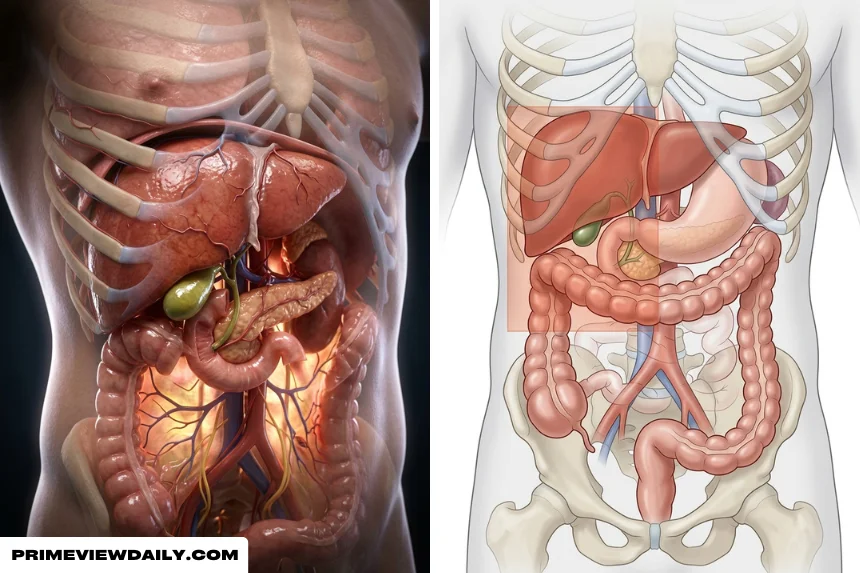
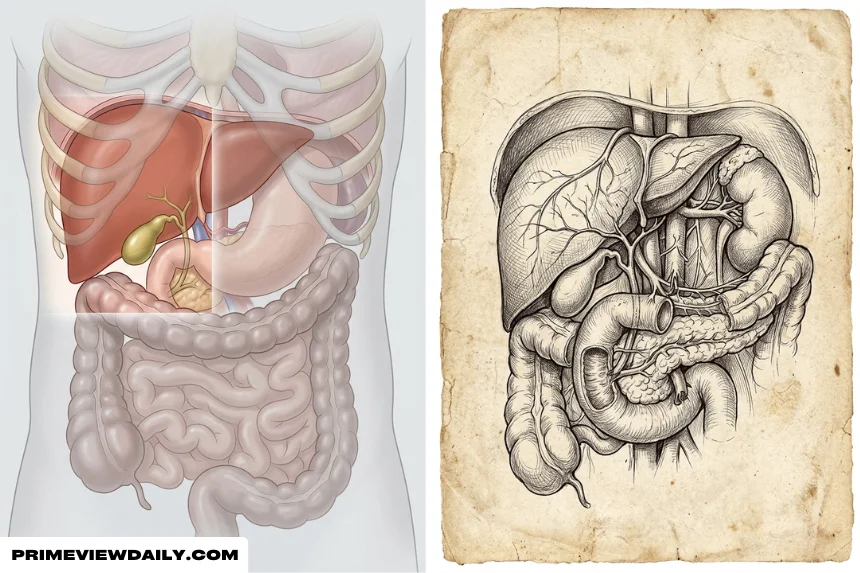
The right upper quadrant, commonly shortened to RUQ, is the upper-right part of your abdomen beneath the ribs. It contains the liver, gallbladder, part of the pancreas and intestine, and the upper portion of the right kidney. Pain in this area may also come from the abdominal muscles, ribs, skin, lungs, or other nearby structures.
Gallbladder problems are an important cause of right upper quadrant pain, but the location of pain alone cannot identify the problem. The timing, severity, associated symptoms, medical history, physical examination, blood tests, and imaging may all be needed to determine the cause. Ultrasound is commonly the first imaging test when clinicians suspect a gallbladder or biliary condition.
This guide provides general information and cannot diagnose abdominal pain. Sudden, severe, persistent, or worsening symptoms require professional medical assessment.
When Right Upper Quadrant Pain Needs Urgent Care
Seek urgent medical help if right upper quadrant pain is severe, rapidly worsening, or accompanied by:
- Fever or chills.
- Repeated vomiting or an inability to keep fluids down.
- Yellow skin or eyes, known as jaundice.
- Dark urine or unusually pale stools.
- A swollen, rigid, or very tender abdomen.
- Vomiting blood, passing red blood, or having black, tarry stools.
- Fainting, confusion, marked weakness, or difficulty waking.
- Chest pressure, shortness of breath, sweating, or pain spreading to the arm, jaw, back, or shoulder.
Abdominal pain lasting several hours with fever, vomiting, jaundice, dark urine, or light-colored stools may indicate a gallbladder, bile duct, liver, or pancreatic complication. Blood in vomit or black stools can indicate gastrointestinal bleeding. Heart problems may sometimes cause discomfort in the stomach or upper abdomen rather than obvious chest pain.
Warning signs during pregnancy
During pregnancy, severe or persistent pain under the right ribs needs prompt assessment, particularly after 20 weeks. Right-sided pain accompanied by a severe headache, vision changes, or sudden swelling of the face, hands, or feet can be associated with pre-eclampsia. Contact your maternity unit or healthcare provider immediately.
Where Is the Right Upper Quadrant?
Clinicians divide the abdomen into four sections using an imaginary vertical line down the middle of the body and a horizontal line through the belly button. The section above the belly button and on your right side is the right upper quadrant.
Structures located fully or partly within this area include:
- The right lobe of the liver.
- The gallbladder and bile ducts.
- Part of the stomach and duodenum.
- The head of the pancreas.
- The upper right kidney and adrenal gland.
- Parts of the ascending and transverse colon.
- Abdominal wall muscles, nerves, skin, and lower ribs.
The lungs and diaphragm sit above the abdominal cavity. Problems affecting the lower right lung or chest wall may therefore feel like upper abdominal pain.
Common Causes of Right Upper Quadrant Pain
The following patterns can help a clinician decide what to investigate, but symptoms often overlap. A person may also have more than one condition at the same time.
| Possible cause | How the pain may feel | Other possible symptoms |
|---|---|---|
| Gallstones or biliary colic | Strong, steady, or cramping pain beneath the right ribs, sometimes after a heavy meal | Nausea, vomiting, or pain spreading to the back or right shoulder |
| Inflamed gallbladder | Persistent, often severe pain and tenderness | Fever, chills, nausea, or vomiting |
| Blocked bile duct | Upper-right abdominal pain | Jaundice, dark urine, pale stools, itching, or fever |
| Indigestion, gastritis, or ulcer | Burning, aching, or uncomfortable upper abdominal pain | Bloating, belching, nausea, early fullness, or pain related to meals |
| Pancreatitis | Constant or severe upper abdominal pain that may spread to the back | Vomiting, fever, rapid pulse, or feeling seriously unwell |
| Kidney stone or infection | Sharp side or back pain, sometimes occurring in waves | Painful urination, frequent urination, blood in urine, fever, or chills |
| Bowel-related pain | Cramping, pressure, or bloating | Gas, constipation, diarrhea, or a change in bowel habits |
| Rib or muscle injury | Localized pain that changes with movement, coughing, deep breathing, or pressure | Recent exercise, lifting, coughing, fall, or injury |
| Shingles | Burning, tingling, or sensitive skin on one side | A stripe of blisters may appear several days after the pain begins |
| Lung or heart condition | Upper abdominal or lower chest discomfort | Cough, breathing difficulty, chest pressure, sweating, or weakness |
Gallstones and gallbladder inflammation
Gallstones can cause pain when they temporarily block a bile duct. A gallbladder attack commonly produces pain in the upper-right abdomen and may last several hours. Attacks often occur after heavy meals and may happen in the evening or at night.
Pain that continues rather than settling may indicate acute cholecystitis, which is inflammation of the gallbladder. Fever, chills, vomiting, increasing tenderness, or jaundice make urgent assessment particularly important.
Not everyone with gallstones has symptoms. Stones found incidentally do not necessarily require treatment, but painful or complicated gallstones may require specialist care.
Liver and bile duct conditions
Because the liver occupies much of the right upper quadrant, inflammation, infection, swelling, injury, or obstruction involving the liver or bile ducts can cause discomfort in this area.
Symptoms that may point toward a liver or biliary problem include:
- Jaundice.
- Dark urine.
- Pale or clay-colored stools.
- Itching.
- Fever.
- Nausea or vomiting.
- Unusual fatigue or reduced appetite.
These symptoms are not specific to one disease. A healthcare professional may use blood tests and imaging to determine whether the liver, gallbladder, or bile ducts are involved.
Indigestion, gastritis, and peptic ulcers
Problems involving the stomach or duodenum may be felt in the center or right side of the upper abdomen. The pain may feel dull, burning, or uncomfortable and can come and go.
Peptic-ulcer pain may occur when the stomach is empty, during the night, or after eating. Other possible symptoms include nausea, bloating, belching, and feeling full sooner than expected.
Vomiting blood, vomit that resembles coffee grounds, or black, tarry stools requires immediate medical care because these can be signs of gastrointestinal bleeding.
Pancreatic conditions
The pancreas lies mainly across the upper middle abdomen, but its head extends toward the right upper quadrant. Pancreatitis generally causes severe or persistent upper abdominal pain that may spread to the back. Nausea, vomiting, fever, or worsening pain after eating may also occur.
Acute pancreatitis is a serious condition that usually requires urgent hospital assessment. Persistent severe upper abdominal pain should not be managed solely with home remedies.
Kidney stones and kidney infections
The right kidney lies toward the back of the abdomen. Kidney pain is therefore frequently felt in the side or back rather than directly at the front under the ribs.
Kidney stones can cause sharp pain that travels toward the lower abdomen or groin. Blood in the urine, urinary urgency, painful urination, nausea, or vomiting may occur. A kidney infection may produce side or back pain together with fever, chills, urinary symptoms, nausea, or vomiting.
Fever with side pain and urinary symptoms requires prompt medical attention because a kidney infection can become serious if untreated.
Bowel, gas, and constipation
Part of the large intestine runs through the right upper quadrant. Gas, constipation, intestinal infections, food intolerance, and functional bowel conditions can therefore produce pressure, bloating, cramps, or localized discomfort in this area.
Pain caused by gas or bowel contractions may come and go and may improve after passing gas or having a bowel movement. However, severe localized pain, abdominal swelling, persistent vomiting, bleeding, fever, or an inability to pass stool or gas should be assessed urgently.
Muscle, rib, and abdominal wall pain
A pulled abdominal muscle, bruised rib, repetitive coughing, or strenuous exercise may cause pain near the right ribs. Musculoskeletal pain is often affected by:
- Twisting or bending.
- Lifting.
- Coughing or sneezing.
- Taking a deep breath.
- Pressing the painful spot.
Pain that changes with movement may suggest a chest-wall or muscle problem, but it does not rule out an internal condition. Breathing difficulty, coughing up blood, significant trauma, or worsening chest pain needs urgent evaluation.
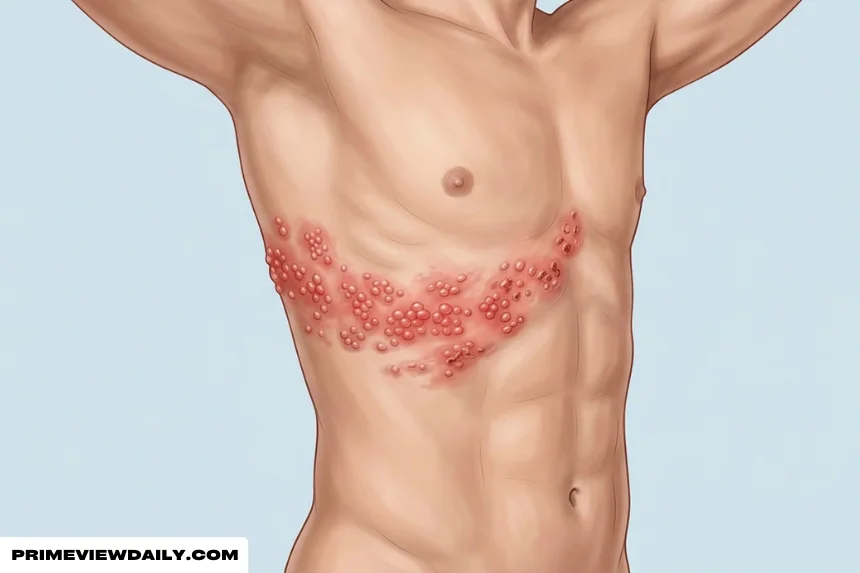
Shingles
Shingles may begin with burning, tingling, itching, or skin sensitivity on one side of the torso. A painful blistering rash usually appears later and normally remains on one side rather than crossing the body’s midline.
Early medical advice is useful, especially for older adults, people with weakened immune systems, or anyone whose rash is near the eye.
Lung or heart problems
Pain from pneumonia, pleurisy, or another condition affecting the lower right lung may be felt near the right ribs. Cough, fever, shortness of breath, or pain that worsens when breathing can indicate a chest rather than abdominal cause.
Heart-related discomfort may sometimes be felt in the stomach, back, shoulder, arm, neck, or jaw. Call emergency services for upper abdominal discomfort accompanied by chest pressure, sweating, faintness, nausea, or shortness of breath.
What Pain Patterns May Tell Your Doctor
Before an appointment, note:
- When the pain started.
- Whether it began suddenly or gradually.
- Whether it is constant or comes in waves.
- How long each episode lasts.
- Whether it spreads to your shoulder, chest, back, or groin.
- Whether eating makes it better or worse.
- Whether movement, coughing, or breathing changes it.
- Any fever, vomiting, jaundice, rash, urinary symptoms, or bowel changes.
- Recent injuries, travel, surgery, medication use, or pregnancy.
- Whether you have experienced similar pain before.
Pain severity alone does not reliably show how serious a condition is. Some relatively minor problems can be very painful, while serious illnesses may initially cause mild discomfort.
How Right Upper Quadrant Pain Is Diagnosed
A healthcare professional will usually begin by asking about the pain and associated symptoms. They may examine the entire abdomen rather than only the painful area and may also listen to the lungs, check the ribs, assess hydration, and look for jaundice or a rash.
Depending on the suspected cause, tests may include:
- A complete blood count to look for infection or inflammation.
- Liver-function and bile-duct tests.
- Pancreatic enzyme tests.
- Kidney-function tests.
- Urinalysis.
- A pregnancy test when relevant.
- Abdominal ultrasound.
- CT or MRI.
- MRCP to examine the bile and pancreatic ducts.
- A gallbladder nuclear-medicine scan in selected cases.
- Endoscopy when a stomach or duodenal condition is suspected.
Ultrasound is generally the preferred first imaging examination for unexplained right upper quadrant pain or suspected gallbladder disease. If ultrasound findings are unclear, CT, MRI, MRCP, or gallbladder scintigraphy may be considered according to the symptoms and laboratory findings.

How Right Upper Quadrant Pain Is Treated
Treatment depends entirely on the underlying condition. There is no single treatment for pain in this location.
Possible treatments may include:
- Observation and dietary adjustments for certain mild digestive problems.
- Acid-reducing medication and treatment for H. pylori when an ulcer is diagnosed.
- Antibiotics for some bacterial infections.
- Fluids, pain control, and hospital monitoring for pancreatitis or serious infection.
- Medication or procedures for kidney stones.
- Antiviral treatment for shingles when appropriate.
- Surgery to remove the gallbladder for certain symptomatic or complicated gallstone conditions.
Do not begin antibiotics, leftover prescription medicines, or high-dose pain medication without medical advice. Frequent use of aspirin, ibuprofen, or naproxen can contribute to peptic ulcers in some people.
What You Can Do While Waiting for an Appointment
For mild pain without warning signs:
- Keep a record of when the pain occurs and what you ate or did beforehand.
- Choose smaller meals and avoid foods that repeatedly trigger symptoms.
- Drink enough fluids unless a clinician has told you to restrict them.
- Avoid alcohol until the cause is clearer.
- Avoid strenuous activity if movement appears to trigger the pain.
- Ask a pharmacist or clinician which over-the-counter pain medicine is appropriate for you.
Arrange an appointment if the pain persists, repeatedly returns, disturbs sleep, or affects eating and daily activities. Do not delay care because the pain temporarily improves if warning signs are also present.
Frequently Asked Questions
Is right upper quadrant pain always caused by the gallbladder?
No. The gallbladder is an important possibility, but pain can also come from the liver, stomach, pancreas, kidney, bowel, ribs, muscles, skin, lungs, or occasionally the heart.
Can gas cause pain in the right upper quadrant?
Yes. Gas can collect in the part of the colon that bends beneath the liver, producing pressure or cramping under the right ribs. Persistent, severe, or worsening pain should not automatically be assumed to be gas.
Why does my right upper quadrant hurt after eating?
Gallbladder pain may occur after a heavy meal, but indigestion, gastritis, ulcers, food intolerance, and pancreatic conditions can also be related to eating. The timing alone cannot confirm the cause.
Can right upper quadrant pain spread to the back or shoulder?
Yes. Gallbladder pain may spread toward the right shoulder or back. Pancreatic pain can radiate to the back, while kidney pain often begins in the side or back.
What is the usual first test for right upper quadrant pain?
An abdominal ultrasound is commonly the first imaging test, particularly when gallstones or gallbladder inflammation are suspected. Other tests may be required if the ultrasound is normal or unclear.
How long should I wait before seeing a doctor?
There is no universally safe waiting period. Seek immediate help for severe or worsening pain or any warning signs. Arrange a medical appointment for pain that persists, keeps returning, or has no clear harmless explanation.
Conclusion
Right upper quadrant pain has many possible causes, ranging from temporary digestive discomfort or muscle strain to gallbladder inflammation, kidney infection, pancreatitis, or another condition requiring urgent treatment.
Pay attention to the pain’s timing and associated symptoms rather than trying to diagnose it from location alone. Severe pain, fever, jaundice, persistent vomiting, bleeding, breathing difficulty, or concerning pregnancy symptoms should be assessed without delay.
Discover more on our website about is-maple-syrup-better-than-sugar