


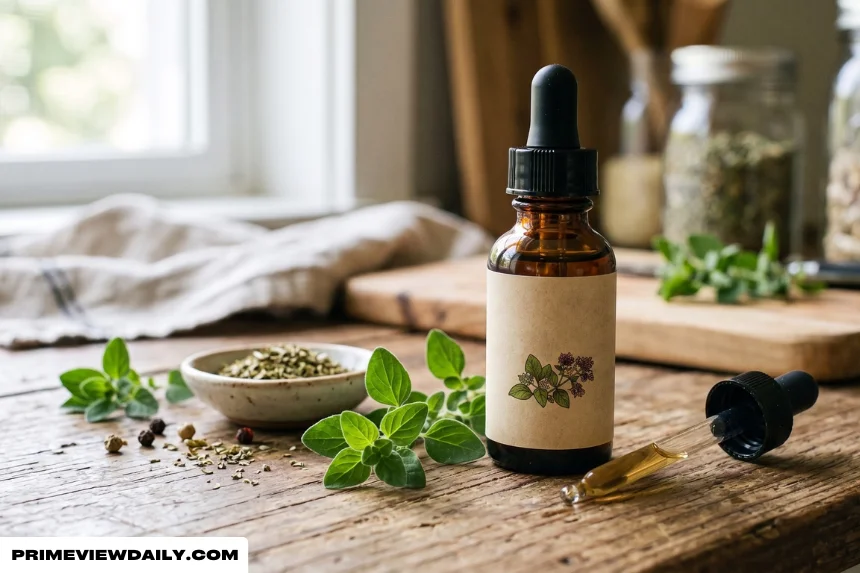
Oil of oregano with black seed oil has become a popular herbal supplement combination for people interested in immune support, digestive wellness, and natural antioxidant support. Both oils come from plants with long histories of traditional use, and both contain active compounds that researchers continue to study.
However, this combination needs a careful explanation. Oil of oregano and black seed oil are not proven cures for infections, colds, flu, digestive disease, or chronic inflammation. Most research looks at each ingredient separately, and much of the oregano oil evidence comes from lab, animal, or early-stage studies rather than large human trials.
For healthy adults, the combination may offer useful wellness support when used responsibly. Still, it can also cause side effects or interact with medication. The safest approach is to understand what each oil may do, what the evidence actually supports, and when to ask a healthcare professional before using it.
What Are Oil of Oregano and Black Seed Oil?
Oil of oregano usually refers to a supplement made from oregano plant compounds, especially carvacrol and thymol. These natural compounds appear in oregano essential oil and have shown antimicrobial and antioxidant activity in laboratory research. Reviews describe oregano essential oils as rich in bioactive compounds, but they also note that many findings still need stronger human evidence.
Black seed oil comes from the seeds of Nigella sativa, also called black cumin or black seed. Its best-known active compound is thymoquinone. Memorial Sloan Kettering Cancer Center notes that small studies suggest Nigella sativa may have potential benefits for blood pressure and asthma symptoms, while animal and lab studies explore other effects. However, human evidence remains limited for many claims.
Together, these oils create a “botanical blend” that people often use for general wellness. Even so, combining them does not automatically make either ingredient stronger or safer.
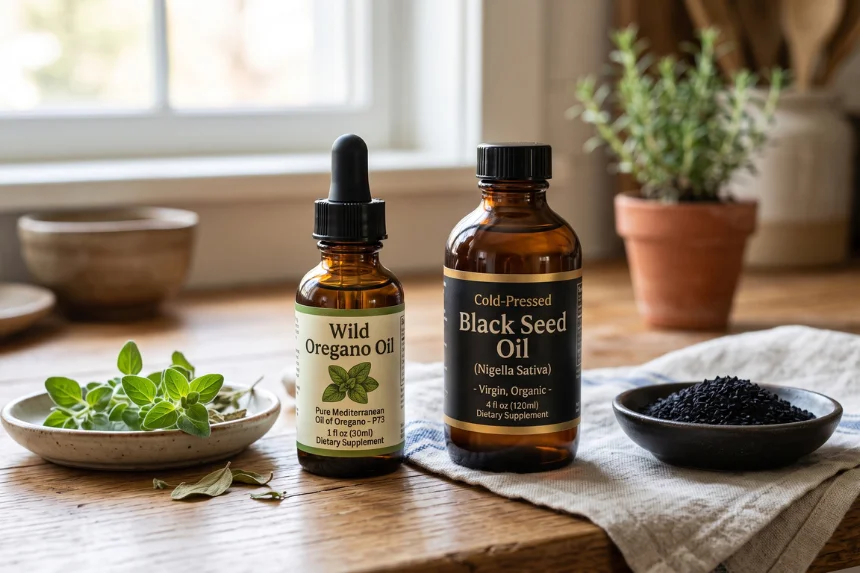
Main Potential Benefits of Oil of Oregano With Black Seed Oil
The possible benefits mostly come from the known compounds in each oil. Oil of oregano contributes carvacrol and thymol, while black seed oil contributes thymoquinone and fatty acids.
Here is a practical overview:
| Potential benefit | Why people use the combination | Evidence strength |
|---|---|---|
| Antioxidant support | Both oils contain plant compounds linked with antioxidant activity | Moderate for compounds; limited for the combination |
| Immune wellness | Oregano oil has antimicrobial activity in lab studies; black seed has traditional immune-related use | Limited human evidence |
| Digestive comfort | Some people use both oils for bloating or gut balance | Limited and individual |
| Respiratory wellness | Black seed has small-study evidence for asthma symptoms; oregano oil is often marketed for seasonal wellness | Limited to mixed |
| Inflammation support | Thymoquinone and carvacrol show anti-inflammatory activity in early research | Promising but not conclusive |
| Skin and topical use | Diluted forms may appear in skin-care or fungal-support products | Depends on product and dilution |
These benefits sound appealing, but readers should separate “may support” from “will treat.” A supplement can fit into a wellness routine without replacing medical care.
1. Antioxidant Support
One of the most realistic benefits of oil of oregano with black seed oil is antioxidant support. Antioxidants help protect cells from oxidative stress, a process linked with normal metabolism, pollution, inflammation, and other stressors.
Carvacrol, a major compound in oregano oil, has been studied for antioxidant and antimicrobial properties. Thymoquinone, the key compound in black seed oil, has also drawn research interest for its antioxidant and anti-inflammatory effects. Reviews on both compounds describe promising biological activity, although many results come from lab or animal research rather than large human trials.
This means the combination may support a healthy lifestyle, but it should not be treated as a substitute for sleep, a balanced diet, exercise, hydration, or medical treatment.

2. Immune Wellness Support
Many people take oil of oregano with black seed oil during cold and flu season. The reason is easy to understand: oregano oil compounds show antimicrobial activity in lab studies, and black seed has a long history of traditional use.
However, lab activity does not prove that a supplement prevents or treats infections in people. The National Center for Complementary and Integrative Health states that there is no strong evidence that oil of oregano prevents or treats colds or that related natural products prevent or treat influenza-like illness.
So, the better wording is that this blend may support general wellness. It should not replace vaccines, prescribed medicine, medical testing, or professional care when symptoms become serious.
3. Digestive Wellness
Some people use this combination for digestive comfort, especially when they feel bloated or want support for gut balance. Oil of oregano has strong plant compounds, and black seed oil has a history of use in traditional digestive remedies.
Still, stronger is not always better. Oregano oil can irritate the stomach in some people. NCBI’s LiverTox notes that higher doses may cause abdominal discomfort, heartburn, constipation or diarrhea, nausea, vomiting, dizziness, and headache.
Black seed oil can also cause digestive symptoms. A review of clinical trials reported mild side effects such as nausea, bloating, burning sensation, epigastric pain, and hypoglycemia in some studies.
Because of that, anyone with reflux, gastritis, ulcers, irritable bowel symptoms, inflammatory bowel disease, or frequent stomach upset should be cautious and speak with a clinician before using this blend.
4. Inflammation Support
Oil of oregano and black seed oil both contain compounds that researchers study for inflammation-related pathways. Carvacrol and thymoquinone appear in many papers because they may influence oxidative stress and inflammatory signaling.
A broad review of black cumin described many potential pharmacological effects, but it also emphasized that black cumin and its active components remain far from broad clinical application for many uses.
That matters because inflammation is not one simple problem. Joint pain, autoimmune disease, gut inflammation, skin flares, and metabolic inflammation all have different causes. A supplement may help some people feel better, but it cannot diagnose or treat the underlying reason for persistent symptoms.
5. Respiratory Wellness
Black seed oil has more human-centered discussion around respiratory health than oregano oil does. Memorial Sloan Kettering notes that small studies suggest possible benefits for asthma symptoms. However, those findings do not mean black seed oil can replace inhalers, allergy medicine, or prescribed asthma treatment.
Oil of oregano often appears in respiratory wellness products, but claims about treating colds, flu, bronchitis, or sinus infections need caution. If you have wheezing, shortness of breath, chest pain, high fever, or symptoms that keep worsening, seek medical care rather than relying on an herbal oil blend.
6. Skin and Topical Use
Some people use diluted oregano oil or black seed oil on the skin. Black seed oil appears in some skin-care products, while oregano oil’s antimicrobial compounds make it popular in topical wellness formulas.
However, oregano oil can irritate or burn the skin if you apply it undiluted. WebMD notes that oregano oil may cause a rash when applied to the skin, and LiverTox lists rare hypersensitivity reactions.
If you use a topical product, patch test it first, avoid broken skin, and keep it away from the eyes, nose, genitals, and mucous membranes. Do not apply oregano essential oil directly to the skin unless a qualified professional or product label gives safe dilution instructions.
Is the Combination Better Than Taking One Oil Alone?
No strong clinical evidence proves that oil of oregano with black seed oil works better than either oil alone. The idea of combining them makes sense from a product-formulation perspective because both contain bioactive plant compounds. However, “more ingredients” can also mean more chances for irritation, side effects, or interactions.
A cautious approach works best:
- Choose one product with a clear Supplement Facts label.
- Avoid stacking multiple oregano or black seed products.
- Start with the lowest labeled amount.
- Watch for stomach upset, rash, dizziness, low blood sugar symptoms, or unusual bleeding.
- Stop using it before surgery unless your clinician says otherwise.
- Ask a pharmacist or doctor if you take medication.
This matters because supplements can interact with medications. NIH’s Office of Dietary Supplements encourages people to talk with healthcare providers about supplement use and what may be best for their health.
Who Should Avoid Oil of Oregano With Black Seed Oil?
Some people should avoid this combination unless a healthcare professional specifically approves it.
You should be especially cautious if you:
- Are pregnant, trying to become pregnant, or breastfeeding
- Take blood thinners or antiplatelet medicine
- Take diabetes medication or have low blood sugar episodes
- Take blood pressure medication
- Have liver disease, kidney disease, ulcers, reflux, or severe stomach sensitivity
- Have allergies to oregano, mint-family plants, black seed, or related botanicals
- Have a bleeding disorder
- Have surgery scheduled
- Give supplements to a child
LiverTox warns that oregano in dietary supplement doses should not be used during pregnancy or by women of childbearing age who are not using effective contraception.
Black seed may also affect blood sugar and blood pressure. WebMD notes that black seed may lower blood sugar and can interact with diabetes medications.
Possible Side Effects
Oil of oregano with black seed oil may cause side effects, especially when people take too much, use highly concentrated products, or combine it with medications.
Possible side effects include:
- Heartburn
- Nausea
- Bloating
- Diarrhea or constipation
- Burning sensation in the stomach or throat
- Headache
- Dizziness
- Skin rash
- Allergic reaction
- Low blood sugar symptoms in susceptible people
Stop using the product and seek medical help if you develop trouble breathing, facial swelling, severe rash, chest pain, severe abdominal pain, fainting, black stools, unusual bleeding, or symptoms of a serious allergic reaction.
How to Choose a Safer Product
Product quality matters because oil-based herbal supplements can vary widely in concentration. Some products use oregano essential oil, some use diluted oil of oregano, and some combine several botanicals in one bottle.
Look for:
- A clear Supplement Facts panel
- Specific ingredient names, such as Origanum vulgare and Nigella sativa
- Clear serving size instructions
- Third-party testing when available
- No disease-cure claims
- A carrier oil if the formula is liquid
- Clear warnings for pregnancy, medication use, and allergies
Avoid products that promise to “kill infections,” “replace antibiotics,” “cure viruses,” or “detox the body.” Those claims often go beyond the evidence.
How to Use It More Safely
Always follow the product label and ask a healthcare professional if you have a medical condition or take medication. Do not drink oregano essential oil unless the product specifically states it is made for internal use and provides safe serving instructions.
A sensible routine includes:
- Start with a low labeled serving.
- Take it with food if the label allows, especially if your stomach feels sensitive.
- Avoid combining it with other strong herbal antimicrobials at first.
- Track how you feel for several days.
- Stop if you notice irritation, rash, stomach pain, dizziness, or low blood sugar symptoms.
- Use it as a short-term supplement unless your clinician recommends otherwise.
This article provides general wellness information, not medical advice. A doctor, pharmacist, registered dietitian, or qualified herbal professional can help you decide whether this blend makes sense for your health history.
FAQs
What are the benefits of oil of oregano with black seed oil?
Oil of oregano with black seed oil may support antioxidant activity, digestive wellness, and general immune wellness. However, human evidence for the exact combination remains limited, and it should not be used as a treatment for infections or chronic disease.
Can I take oil of oregano and black seed oil every day?
Some products market this blend for daily use, but daily use is not right for everyone. People who take medication, have digestive problems, are pregnant, or have chronic health conditions should ask a healthcare professional first.
Is oil of oregano with black seed oil good for colds?
There is no strong evidence that oil of oregano prevents or treats colds. It may fit into a general wellness routine, but it should not replace rest, hydration, vaccines, medical care, or prescribed treatment when needed.
Can oil of oregano with black seed oil replace antibiotics?
No. This blend should not replace antibiotics or other prescribed medications. Lab studies on antimicrobial activity do not prove that the supplement can safely treat infections in people.
What is the difference between oregano oil and oregano essential oil?
Oregano essential oil is a highly concentrated volatile oil. Some supplement brands sell diluted oil of oregano for internal use, but pure essential oils can be unsafe if swallowed or applied undiluted. Always follow the label and use only products intended for your chosen route of use.
Can black seed oil lower blood sugar?
Black seed may lower blood sugar in some people. That can become risky for people who take diabetes medication or already experience low blood sugar.
When should I stop taking this blend?
Stop taking it if you develop stomach burning, worsening reflux, rash, dizziness, low blood sugar symptoms, unusual bleeding, or any allergic reaction. Also stop before surgery unless your healthcare provider tells you otherwise.
Conclusion
Oil of oregano with black seed oil may offer antioxidant, digestive, and general wellness support, mainly because oregano contains compounds such as carvacrol and thymol, while black seed oil contains thymoquinone. Still, the evidence for the exact combination remains limited.
Use this blend carefully. Choose a clearly labeled product, avoid exaggerated disease-cure claims, and speak with a healthcare professional if you are pregnant, breastfeeding, taking medication, managing a chronic condition, or planning surgery.
Read mor about What Does Krowemoh Mean in Latin