



Did Ed Gein kill his brother in real life? No available evidence proves it. Henry Gein died during a brush fire near the family farm on May 16, 1944, and authorities treated the death as an accident caused by asphyxiation. However, later reports about marks on Henry’s head, the lack of an autopsy, Ed’s behavior during the search, and conflict within the family created lasting suspicion.
Netflix turns that uncertainty into a definite murder in Monster: The Ed Gein Story. In the series, Ed strikes Henry with a piece of wood and uses the fire to hide what happened. Nevertheless, no surviving public evidence proves that this scene reflects real events.
Therefore, the most accurate answer remains cautious: Ed may have played a role, but the official record did not establish homicide. Prosecutors never charged him, he never confessed, and no autopsy showed that a blow caused Henry’s death.
Did Ed Gein Kill His Brother in Real Life? Quick Answer
| Question | Verified answer |
|---|---|
| Did Ed Gein kill Henry? | It has never been proven |
| Henry’s full name | Henry George Gein |
| Relationship | Ed Gein’s older brother |
| Date of death | May 16, 1944 |
| Age | 43 |
| Location | Near the Gein family farm outside Plainfield, Wisconsin |
| What were the brothers doing? | Burning marsh or brush vegetation |
| Official cause of death | Asphyxiation, commonly reported as leading to heart failure |
| Official manner | Accident |
| Was an autopsy performed? | No autopsy is commonly reported |
| Were head injuries reported? | Later accounts mention bruises or marks, but their cause was never established |
| Was Ed charged? | No |
| Did Ed confess? | No |
| Is the Netflix murder scene proven history? | No; it is a dramatization |
Did Ed Gein Kill His Brother in Real Life?
No reliable evidence proves that Ed Gein murdered Henry. Officials in 1944 accepted an accidental-death explanation connected with the fire, and the case did not develop into a homicide prosecution.
However, “not proven” is not the same as “impossible.” Authorities conducted a limited investigation, no full autopsy clarified the injuries, and later writers described details that looked suspicious after Ed’s 1957 crimes became known.
Therefore, the case sits between two overly confident claims:
- It is too strong to say Ed definitely killed Henry.
- It is also too strong to say every question was fully resolved.
A responsible historical conclusion recognizes both the official finding and the evidence gap. Officials ruled Henry’s death accidental, while historians still treat Ed’s possible involvement as an unproven theory.
Who Was Henry Gein?
Henry George Gein was the older and only brother of Ed Gein. He was born in 1901 and grew up with Ed on a farm near Plainfield, Wisconsin.
Their parents, George and Augusta Gein, created an unstable family environment. George struggled with alcohol and had difficulty maintaining steady authority. Meanwhile, Augusta was intensely religious, controlling, and deeply suspicious of sexuality and the outside world.
Later biographies portray Henry as more socially independent than Ed. They also report that he became increasingly critical of Augusta’s influence over the family.
However, readers should treat personality descriptions carefully. Much of what people believe about the brothers comes from biographies written after Ed became notorious. Those accounts may preserve valuable testimony, but they also interpret the past through knowledge of his later crimes.
What is clear is that Henry and Ed continued working together on the family property after their father died in 1940. Four years later, Henry died during the brush fire that created the mystery.

How Did Henry Gein Die?
On May 16, 1944, Ed and Henry were burning marsh or brush vegetation on or near the family property. Such controlled burning was a familiar rural practice, although it could quickly become dangerous.
According to the official account, the fire spread beyond control. The brothers lost sight of each other, and Ed later reported Henry missing.
Local people and firefighters searched the area. Searchers then found Henry’s body on ground affected by the fire.
Authorities concluded that smoke or fire conditions had caused asphyxiation. Modern accounts often phrase the medical finding as “asphyxiation leading to heart failure.”
Consequently, officials treated the death as an accident rather than murder. No charge followed, and officials buried Henry without the extensive forensic investigation that a suspicious death would likely receive today.
What Was Henry Gein’s Official Cause of Death?
Officials reported asphyxiation associated with the brush fire as Henry’s cause of death. Some sources use the longer phrase “asphyxiation leading to heart failure.”
These terms describe the medical process that caused death. Asphyxiation means the body did not receive enough oxygen. Smoke inhalation can produce that result even when flames do not severely burn the body.
The official manner of death was accidental. “Manner” is the broader classification, such as accident, natural death, suicide, homicide, or undetermined.
Therefore, two separate statements shaped the 1944 record:
- Henry died because fire conditions deprived him of oxygen.
- Authorities believed the event was accidental.
Later suspicion did not change that official conclusion. No court or later investigation formally reclassified the death as homicide.

Was an Autopsy Performed on Henry Gein?
Available accounts report no autopsy of Henry.
That missing examination matters because an autopsy could have helped answer several questions:
- Did smoke inhalation leave evidence in the airway or lungs?
- Were the reported head marks superficial or severe?
- Did Henry suffer a fatal blow before encountering smoke?
- Did heart disease or another medical condition contribute?
- Did he fall, strike an object, or lose consciousness during the fire?
However, an autopsy would not automatically have solved every question. Forensic medicine in 1944 had fewer tools than modern pathology, and the fire scene could have complicated interpretation.
Still, the absence of a detailed postmortem examination left a permanent gap. Later writers could raise suspicions, but they could not return to a preserved forensic record that had settled the cause of the head marks.
The lack of an autopsy does not prove a cover-up. Rural authorities often handled deaths differently from modern investigators, especially when the scene appeared to support an accident. Nevertheless, the decision limited the evidence available to later generations.
Did Henry Gein Have Injuries to His Head?
Later biographies and articles report bruises, marks, or injuries on Henry’s head. Those claims form one of the main reasons people suspect Ed.
However, the public record does not provide a preserved autopsy conclusion establishing that blunt-force trauma killed Henry. Nor does it provide a modern forensic analysis showing that the marks came from an intentional attack.
Several explanations remain theoretically possible:
- Henry fell while moving through smoke or uneven ground.
- A branch or piece of debris struck him.
- Firefighting or body recovery caused marks.
- He suffered a medical collapse and hit the ground.
- Another person struck him.
The last possibility creates the murder theory, but the marks alone cannot identify which explanation is correct.
Moreover, reports differ over the number, severity, and location of the injuries. Without original photographs, a complete coroner report, or an autopsy, later descriptions cannot establish a fatal weapon.
Netflix chooses one answer by showing Ed strike Henry with a heavy piece of wood. That scene is dramatic and easy to understand. Historically, however, no surviving evidence proves that such a blow occurred.
Was Henry Gein’s Body Burned?
Modern sources conflict over the extent of fire damage.
Some articles say Henry’s body sustained serious burns. Others say his clothing or exposed skin showed little or no burning, even though he lay near scorched ground.
This disagreement creates a major research problem. Writers may be using different descriptions of:
- Soot on clothing.
- Burned vegetation around the body.
- Damage to clothing rather than skin.
- Partial burns.
- Later retellings that simplified an ambiguous scene.
Therefore, the article should not state either extreme as settled fact.
A person can die from smoke inhalation without extensive external burns. Consequently, a relatively unburned body would not by itself disprove the official cause.
Conversely, serious burns would not rule out a prior injury. The most accurate conclusion is that secondary accounts disagree, while the official finding remained asphyxiation from the fire.
Why Did Ed Gein’s Behavior Raise Suspicion?
Ed reportedly led searchers to the place where Henry’s body lay after saying that he had lost track of him.
That detail sounds suspicious because it suggests that Ed knew more than he admitted. Later writers have asked how he could find the body so efficiently if the smoke and fire had separated them.
However, the behavior also has possible noncriminal explanations. Ed knew the property, knew the area where the brothers had worked, and may have searched likely routes before official searchers arrived.
In addition, an eyewitness may remember “led them directly” differently from a formal search record. A later biography can turn a short search into a more dramatic moment.
Therefore, the body-location story supports suspicion but does not prove guilt. It is circumstantial evidence whose meaning depends on details that are no longer available.

Did Henry and Ed Argue About Augusta Gein?
Biographers often report that Henry criticized their mother Augusta and worried about her control over Ed. Some accounts also suggest that Henry wanted marriage, independence, or a life away from the farm.
This alleged conflict provides a possible motive. If Ed saw criticism of Augusta as betrayal, an argument could have become violent.
Nevertheless, the evidence for a specific fatal confrontation is weak. No surviving witness documented the exact conversation shown in the series. Ed did not confess to killing Henry because of Augusta, and no letter or diary established such a motive.
Netflix uses the family tension because it fits the drama’s psychological structure. In episode 1, Henry’s desire to escape Augusta’s influence triggers the confrontation that leads to his death.
The broad family tension has biographical support. The precise argument and killing do not.
What Does Monster: The Ed Gein Story Show?
The official Monster episode guide identifies the first episode as “Mother!,” which gives viewers a direct answer that history does not provide.
In the series:
- Henry expresses frustration with Augusta.
- Ed becomes emotionally overwhelmed.
- Ed strikes Henry with a block or piece of wood.
- The blow kills Henry.
- Ed uses the brush fire to hide the death.
- Augusta’s grief deepens the psychological damage within the family.
Netflix’s official episode guide describes the season as a drama based on real life, not as a documentary reconstruction. Moreover, Netflix’s official explanation says that “in the show” Ed kills Henry and covers his tracks with the fire.
That wording is important. It describes what the writers chose to portray.
The real fire and Henry’s real death give the scene a historical foundation. However, the weapon, argument, fatal blow, and planned cover story remain dramatized claims.
Netflix vs. Real Life
| Element | Netflix version | Historical evidence |
| Henry dies during a fire | Yes | True |
| The fire occurs near the family farm | Yes | True |
| Henry opposes Augusta’s influence | Presented as a clear motive | Later biographies report tension, but no fatal argument is proven |
| Ed strikes Henry with wood | Shown directly | No forensic proof or confession |
| The blow causes death | Shown directly | Official cause was asphyxiation |
| Ed stages the fire | Shown directly | Not established |
| Henry has a head injury | Implied by the blow | Later reports mention marks, but their cause is unresolved |
| Authorities rule the death accidental | The cover succeeds | Historically true that the death was treated as accidental |
| Augusta suspects Ed | Suggested through family drama | Not established by reliable records |
| Ed later admits the killing | No clear historical confession | No documented confession exists |
The series therefore combines fact, suspicion, and invention. It begins with a real unresolved death, selects the murder theory, and dramatizes it as certainty.
Did Ed Gein Ever Confess to Killing Henry?
No documented confession shows that Ed admitted killing Henry.
After his arrest in 1957, Ed discussed grave robbing and the killings connected with Mary Hogan and Bernice Worden. Investigators examined whether he might be responsible for other disappearances or deaths.
However, Henry’s case never produced a verified confession.
Silence does not prove innocence. Offenders can deny crimes, forget events, or provide incomplete accounts.
Nevertheless, absence of a confession matters because many popular stories imply that the Netflix scene came from Ed’s own description. It did not.
The murder theory rests on circumstances and later interpretation, not on a recorded admission.
Was Ed Gein Investigated or Charged for Henry’s Death?
Prosecutors never charged Ed with murdering Henry.
In 1944, authorities accepted the accidental-death explanation. They did not build a homicide prosecution around the head marks or body location.
After Ed’s later crimes came to light, public suspicion increased. However, no later charge reclassified Henry as a confirmed victim.
The investigation context also matters. In 1957, authorities focused on the disappearance and killing of Bernice Worden, the earlier killing of Mary Hogan, grave robberies, and the human remains found at the farm.
Reopening a 13-year-old accidental-death case would have required usable evidence. Without an autopsy, preserved scene evidence, or living witnesses who could prove an assault, prosecutors would have faced an extremely weak case.
Therefore, Henry remained outside the legally confirmed murder count.
Why Did Suspicion Grow After 1957?
Before 1957, Henry’s death appeared to local authorities as a tragic farm-fire accident.
Then investigators discovered what Ed had done at the Plainfield property. The Wisconsin Historical Society profile summarizes the grave robbing and at least two killings connected with him.
That discovery changed how people interpreted the past.
A strange detail that once seemed minor could now appear ominous. Ed’s ability to locate Henry’s body, Augusta’s controlling influence, and the reported head marks all gained new meaning.
Historians call this process retrospective suspicion. Later information causes people to reevaluate an earlier event.
Retrospective suspicion can be reasonable. Investigators often review old cases after learning that a person committed related crimes.
However, it can also create hindsight bias. Once people know Ed became a murderer, they may interpret every unusual event in his past as evidence of another murder.
Therefore, his later crimes justify questions but do not answer them.
How Many People Did Ed Gein Definitely Kill?
The strongest confirmed murder record centers on two women:
- Mary Hogan, who disappeared in 1954.
- Bernice Worden, whose 1957 disappearance led police to Gein’s property.
The discovery also established that Gein robbed graves and used human remains taken from cemeteries.
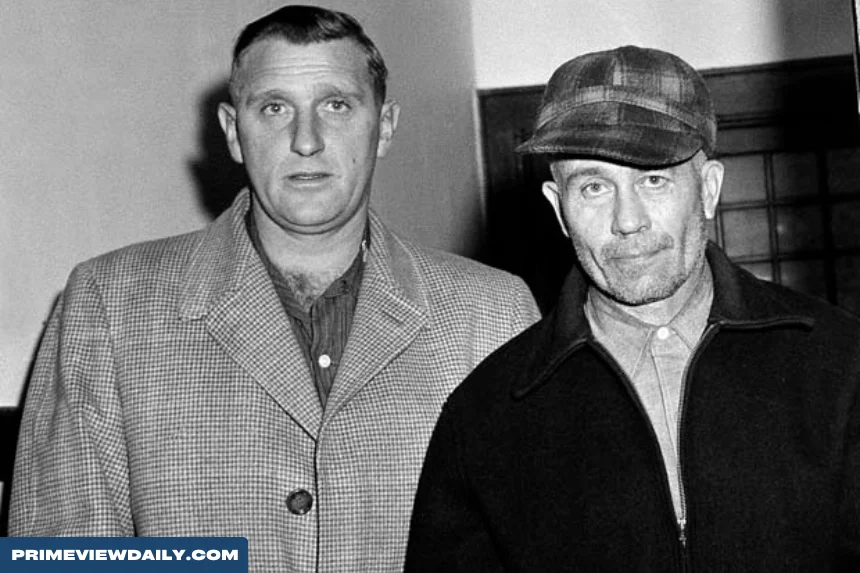
A historical photograph of Gein at the state crime lab documents part of the investigation that followed his arrest.
Writers frequently list Henry as a possible victim, but the legal record does not confirm him as one. Later writers have also linked other disappearances to Ed without sufficient proof.
Therefore, a careful article should not inflate the confirmed count. Ed was unquestionably a murderer and grave robber, but that fact does not make every allegation true.
Evidence Supporting and Challenging the Murder Theory
| Evidence or argument | Why it supports suspicion | Why it does not prove murder |
| Reported head marks | Could suggest a blow | Could also result from a fall, debris, or recovery conditions |
| No autopsy | Important questions remained unanswered | Absence of an autopsy does not itself prove homicide |
| Ed located the body | May suggest prior knowledge | He knew the property and search area |
| Henry criticized Augusta | Provides a possible motive | No documented fatal argument survives |
| Ed’s later murders | Shows he was capable of killing | Later crimes do not prove an earlier allegation |
| Conflicting burn reports | May suggest the official story was incomplete | Secondary reports themselves conflict |
| Official accidental ruling | Weighs against a homicide conclusion | The investigation may have been limited |
| No charge | Shows prosecutors lacked a case | Lack of charge is not absolute proof of innocence |
| No confession | Removes a direct source of guilt | A guilty person could remain silent |
| Passage of time | Makes later certainty difficult | Does not resolve the original facts |
The table shows why the case persists. Almost every suspicious fact has a plausible alternative explanation, while almost every innocent explanation remains imperfectly documented.
Could Henry Gein’s Death Be Solved Today?
A definitive solution is unlikely.
More than eight decades have passed. The original scene no longer exists, Ed and the key witnesses are dead, and no autopsy preserved medical findings for modern review.
Even if officials found a death certificate, coroner note, or newspaper report, those documents might clarify only the official account. They would not necessarily prove who caused the head marks or whether they contributed to death.
Exhumation would also have serious limitations. Soft-tissue evidence of smoke inhalation and bruising would no longer be available, and skeletal remains might not reveal a nonfracturing blow.
A newly discovered confession, photograph, or detailed contemporary witness statement could change the historical discussion. However, no such evidence has entered the public record.
Therefore, the case will probably remain unresolved rather than solved.
The Ed and Henry Gein Timeline
| Year | Event |
| 1901 | Henry George Gein is born |
| 1906 | Edward Theodore Gein is born |
| 1940 | Their father George dies |
| May 16, 1944 | Henry dies during a brush or marsh fire |
| 1945 | Augusta Gein dies |
| 1954 | Mary Hogan disappears and is later connected with Ed |
| November 1957 | Bernice Worden disappears; authorities arrest Ed and search the farm |
| 1957–1958 | Investigators examine his murders, grave robbing, and possible links to other cases |
| 1968 | A judge finds Ed guilty of Worden’s murder but not guilty by reason of insanity |
| 1984 | Ed dies in a Wisconsin mental-health institution |
| 2025 | Netflix releases Monster: The Ed Gein Story and depicts Henry’s death as murder |
| 2026 | Historical reporting continues to describe Ed’s involvement as suspicious but unproven |
The timeline illustrates the main evidentiary problem. Officials accepted the accident explanation 13 years before Ed’s later crimes became known.
Why the Correct Answer Is “Unproven”
The word “unproven” is more accurate than either “yes” or “no.”
A legal conclusion requires evidence linking a person to a crime. In Henry’s case, no charge, confession, autopsy finding, eyewitness, or preserved weapon established that Ed caused the death.
A historical conclusion can be broader than a courtroom verdict. Historians may weigh patterns, motives, witness accounts, and suspicious conduct.
Even under that broader standard, the evidence remains incomplete. No forensic record explains the head marks, burn reports conflict, and the body-location story lacks a complete original account.
Therefore, historians can reasonably suspect Ed without declaring the case solved.
A detailed review of Henry’s suspicious death reaches the same basic problem: the circumstances invite questions, but available evidence never established the truth.
Why Accurate True-Crime Language Matters
True-crime entertainment often turns uncertainty into a clean scene. A character acts, the camera shows the weapon, and viewers receive an answer.
History is frequently less satisfying. Records disappear, witnesses contradict one another, and investigators make decisions that later generations cannot test.
Calling Henry a confirmed murder victim would erase that uncertainty. Meanwhile, saying there is “nothing suspicious” would ignore the legitimate questions created by the injuries, missing autopsy, family tension, and Ed’s later crimes.
Accuracy also respects Henry as a real person. He should not exist only as a step in Ed’s fictional psychological development.
Therefore, responsible phrasing remains simple:
- Henry officially died in an accident.
- Ed’s involvement was never proved.
- Later circumstances made the death suspicious.
- Netflix chose the murder theory for dramatic purposes.
Did Ed Gein Kill His Brother in Real Life? FAQ
1. Did Ed Gein kill his brother in real life?
It has never been proven that Ed Gein killed Henry. Authorities treated Henry’s death as an accident, while later reports about head marks, Ed’s behavior, and family conflict created suspicion.
2. How did Henry Gein officially die?
Officials reported asphyxiation associated with a brush fire as the cause, sometimes phrasing it as asphyxiation leading to heart failure. Authorities classified the death as accidental.
3. When did Henry Gein die?
Henry died on May 16, 1944, near the family farm outside Plainfield, Wisconsin. He was 43 years old.
4. Did Henry Gein have injuries on his head?
Later accounts report bruises or marks on his head. However, no publicly available autopsy established whether those injuries caused his death or resulted from a fall, debris, or another event.
5. Was Henry Gein’s body burned?
Modern reports conflict. Some describe significant burns, while others say his body or clothing had little fire damage. Therefore, secondary accounts cannot establish the extent of burning with certainty.
6. Was an autopsy performed on Henry Gein?
No autopsy is commonly reported. Consequently, later investigators lacked a detailed medical record that might have clarified smoke inhalation and the head injuries.
7. Did Ed Gein confess to killing his brother?
No documented confession exists. Ed admitted other crimes and investigators connected him to two killings, but he never gave a verified public confession to killing Henry.
8. Why did Ed Gein know where Henry’s body was?
Ed reportedly led searchers to the body, which later writers considered suspicious. However, he knew the property and the area where the brothers had worked, so the fact does not prove guilt.
9. What does Monster: The Ed Gein Story show?
The Netflix series shows Ed hitting Henry with a piece of wood and using the brush fire as a cover. That scene dramatizes one theory rather than a proven historical event.
10. How many people did Ed Gein definitely kill?
The strongest confirmed murder record includes Mary Hogan and Bernice Worden. Henry remains a suspected but unproven possible victim.
Conclusion
So, did Ed Gein kill his brother in real life? The surviving evidence does not prove that he did.
Officials treated Henry Gein’s death as an accident caused by asphyxiation during a May 1944 brush fire. However, the reported head marks, absence of an autopsy, Ed’s role in finding the body, family tension, and his later confirmed crimes created a reasonable basis for suspicion.
Nevertheless, suspicion is not proof. Prosecutors never charged Ed, he never confessed, and no forensic finding established a fatal blow.
Netflix resolves the mystery by showing murder. History cannot. The most accurate conclusion is that Ed’s possible involvement remains unresolved and unproven.