


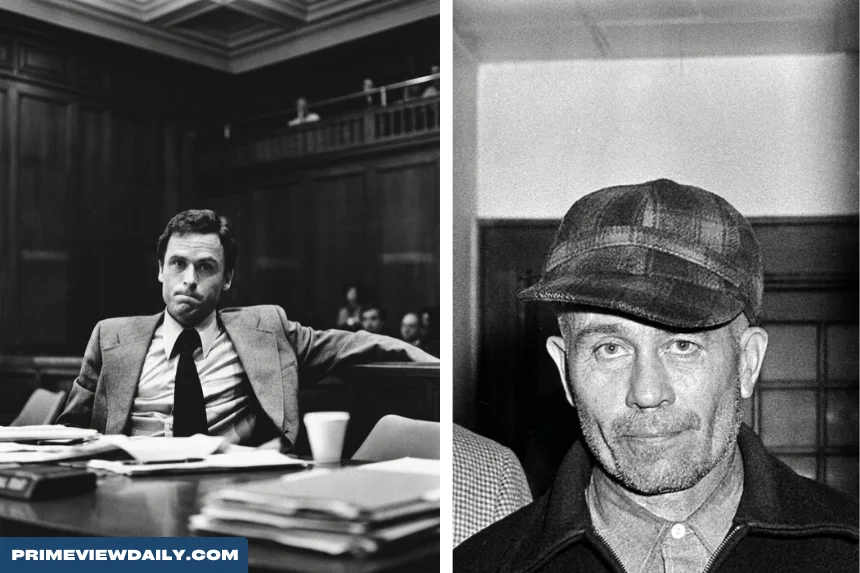
No, Ed Gein did not help catch Ted Bundy. The idea comes from the 2025 Netflix drama Monster: The Ed Gein Story, not from the documented Bundy investigation. Police first arrested Bundy in Utah in 1975, and a Pensacola officer made his final arrest during a traffic stop on February 15, 1978.
However, one detail needs careful wording. Former FBI profiler John Douglas later said he briefly met Gein during the 1970s. That encounter was unrelated to Bundy, and Douglas described it as unproductive. Therefore, the historically accurate conclusion is not that no FBI figure ever saw Gein. It is that Gein supplied no known clue that identified, located, arrested, or convicted Bundy.
The Netflix finale builds its fictional connection from real ingredients: genuine profilers, a real FBI unit, Gein’s institutional confinement, Bundy’s nationwide manhunt, and the government’s practice of interviewing convicted offenders. Nevertheless, it combines those ingredients into an event that did not happen.
This article contains spoilers for episode 8, “The Godfather.”
Did Ed Gein Help Catch Ted Bundy? Quick Answer
| Question | Verified answer |
|---|---|
| Did Ed Gein help catch Ted Bundy? | No |
| Where did the claim come from? | Netflix’s Monster: The Ed Gein Story |
| Which episode shows it? | Episode 8, “The Godfather” |
| Did Gein give the FBI a useful Bundy tip? | No reliable evidence supports that claim |
| Did John Douglas ever meet Gein? | Douglas said he briefly met him, but the encounter was unrelated to Bundy and produced little useful information |
| When was Bundy first arrested? | August 1975 in Utah |
| When was Bundy finally captured? | February 15, 1978, in Pensacola, Florida |
| What led to the final arrest? | A police officer stopped a stolen orange Volkswagen |
| Did a Richard Speck letter reveal Bundy? | No; the letter is a fictional plot device |
| Did Gein identify Bundy’s car? | No; investigators had connected Bundy with a Volkswagen years earlier |
| What did the FBI really do? | Supported the fugitive manhunt, distributed identification material, processed evidence, and prepared behavioral information |
Did Ed Gein Help Catch Ted Bundy in Real Life?
No historical record shows that Ed Gein helped investigators catch Ted Bundy. Official FBI histories of the Bundy manhunt describe police stops, court proceedings, escapes, fugitive warrants, wanted posters, fingerprint work, and a final traffic stop. They do not mention a tip from Gein.
Likewise, reliable accounts do not support the specific clues shown in the Netflix series. Gein did not reveal Bundy’s first name, identify a useful saw, supply the decisive car clue, or pass along a letter that led investigators to the fugitive.
The distinction between “influence” and “assistance” also matters. Gein’s crimes influenced horror fiction and later popular culture. FBI personnel studied offenders to improve behavioral analysis. However, cultural influence and offender research do not establish that Gein worked on the Bundy case.
The available evidence therefore supports a clear answer: Gein did not help police find Bundy.

What Does Monster: The Ed Gein Story Show?
Episode 8 places an older, institutionalized Gein inside a storyline that resembles Netflix’s Mindhunter. Agents based on John Douglas and Robert Ressler visit him while searching for an unidentified murderer who is clearly Ted Bundy.
The fictional investigation develops in stages. First, the agents show Gein case material and ask him to think like the unknown offender. He discusses the type of tool that a killer might use when removing a victim’s head. The series presents his answer as unexpectedly useful.
Later, the plot introduces a letter associated with Richard Speck. The letter supposedly contains details that narrow the search, including the name “Ted” and a Volkswagen connection. Gein then relays the information to investigators.
Finally, the series shows Gein watching coverage of Bundy’s capture. A report credits an anonymous tip, allowing Gein to believe that he has helped society.
This sequence gives the character a form of imagined redemption. Instead of ending only as a man confined for his crimes, the fictional Gein believes that his unusual knowledge has prevented further violence.
However, none of those investigative steps appears in the documented Bundy case.
Was the Ted Bundy Storyline a Delusion?
Netflix’s own account treats the Bundy-help sequence as part of Gein’s fantasy life. In Netflix’s official ending explanation, the platform describes the finale as showing Ed’s fantasies shifting toward a vision in which he helps FBI agents catch Bundy.
That framing explains why the episode can appear realistic at first. It uses real names, period settings, government offices, and familiar Mindhunter-style imagery. Meanwhile, the story repeatedly blurs memory, fantasy, media, and history.
The nurses’ reactions also support a delusional interpretation. They do not treat Gein as a formally recognized investigative consultant. Instead, the scenes fit the show’s broader portrayal of an institutionalized man constructing meaning inside his own reality.
Nevertheless, the historical verdict remains the same under either interpretation. Whether viewers read the sequence as a literal event within the drama or as Gein’s fantasy, it did not happen in the actual Bundy investigation.
Did the FBI Ever Interview Ed Gein?
A former FBI profiler said he briefly met Ed Gein, but the encounter did not concern Ted Bundy.
John Douglas later explained in a direct interview about meeting Gein that he became interested in the case while assigned to Milwaukee and attending graduate school. Because his FBI position gave him access to institutions and records, he arranged to see Gein.
Douglas did not describe a productive profiling session. Instead, he said Gein’s psychotic condition made meaningful interviewing difficult. The meeting was brief and did not resemble the more systematic offender interviews Douglas later conducted.
This nuance corrects two inaccurate extremes:
- It is wrong to say Gein helped Douglas or the FBI catch Bundy.
- It is also too broad to say no FBI agent ever met Gein.
The most accurate sentence is simple: Douglas reportedly met Gein briefly, but the meeting was unrelated to Bundy and produced no useful Bundy intelligence.
How Was Ted Bundy Actually Caught?
The phrase “caught Ted Bundy” can refer to several different events because authorities arrested, recaptured, and finally arrested him at different points.
The real story began years before the Netflix finale’s imagined consultation.
Bundy’s first arrest in Utah
Police arrested Bundy in August 1975 after stopping his Volkswagen in Utah. The car contained suspicious items, including handcuffs, rope, and a ski mask. Investigators later connected him to the attempted kidnapping of a teenager who had escaped.
A court convicted Bundy in 1976 of kidnapping and assault. Therefore, Bundy was already publicly identified, prosecuted, and imprisoned before his final 1978 flight.
This timing alone weakens the Netflix clue sequence. By 1978, investigators did not need Gein to reveal that the suspect’s name was Ted.
The first Colorado escape
Bundy faced a separate murder case in Colorado. During a June 1977 courthouse appearance in Aspen, officials left him alone in a law library, and he escaped through a window.
Authorities searched the surrounding area and recaptured him several days later. This event turned him into a fugitive, but it did not end the case.
The second escape
Near the end of December 1977, Bundy escaped again. He passed through an opening above his jail cell and left the building while staff coverage was limited.
This second escape triggered a much wider manhunt. Bundy traveled to Florida, where he committed additional crimes while using false identities and stolen property.
The FBI manhunt
The FBI entered the fugitive search because Bundy had crossed state lines and faced a federal unlawful-flight warrant. The Bureau created and distributed identification material, processed fingerprints, supported communication among jurisdictions, and shared behavioral information.
On February 10, 1978, the FBI placed Bundy on its Ten Most Wanted Fugitives list. The official Ted Bundy wanted poster remains a clear dated record of that stage of the search.
The final Pensacola arrest
At about 1:30 a.m. on February 15, 1978, a Pensacola police officer noticed a stolen orange Volkswagen and ordered the driver to stop. Bundy resisted, but the officer took him into custody.
The officer did not begin the stop knowing that the driver was Ted Bundy. The stolen car and the circumstances of the encounter prompted the police action.
Authorities then identified the arrested man with help from the information circulating during the fugitive search. The FBI’s account of Ted Bundy’s documented manhunt credits the traffic stop and subsequent identification—not an anonymous Gein tip.
Who Caught Ted Bundy in Florida?
A Pensacola police officer made the final physical arrest after stopping the stolen Volkswagen. However, the wider result came from combined local, state, and federal work.
The officer deserves credit for noticing the vehicle, initiating the stop, and overcoming Bundy’s resistance. Meanwhile, the FBI and other agencies had distributed the material that helped authorities identify the fugitive after the arrest.
Therefore, saying “a traffic stop caught Bundy” is accurate but incomplete. The stop produced the arrest, while the national manhunt, fingerprint systems, wanted information, and multiagency communication helped connect the arrested driver to Bundy’s identity and cases.
Still, Gein had no documented role in any part of that chain.
What Role Did the FBI Play in the Bundy Manhunt?
The FBI did not make the initial 1975 Utah arrest or the final Pensacola traffic stop. Nevertheless, the Bureau played an important role after Bundy’s escapes created a federal fugitive case.
Its work included:
- Gathering and distributing Bundy’s criminal history and identifying information.
- Obtaining or supporting a federal warrant for unlawful flight.
- Producing wanted posters and fugitive notices.
- Adding Bundy to the Ten Most Wanted list.
- Processing and comparing fingerprints.
- Coordinating information across jurisdictions.
- Sharing a behavioral description of Bundy’s victim selection and methods.
- Helping authorities identify him after the final stop.
The Bureau’s history of the FBI’s Behavioral Science Unit identifies Howard Teten and Robert Ressler as the agents who prepared a psychological assessment used during the manhunt.
That detail differs from the Netflix casting choice. The show uses characters based on John Douglas and Robert Ressler as the pair visiting Gein. In the historical Bundy manhunt, the FBI credits Teten and Ressler with the assessment.
Therefore, the finale blends real agents and real practices while rearranging their roles.
Did Ed Gein Identify Ted Bundy’s Volkswagen?
No. Investigators already associated Bundy with a Volkswagen well before the 1978 manhunt.
Witnesses in Washington described a Volkswagen in connection with disappearances during 1974. Police then stopped Bundy in his own Volkswagen in Utah in August 1975. The vehicle became part of the evidence surrounding his arrest and investigation.
By February 1978, Bundy’s identity and history were already known to authorities. Moreover, the car involved in his final arrest was a stolen orange Volkswagen, not a hidden personal vehicle discovered through a secret clue.
The Netflix plot gains drama by presenting the car make as a breakthrough. Historically, however, the Volkswagen connection was old information.
Did Richard Speck Send Gein a Ted Bundy Letter?
No reliable evidence supports the letter shown in the series.
Richard Speck was a real convicted murderer, and the FBI’s offender-interview era involved studying multiple violent criminals. However, those broad facts do not prove that Speck corresponded with Gein or passed him a Bundy letter.
The series uses the letter to move the fictional investigation forward. It gives Gein a specific item he can send to law enforcement, while also linking several notorious offenders inside one narrative.
No documented record confirms that:
- Speck sent Gein a Bundy-related letter.
- Bundy wrote the supposed letter.
- The letter revealed the name “Ted.”
- Gein passed it to investigators.
- Investigators used it to locate Bundy.
Therefore, the letter belongs to the drama rather than the historical file.
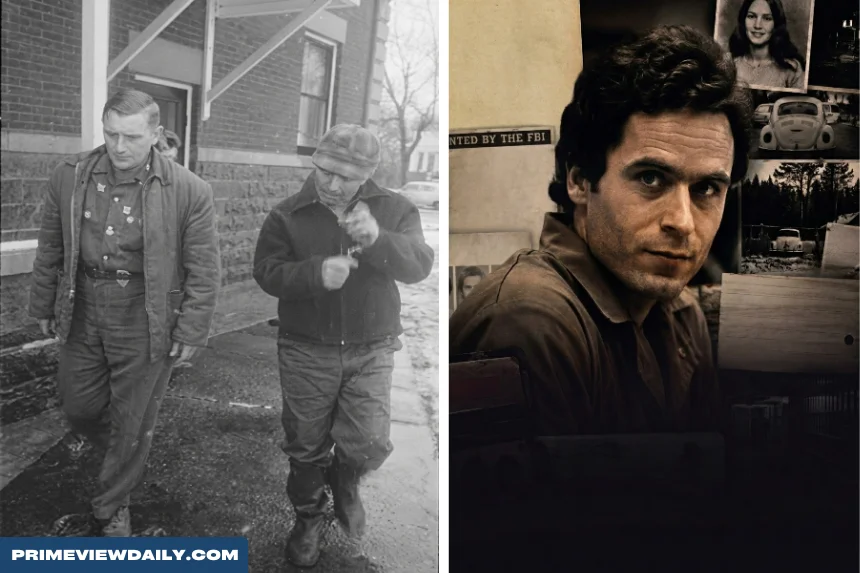
Why Did Netflix Connect Ed Gein and Ted Bundy?
The connection supports the finale’s larger theme: Gein’s influence on the culture that came after him.
Gein did not create Bundy’s crimes, and the two men had no documented investigative relationship. However, Gein became a major reference point in horror films, crime writing, and public ideas about the “serial killer.”
The episode also pays visual and narrative tribute to Mindhunter. That series dramatized the early FBI practice of interviewing convicted offenders to understand criminal behavior. By placing Gein opposite Douglas- and Ressler-like agents, Monster creates a crossover that viewers can recognize instantly.
Moreover, the invented consultation gives Gein a final fantasy of usefulness. He imagines converting the knowledge associated with his crimes into something that saves lives.
This explanation is partly interpretive. Nevertheless, the creators’ comments about Gein’s fantasies, cultural legacy, and the Mindhunter homage support it.
The Real History Behind the Mindhunter-Style Scenes
The finale works because much of its background is real.
The FBI created the Behavioral Science Unit in 1972. Agents and researchers developed methods for studying crime scenes, victim selection, offender behavior, and interview strategy.
They also conducted interviews with convicted offenders. These interviews aimed to improve research and training, although investigators understood that offenders could lie, manipulate, forget, or misunderstand their own behavior.
The current FBI describes the work of its behavioral teams as a combination of research, operational experience, criminal investigative analysis, and interview strategy. The unit does not operate like a fictional mind-reading service.
Several names in the episode come from that history:
- John Douglas became one of the best-known profilers and authors connected with offender interviews.
- Robert Ressler joined the unit in the 1970s and contributed to behavioral research and the Bundy assessment.
- Howard Teten helped establish early profiling instruction and worked on the real Bundy assessment.
- Ann Burgess contributed research expertise to the development of behavioral study.
Thus, the institutional frame is historically recognizable. The Gein-to-Bundy clue chain is not.
Did Criminal Profiling Catch Ted Bundy?
Criminal profiling supported the manhunt, but it did not directly produce the final stop.
Teten and Ressler prepared information about Bundy’s likely habits, victim selection, and behavior. The FBI distributed that information to law-enforcement agencies during the fugitive search.
However, a Pensacola officer stopped Bundy because he was driving a stolen car. The officer did not identify him through a psychological profile before initiating the stop.
Afterward, fingerprints, wanted information, and interagency records helped confirm who police had arrested.
Therefore, the fairest conclusion is balanced:
- Behavioral analysis contributed to the broader investigative effort.
- It did not replace ordinary police observation, evidence, warrants, records, and identification.
- It did not depend on Ed Gein.
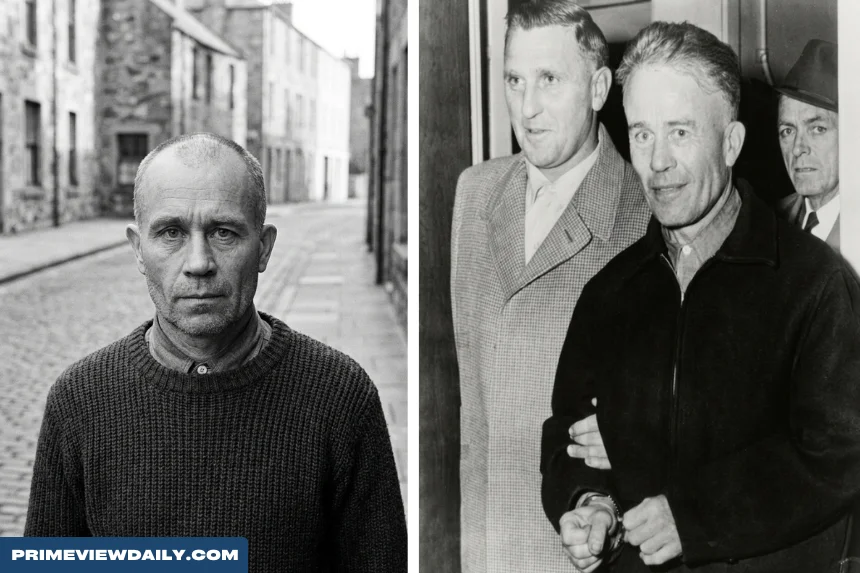
Why the Anonymous-Tip Claim Is False
The Netflix sequence shows Gein hearing that an anonymous tip helped catch Bundy. The moment allows him to imagine that officials have protected his identity while recognizing his contribution.
Official accounts do not support that explanation. The FBI describes a stolen-vehicle traffic stop followed by resistance, custody, and identification.
A wanted poster is not an anonymous tip. A behavioral summary is not an anonymous tip. Likewise, information shared among law-enforcement agencies is not evidence of a hidden Gein source.
Researchers can review the FBI Vault records on Ted Bundy for federal files connected with the fugitive investigation. The public record does not establish the fictional tip.
Monster Fact vs. Fiction
| Netflix element | Historical status | What the evidence supports |
| John Douglas briefly meets Ed Gein | Partly true in broad outline | Douglas said he briefly met Gein, but the meeting was unrelated to Bundy |
| Douglas and Ressler ask Gein to profile Bundy | Fictional | No evidence supports a Bundy consultation |
| Gein identifies the useful cutting tool | Fictional | No documented clue from Gein advanced the case |
| Richard Speck sends Gein a Bundy letter | Fictional | No reliable record confirms the letter |
| Gein reveals the first name “Ted” | Fictional and chronologically unnecessary | Authorities had identified and convicted Bundy before 1978 |
| Gein identifies a Volkswagen | Fictional as a breakthrough | The Volkswagen link was known years earlier |
| An anonymous Gein tip causes the arrest | Fictional | The final arrest followed a stolen-car traffic stop |
| The FBI has a Behavioral Science Unit | True | The Bureau created it in 1972 |
| FBI personnel interview violent offenders | True | Interviews supported research, training, and some case consultation |
| Robert Ressler contributes to the real Bundy manhunt | True | The FBI credits Ressler and Howard Teten with a behavioral assessment |
| Bundy is caught in Florida | True | Pensacola police arrested him on February 15, 1978 |
The Complete Ed Gein and Ted Bundy Timeline
The chronology makes the fictional connection easier to evaluate. Ed Gein entered psychiatric custody years before Bundy’s known crimes began, while Bundy’s identification and arrests developed through separate investigations.
| Year or date | Ed Gein | Ted Bundy and the investigation |
| 1957 | Wisconsin authorities arrest Gein after searching his property | Bundy is a child |
| Late 1950s–1960s | Gein remains in psychiatric custody after courts find him mentally ill | Bundy reaches adulthood |
| 1968 | A court finds Gein competent for trial; a judge later finds him not guilty by reason of insanity | No connection to Gein is documented |
| 1972 | Gein remains institutionalized | FBI creates the Behavioral Science Unit |
| 1974 | Gein remains in Wisconsin psychiatric custody | Women disappear in the Pacific Northwest; witnesses describe a man and a Volkswagen |
| August 1975 | No role in the Bundy case | Utah police arrest Bundy after stopping his Volkswagen |
| 1976 | No role in the Bundy case | A Utah court convicts Bundy of kidnapping and assault |
| June 1977 | No role in the Bundy case | Bundy escapes in Aspen and authorities recapture him days later |
| December 1977 | No role in the Bundy case | Bundy escapes from a Colorado jail |
| February 10, 1978 | No documented consultation | FBI adds Bundy to the Ten Most Wanted list |
| February 15, 1978 | No role in the arrest | Pensacola police stop a stolen Volkswagen and arrest Bundy |
| 1979 | Gein remains institutionalized | Florida court convicts Bundy in the Chi Omega case |
| 1984 | Gein dies | Bundy remains on death row and speaks with investigators about the Green River case |
| 1989 | — | Florida executes Bundy |
| 2025 | — | Netflix releases the fictional Gein-Bundy sequence |
The men were alive during the same period, and Douglas reportedly saw Gein during the 1970s. However, chronological overlap does not establish case assistance.
Did Ted Bundy Help Investigators Catch Another Killer?
Bundy later spoke with investigators working on the Green River murders in Washington State. He offered theories about the unidentified offender’s behavior, including the possibility that the killer returned to body-disposal locations.
That real consultation occurred while Bundy was on death row and years after police had captured him. It involved the investigation later connected to Gary Ridgway, not Bundy’s own manhunt.
Moreover, Ridgway was not arrested until 2001. Therefore, people should avoid turning Bundy’s comments into a simple claim that he directly “caught” the Green River Killer.
Still, this separate history may help explain why the Netflix plot feels possible. Investigators have sometimes asked convicted offenders for behavioral observations. The series reverses that pattern by imagining Gein helping to catch Bundy.
Why Accurate True-Crime Storytelling Matters
The question may appear to concern only one television scene. However, the answer affects how audiences understand criminal investigations, mental illness, and the people harmed by violent crime.
Fiction can redirect credit
The Netflix plot gives Gein symbolic credit for Bundy’s capture. Historically, local officers, investigators, surviving witnesses, courts, record systems, and federal fugitive teams created the chain that led to his arrests.
A fictional anonymous tip can obscure that work. Therefore, fact-checking restores credit to the people who actually observed, reported, investigated, identified, and arrested Bundy.
A compelling scene can become a false memory
Viewers often remember the emotional logic of a drama more clearly than a later disclaimer. When a series uses real names, dates, uniforms, institutions, and documentary-style images, an invented scene can feel archival.
Consequently, an entertainment page may repeat the claim, another site may paraphrase it, and the fiction can begin to look like a sourced fact.
Mental illness should not serve as a universal crime explanation
The finale connects fantasy, institutionalization, and Gein’s psychiatric condition. However, most people with mental illness do not commit violence.
A careful discussion should not imply that schizophrenia automatically creates violent behavior, secret criminal insight, or a special ability to understand murderers. Gein’s history requires case-specific evidence rather than a stereotype.
True crime concerns real victims
Stories about Gein and Bundy often focus on the offenders’ personalities. Nevertheless, their crimes affected victims, families, communities, witnesses, police officers, and survivors.
Accuracy helps prevent the offenders from becoming fictional antiheroes. It also limits a narrative in which one violent offender receives a heroic final purpose through another offender’s capture.
How to Check Whether a True-Crime Scene Really Happened
A simple verification process can separate historical evidence from screenwriting.
1. Check the official episode description
A description can reveal whether the creators signal fantasy, blurred time, or psychological storytelling. In this case, episode 8 explicitly refers to the past and present blurring.
2. Read the platform’s behind-the-scenes explanation
Netflix later described the Bundy-help sequence as part of Ed’s fantasies. That statement does not replace independent history, but it clarifies the production’s intended frame.
3. Build a dated timeline
Dates expose contradictions quickly. Bundy had already been arrested, named, and convicted before the imagined Gein clue sequence.
4. Check official case histories
The FBI’s Bundy history identifies the traffic stop, fugitive materials, and federal assistance. It does not identify Gein as an informant.
5. Separate real people from real events
Douglas and Ressler were real. The Behavioral Science Unit was real. Offender interviews were real. However, a scene containing real people can still depict an invented meeting.
6. Look for a primary or direct account
Douglas’s own interview supports a brief meeting with Gein. It also undermines the idea that the meeting produced valuable Bundy insights.
7. Watch for vague phrasing
Terms such as “inspired by,” “based on,” and “drawn from” do not guarantee that each event occurred. They often allow writers to combine people, compress years, and invent dialogue.
Did Ed Gein Help Catch Ted Bundy? FAQ
1. Did Ed Gein help catch Ted Bundy?
No. No reliable evidence shows that Gein supplied a clue, tip, letter, behavioral assessment, or vehicle information that led to Bundy’s arrest. The connection comes from Netflix’s fictionalized finale.
2. Did the FBI ever interview Ed Gein?
John Douglas said he briefly met Gein during the 1970s. However, Douglas described the encounter as unproductive, and no evidence connects it to the Bundy investigation.
3. What does Netflix show Ed Gein doing for the FBI?
The series shows Gein discussing the unknown killer’s methods and later passing along information involving the name “Ted” and a Volkswagen. Consequently, the fictional investigators appear to benefit from his insights.
4. Was the Ted Bundy storyline in Ed Gein’s imagination?
Netflix’s official ending article describes the sequence as part of Ed’s fantasies. Moreover, the episode repeatedly blurs reality and delusion, so the show does not present the sequence as reliable documentary history.
5. How was Ted Bundy actually caught?
Police first arrested Bundy in Utah in August 1975. After two Colorado escapes, a Pensacola police officer stopped him in a stolen orange Volkswagen on February 15, 1978, and authorities then confirmed his identity.
6. Who arrested Ted Bundy in Pensacola?
A local Pensacola police officer made the final traffic stop and physical arrest. Meanwhile, FBI wanted materials, fingerprints, and multiagency records helped authorities identify the escaped fugitive.
7. Did Ed Gein identify Ted Bundy’s Volkswagen?
No. Witnesses and investigators had associated Bundy with a Volkswagen by 1974, and police arrested him in his own Volkswagen in 1975. The car in the 1978 final arrest was a stolen orange Volkswagen.
8. Did Richard Speck really send Gein a Ted Bundy letter?
No reliable record confirms such a letter or a Speck-Gein correspondence that aided the case. The series uses the letter as a fictional device to connect several notorious offenders.
9. Were John Douglas and Robert Ressler real FBI profilers?
Yes. Both men contributed to the development of FBI behavioral work. However, the FBI credits Howard Teten and Ressler with the behavioral assessment used during the Bundy manhunt, not a Gein consultation.
10. Why did Monster invent the Ed Gein and Ted Bundy connection?
The sequence links Gein’s cultural legacy to later true-crime stories, pays homage to Mindhunter, and gives the character an imagined sense of usefulness. Nevertheless, narrative meaning does not make the event historically true.
Conclusion
So, did Ed Gein help catch Ted Bundy? No. The documented case contains no Gein tip, Speck letter, saw clue, secret Volkswagen discovery, or anonymous contribution to Bundy’s arrest.
John Douglas reportedly met Gein briefly, which gives the Netflix finale a small piece of real background. However, that meeting was unrelated to Bundy and produced little useful information.
Bundy’s actual capture followed a much less cinematic path. Police arrested him in Utah in 1975, recaptured him after one escape, pursued him after a second escape, and finally stopped him in a stolen car in Pensacola on February 15, 1978. The FBI supported that manhunt through warrants, wanted materials, behavioral information, fingerprints, and national coordination.
Ultimately, Monster: The Ed Gein Story uses true institutional history to create a fictional connection. It works as a fantasy within the drama, but it should not be repeated as a fact about either case.