


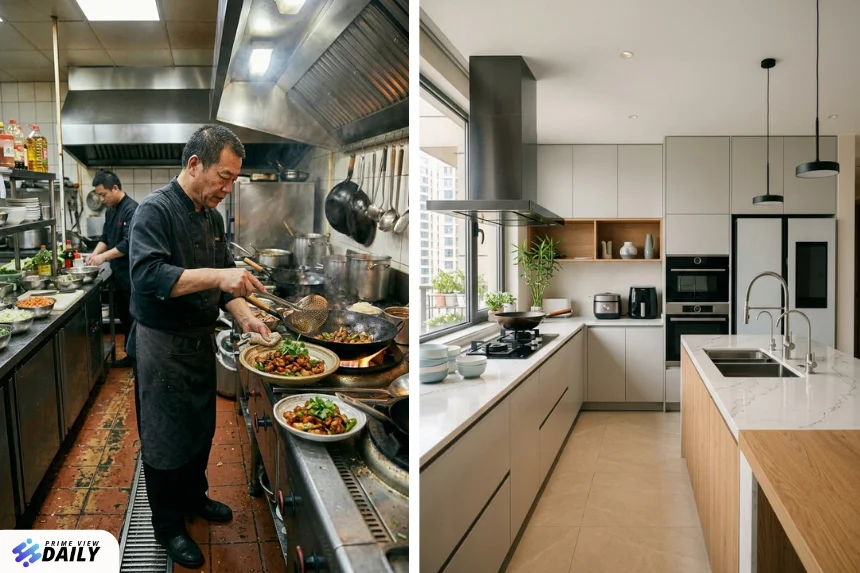
A china kitchen can mean different things depending on the searcher. Some people use the phrase to find a local Chinese restaurant, while others mean Chinese kitchen design, China-made cabinets, or a modern kitchen built around Chinese cooking habits. This guide focuses on the design meaning: how Chinese kitchens work, why they differ from many Western kitchens, and how to plan one that handles real cooking rather than just looking good in photos.
Chinese kitchen design is shaped by high-heat wok cooking, steaming, boiling, oil, fragrance, storage, and frequent daily meal preparation. Modern China kitchen design adds cleaner cabinetry, modular storage, smart appliances, and durable materials, but the core question stays practical: can the kitchen handle the way people actually cook?
What Does “China Kitchen” Mean?
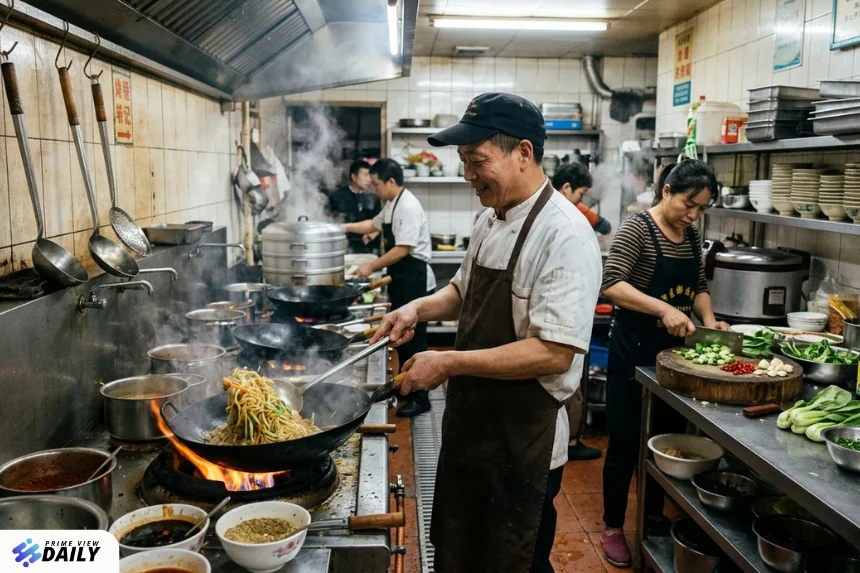
A “China kitchen” usually refers to either a Chinese-style kitchen, a kitchen designed around Chinese cooking habits, or kitchen products made in China. In design content, the phrase is best understood as a kitchen layout that supports wok cooking, steaming, storage, strong ventilation, and efficient daily meal preparation.
The phrase is not perfectly precise. Search results for “China Kitchen” often return restaurant pages, while design-focused results use phrases such as China kitchen design, Chinese kitchen design, modern Chinese kitchen, or China kitchen cabinets. That difference matters because a restaurant result and a residential design guide serve completely different search intent. Current search results include restaurant pages using the exact “China Kitchen” name, while design pages use the phrase for cabinetry, layouts, and modern kitchen systems.
A Chinese kitchen design is a home-kitchen approach built around Chinese cooking methods. A China-made kitchen usually refers to cabinets, surfaces, or modular kitchen systems manufactured in China. A ghost kitchen is different again: it is a commercial food-preparation operation used for delivery, not a residential kitchen design concept.
China has recently tightened rules around food-delivery “ghost kitchens,” requiring platforms and merchants to verify business locations, facilities, and operating conditions. That regulatory meaning is useful to clarify, but it should not be confused with residential China kitchen design.
Plain-language takeaway: Use “China kitchen design” when the page is about layouts, cabinets, and cooking spaces. Use “China Kitchen” alone only if you are targeting a restaurant brand or navigational search.
What Makes a Chinese Kitchen Different from a Western Kitchen?
Chinese kitchen design differs from many Western kitchens because it must handle high-heat cooking, steam, oil, strong aromas, and frequent meal preparation. A good Chinese kitchen prioritizes ventilation, durable surfaces, easy cleaning, deep storage, and a layout that separates messy cooking from dining or social areas when needed.
The biggest difference is cooking intensity. Stir-frying in a wok creates heat, airborne oil, smoke, and fragrance quickly. Steaming and boiling add moisture. Prep work often involves washing vegetables, chopping ingredients, marinating proteins, managing sauces, and moving food rapidly from prep area to hob. A layout that works for light breakfasts and occasional oven meals may feel underpowered for daily Chinese cooking.
Storage also matters more than many showrooms suggest. A practical Chinese kitchen often needs space for a rice cooker, wok, cleaver, chopping boards, steamer baskets, soup pots, dried foods, oils, sauces, spices, noodles, rice, and small appliances. The best storage is not just “more cabinets”; it is storage arranged around how the cook moves.
A Western-style open-plan kitchen can still work, but it needs stronger extraction, easy-clean finishes, and a plan for oil and smell control. Without those details, the kitchen may photograph well and perform poorly.
Plain-language takeaway: Chinese kitchen design starts with cooking behavior, not decoration. The space must control smoke, oil, steam, heat, storage, and cleaning before style decisions matter.
A Short History of Chinese Kitchen Design
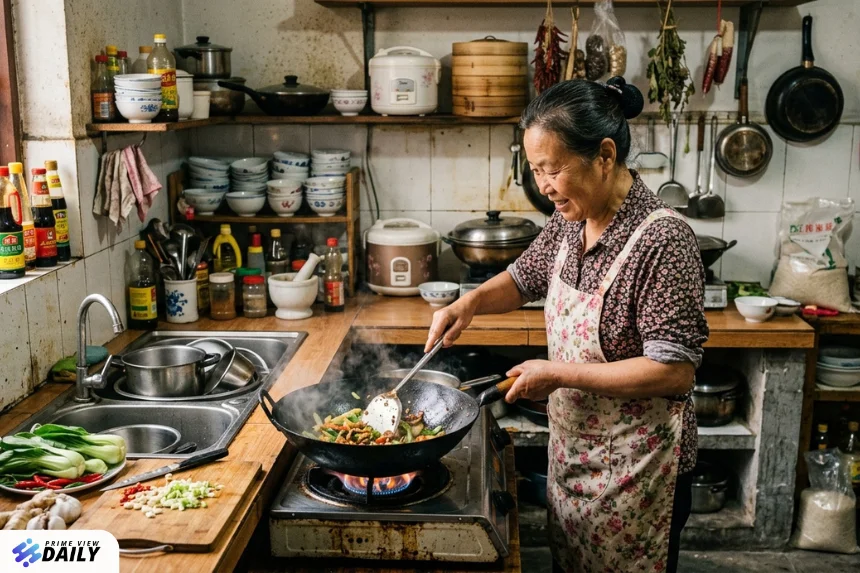
Chinese kitchens evolved from indoor fire-centered spaces into separate cooking rooms and, later, modern cabinet-based kitchens. This history matters because many current design challenges—smoke, storage, heat, and cultural cooking habits—come from long-standing patterns rather than temporary style trends.
A 2024 paper in Environment-Behaviour Proceedings Journal explains that Chinese kitchen evolution can be divided into five stages: birth, development, maturity, decline, and transformation. The same research identifies Huo Tang, a form of Chinese fireplace, as an early marker of the Chinese kitchen, followed by Zao, a stove or oven form, and then the development of the separate kitchen.
The separate kitchen became important because cooking fire, smoke, water storage, cookware, and household organization all needed dedicated space. The research notes that modern “new-style” kitchens do not always meet Chinese users’ needs when traditional cooking behaviors are ignored.
Modern kitchen systems, including integrated cabinets and factory-made modules, have improved storage, hygiene, and consistency. The risk is that some modern designs copy Western cabinet systems without adapting them to Chinese cooking. A beautiful open kitchen with weak ventilation and delicate surfaces is not a functional Chinese kitchen.
Plain-language takeaway: Chinese kitchen history explains why separate cooking space, strong ventilation, and practical storage remain important today. The best modern designs update those needs rather than erase them.
The Best Layouts for a Modern China Kitchen
Best China kitchen layout depends on cooking intensity. Heavy wok cooking usually suits a closed or semi-open kitchen. Light cooking can work in an open-plan layout if ventilation, surface durability, and cleaning access are designed properly from the start.
| Layout | Best for | Strengths | Watch-outs |
|---|---|---|---|
| Closed kitchen | Heavy wok cooking, frying, steaming, daily family meals | Contains smoke, oil, smell, and noise | Can feel isolated or cramped if small |
| Semi-open kitchen | Families wanting both performance and connection | Sliding doors or glass partitions offer flexibility | Requires careful door tracks, extraction, and cleaning |
| Open-plan kitchen | Light cooking, entertaining, compact apartments | Makes the home feel larger and more social | Needs excellent extraction and disciplined storage |
| Galley layout | Small apartments and narrow rooms | Efficient workflow with two counter runs | Can bottleneck if two people cook together |
| L-shaped layout | Small to medium homes | Good corner efficiency and open movement | Corner cabinets need smart storage |
| U-shaped layout | Family homes and serious cooking | More counter space and storage | Needs enough width to avoid feeling tight |
A closed kitchen is often the safest choice for frequent stir-frying because it gives smoke and oil a physical boundary. A semi-open kitchen is the most flexible modern option: glass sliding doors, interior windows, or a pass-through counter can connect the kitchen visually while still containing cooking byproducts.
An open-plan Chinese kitchen is not wrong, but it should be chosen honestly. If you stir-fry most evenings, a weak ductless hood and porous surfaces will not compensate for an open layout. If you cook lightly, reheat meals, or use induction with lower smoke production, open-plan design becomes more realistic.
Plain-language takeaway: Choose the layout based on how often and how intensely the household cooks. A semi-open kitchen is usually the best compromise for modern Chinese cooking.
Essential Features Every Chinese Kitchen Needs
The most important features in a Chinese kitchen are strong ventilation, heat-resistant surfaces, moisture-resistant cabinets, organized storage, and clear prep zones. These features matter more than decorative style because they determine how well the kitchen performs during daily stir-frying, steaming, washing, and family meal preparation.
Powerful ventilation
A range hood captures and vents heat, odors, gases, grease, steam, and smoke from the cooking area. The Home Ventilating Institute says range hood performance should be compatible with the cooking range and cooking frequency, and that high-setting cooking needs a hood powerful enough to extract contaminants.
For Chinese cooking, the hood should be close enough and wide enough to capture the plume rising from the wok or hob. Ducted extraction is usually preferable to recirculation for heavy cooking because it moves contaminated air outside rather than filtering and returning it indoors. ASHRAE notes that capture efficiency measures the percentage of cooking contaminants captured and exhausted, and that high airflow alone does not always mean higher capture efficiency.
Heat-resistant and easy-clean surfaces
Chinese cooking rewards surfaces that tolerate heat, oil, water, and repeated wiping. Quartz, porcelain/sintered stone, stainless steel zones, ceramic tile, and compact laminate can work depending on budget and installation quality. Natural marble can look beautiful, but it is more vulnerable to staining and etching than many engineered surfaces, especially around oil, sauces, and acidic ingredients.
Smart storage zones
Storage should follow the cooking process: wash, chop, season, cook, plate, clean. Keep oils, sauces, ladles, and wok tools near the hob. Keep rice, dry goods, and small appliances near prep areas. Use deep drawers for pots and steamers. Use pull-outs for narrow spice and sauce storage.
Wet and dry prep areas
A wet zone near the sink handles washing vegetables, draining food, and cleaning utensils. A dry zone handles chopping, seasoning, mixing, and plating. Separating the two reduces mess and keeps prep efficient during fast cooking.
Lighting that supports safety
Under-cabinet lighting over prep surfaces is more useful than decorative ceiling lighting alone. The hob, sink, and main chopping zone should be lit clearly enough to see knife work, oil level, steam, and food color.
Plain-language takeaway: Ventilation, surfaces, storage, prep zoning, and lighting do the hard work. Style should enhance those choices, not replace them.
Modern China Kitchen Design Trends
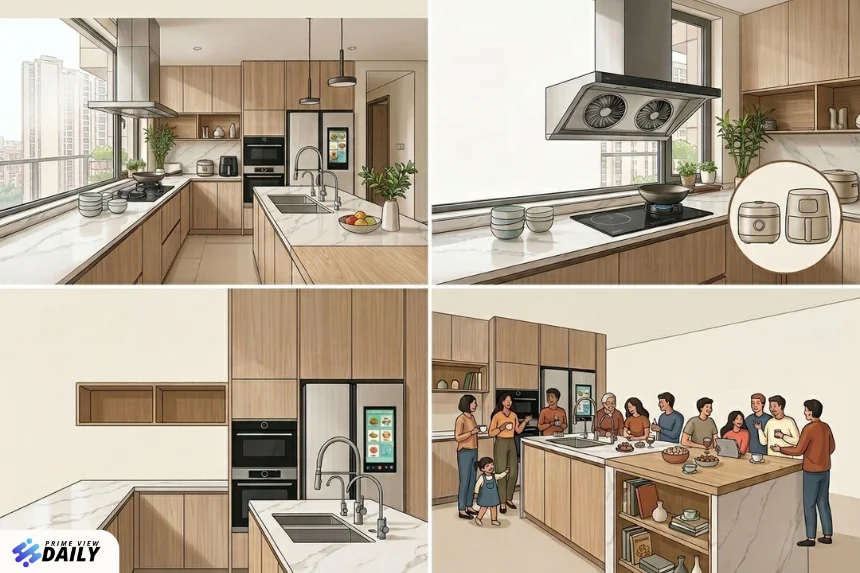
Modern China kitchen design is moving toward cleaner cabinetry, smarter storage, better ventilation, durable worktops, and subtle cultural details. The strongest designs do not copy traditional decoration literally; they combine Chinese cooking needs with contemporary materials, ergonomic layouts, and easy maintenance.
Current China kitchen design content commonly highlights open-concept layouts, minimalist cabinets, integrated technology, custom storage, quartz, stainless steel, and sustainable materials. GoldenHome’s trend page, for example, identifies open-plan layouts, minimalist lines, smart appliances, custom cabinetry, quartz, eco-friendly materials, and stainless-steel/high-gloss finishes as major themes.
Trade-show activity also suggests a large, active kitchen-and-bath sector in China. Kitchen & Bath China 2025 describes itself as Asia’s leading kitchen and bath trade fair; its official site lists built-in kitchens and kitchen furniture among the main product groups and reports 5,662 exhibitors and 117,236 professional visitors.
The best trend to borrow is not one color, finish, or cabinet door. The best trend is performance-led minimalism: clean lines outside, organized storage inside, and strong cooking infrastructure behind the scenes. Warm wood tones, soft neutrals, slim handles, integrated appliances, and subtle lattice or screen-inspired details can reference Chinese design without turning the kitchen into a themed set.
Plain-language takeaway: Modern Chinese kitchen style is becoming cleaner and more integrated, but the best designs still respect heavy cooking, storage, cleaning, and ventilation.
China Kitchen Cabinets: What Buyers Should Check
When buying China kitchen cabinets, buyers should verify cabinet materials, hardware quality, emissions documentation, production drawings, finish samples, packaging standards, shipping terms, and installation support. Price matters, but durability and accountability matter more because kitchen failures are expensive to fix after delivery.
Start with the cabinet box. Common options include plywood, MDF, particleboard, aluminium, and solid wood. Plywood is often valued for strength and moisture resistance, while MDF and particleboard can be cost-effective when properly sealed and specified. Aluminium cabinets may suit humid or high-use environments, but they create a different look and feel.
Check the finish next. Melamine, laminate, lacquer, veneer, acrylic, and PET finishes each behave differently under heat, moisture, scratches, and cleaning. Ask for finish samples, edge-banding details, and maintenance instructions before approving production.
Hardware is not a small detail. Hinges, drawer runners, soft-close systems, lift mechanisms, and corner hardware determine how the kitchen feels after thousands of daily uses. Ask for brand names, load ratings, warranties, and replacement availability.
For US-bound projects, composite wood products such as hardwood plywood, MDF, and particleboard are covered by EPA formaldehyde emissions rules. EPA states that after March 22, 2019, regulated composite wood products must be labeled TSCA Title VI compliant, including finished goods containing those materials.
Use this buyer checklist before paying a deposit:
- Confirm cabinet box material, thickness, finish, and edge-banding.
- Request TSCA Title VI or relevant market compliance documentation where applicable.
- Ask for 2D plans, 3D renderings, and a full itemized quotation.
- Approve physical samples for door finish, countertop, handles, and hardware.
- Check sink, hob, hood, appliance, and plumbing dimensions before production.
- Confirm packaging standards, shipping terms, duties, delivery method, and damage process.
- Clarify who handles installation, adjustments, missing parts, and after-sales support.
Plain-language takeaway: A good cabinet quote should be specific enough to build from. Vague material descriptions and unclear hardware specs are warning signs.
Common Mistakes in Chinese Kitchen Design
The biggest Chinese kitchen design mistake is copying a showroom layout without testing it against real cooking habits. A kitchen that looks beautiful but cannot handle oil, steam, heat, storage, and cleaning will feel frustrating within weeks of daily use.
The first mistake is choosing an open kitchen without proper ventilation. An open layout can work, but only when the hood, ducting, hood width, capture area, and cleaning plan match the cooking intensity. HVI notes that ducting length, bends, and width affect exhaust efficiency, so the hidden duct route matters as much as the visible hood.
The second mistake is using delicate materials near the wok zone. Porous stone, fragile painted finishes, poorly sealed wood, and low-quality edge-banding can age quickly under oil, steam, and repeated wiping.
The third mistake is underestimating appliance and condiment storage. A Chinese kitchen may need more small-appliance parking than a minimalist Western design: rice cooker, kettle, steamer, blender, air fryer, pressure cooker, and water purifier can all compete for counter space.
The fourth mistake is buying cabinets on price alone. Cheap cabinets can become expensive if panels swell, hinges fail, finish colors vary, or replacement parts are unavailable after shipping.
Plain-language takeaway: A Chinese kitchen should be tested against a real week of cooking. If the design cannot handle daily habits, the style is not enough.
China Kitchen Design Ideas by Home Type
China kitchen design should change by home type. A small apartment needs vertical storage and compact movement. A family home needs prep space and pantry capacity. A villa may benefit from a show kitchen plus a working kitchen. A rental project needs durable materials and easy maintenance.
In a small apartment, choose a galley or L-shaped layout with wall cabinets to the ceiling. Add a narrow pull-out for oils and sauces, deep drawers for pots, and a sliding glass partition if the kitchen opens to the living area.
In a family home, prioritize a semi-open layout, a larger sink, clear wet and dry prep zones, and pantry storage. A U-shaped or L-shaped kitchen with a sideboard or appliance cabinet can reduce clutter.
In a villa or luxury home, consider a two-kitchen approach: a visible social kitchen for serving and light prep, plus a working kitchen for wok cooking, frying, steaming, and cleanup. This is especially useful when entertaining and heavy cooking happen at the same time.
In a rental, hotel apartment, or development project, choose replaceable materials, standardized cabinet sizes, durable hardware, and finishes that hide fingerprints and clean easily. A slightly simpler kitchen that survives tenant use is better than a fragile luxury look.
Plain-language takeaway: A China kitchen is not one fixed style. The best design changes with space, cooking intensity, family size, and maintenance expectations.
Final Design Checklist Before You Build or Buy
A strong China kitchen design starts with six checks: cooking habits, ventilation route, cleaning workload, storage inventory, cabinet specification, and installation plan. These checks prevent the most common failures before money is spent on cabinets, appliances, and construction.
Before approving the design, answer these questions:
- How often will the kitchen handle wok cooking, frying, steaming, or boiling?
- Will the kitchen be closed, semi-open, or open-plan?
- Where will the range hood vent, and how long is the duct route?
- Which surfaces are exposed to heat, oil, water, and frequent wiping?
- Where will rice, dry goods, sauces, spices, cookware, and small appliances live?
- Are cabinet materials, finishes, hardware, and compliance documents clearly specified?
- Are sink, hob, hood, refrigerator, dishwasher, and water-purifier dimensions confirmed?
- Who is responsible for installation, adjustment, damage claims, and after-sales support?
For example, imagine a two-bedroom apartment where the owners cook stir-fry five nights a week. A fully open kitchen may look spacious, but a semi-open layout with sliding glass doors, a ducted wall hood, quartz or porcelain worktops, and tall storage would usually perform better. The design still feels modern, but it respects the way the household actually cooks.
Plain-language takeaway: The right China kitchen is the one that survives daily use. Design decisions should be judged by cooking performance, cleaning effort, storage access, and long-term durability.
FAQs
What is a China kitchen?
A China kitchen usually means a kitchen designed around Chinese cooking habits or kitchen products made in China. In design content, the phrase most often refers to layouts, cabinets, surfaces, and ventilation suited to Chinese-style cooking.
What is the difference between a China kitchen and a Chinese kitchen?
A China kitchen often refers to manufacturing, sourcing, or modern kitchen systems from China, while a Chinese kitchen refers more directly to cooking culture and layout needs. In practice, both terms overlap when the topic is Chinese kitchen design.
Why are Chinese kitchens often closed?
Chinese kitchens are often closed because wok cooking, frying, steaming, and boiling can create smoke, oil, heat, moisture, and strong aromas. A closed kitchen helps contain those byproducts and makes cleanup easier.
Can a Chinese kitchen be open-plan?
A Chinese kitchen can be open-plan if cooking is light or the ventilation system is strong enough for the household’s habits. Heavy wok cooking usually works better in a closed or semi-open layout with ducted extraction.
What is the best layout for a Chinese kitchen?
The best Chinese kitchen layout depends on cooking intensity and room size. Closed and semi-open layouts are best for heavy cooking, while L-shaped, galley, and U-shaped plans can all work when storage and ventilation are properly planned.
What countertop is best for Chinese cooking?
The best countertop for Chinese cooking is durable, easy to clean, and resistant to heat, oil, water, and staining. Quartz, porcelain or sintered stone, stainless steel zones, and quality tile are common practical choices.
Are China kitchen cabinets good quality?
China kitchen cabinets can be good quality when the materials, hardware, finish, drawings, production standards, and compliance documents are properly specified. Quality varies widely, so buyers should judge the supplier by documentation and samples rather than price alone.
What should I check before buying kitchen cabinets from China?
Before buying kitchen cabinets from China, check cabinet material, finish samples, hardware brand, emissions documentation, production drawings, packaging, shipping terms, installation support, and after-sales process. These checks reduce the risk of expensive problems after delivery.
What is a ghost kitchen in China?
A ghost kitchen in China is a delivery-focused food operation or online restaurant listing that may not operate like a normal dine-in restaurant. Recent regulatory reporting shows China has tightened verification rules for food-delivery platforms and merchants.
How do I make a small Chinese kitchen more functional?
A small Chinese kitchen becomes more functional with vertical storage, deep drawers, a strong compact range hood, clear wet and dry prep zones, and a sliding or glass partition if cooking smells need control. The goal is to reduce movement and keep frequently used tools close to the hob.
Conclusion
A successful China kitchen design is not defined by one cabinet color, layout, or trend. It is defined by how well the kitchen supports real Chinese cooking: high heat, steam, oil, storage, prep, cleaning, and family routines. Start with cooking habits, choose the right level of openness, specify ventilation carefully, and treat cabinets as a long-term performance decision rather than a decorative purchase.
Discover more on our website about kris jenner before and after facelift