



The Ed Gein brother people search for was Henry George Gein, Ed’s older and only sibling. Henry was born in 1901 and died at age 43 on May 16, 1944, during a brush or marsh fire near the family farm outside Plainfield, Wisconsin.
Authorities treated Henry’s death as an accident caused by asphyxiation associated with the fire. However, later reports about marks on his head, the absence of an autopsy, Ed’s role in finding the body, and tension within the family created a long-running murder theory.
No surviving public evidence proves that Ed Gein killed Henry. Prosecutors never charged Ed, he never gave a documented confession, and no forensic finding established that a blow caused the death. Netflix nevertheless chooses the murder theory in Monster: The Ed Gein Story, where the first episode depicts Ed striking Henry and using the fire as a cover.
Ed Gein Brother Quick Facts
| Fact | Verified or carefully qualified answer |
|---|---|
| Full name | Henry George Gein |
| Relationship | Ed Gein’s older and only brother |
| Born | 1901 |
| Died | May 16, 1944 |
| Age at death | 43 |
| Parents | George Philip Gein and Augusta Wilhelmine Gein |
| Childhood home | Wisconsin; later a farm near Plainfield |
| Adult work | Farm labor, property maintenance, and local odd jobs |
| Best known for | His relationship to Ed and his unresolved 1944 death |
| Official cause of death | Asphyxiation associated with the brush fire |
| Common longer wording | Asphyxiation leading to heart failure |
| Official manner of death | Accident |
| Autopsy | No autopsy is commonly reported |
| Was Ed charged? | No |
| Is Henry a confirmed victim? | No |
| Netflix actor | Hudson Oz |
Who Was Ed Gein’s Brother?
Ed Gein’s brother was Henry George Gein. He was the first son of George and Augusta Gein and was about five years older than Ed, who was born in August 1906.
Public records document Henry’s independent life less fully than his brother’s. Most surviving biographies discuss him through the Gein household, the family farm, his reported disagreements with Augusta, and the unusual circumstances of his death.
Nevertheless, Henry was more than a true-crime footnote. He spent decades living and working in rural Wisconsin before Ed’s crimes became public. By the time authorities arrested Ed in 1957, Henry had already been dead for 13 years.
Modern interest in Henry increased after Netflix dramatized his death. That attention has also increased the risk of treating a fictional scene as a historical answer.

Henry Gein’s Early Life
Henry was born in Wisconsin in 1901. His parents, George Philip Gein and Augusta Wilhelmine Gein, had married around the beginning of the twentieth century.
The family first lived in the La Crosse area. Later, Augusta moved the household to an isolated farm outside Plainfield, where she sought distance from people and influences she considered immoral.
Henry and Ed therefore grew up in a restricted environment. Later biographies describe Augusta as intensely religious and controlling, especially in her warnings about sexuality, alcohol, and women.
Their father presented a different problem. Accounts commonly characterize George as an alcoholic who struggled with work and authority. As a result, Augusta became the dominant figure in the household.
The brothers attended school but spent much of their lives around the farm. Their isolation later became a major part of attempts to explain Ed’s behavior, although a difficult childhood cannot by itself explain violent crime.
The Gein Family
| Family member | Relationship to Henry | Publicly documented role |
| George Philip Gein | Father | Struggled with alcohol and died in 1940 |
| Augusta Wilhelmine Gein | Mother | Dominant religious influence in the home |
| Henry George Gein | Older son | Rural worker who died in 1944 |
| Edward Theodore Gein | Younger brother | Grave robber and murderer arrested in 1957 |
The family structure matters because later murder theories often focus on Augusta.
Ed reportedly idealized his mother and remained emotionally dependent on her. Henry, by contrast, appears in later biographies as more critical of her beliefs and more interested in life beyond her control.
However, the public should treat that contrast cautiously. Much of it comes from accounts written after Ed became notorious, when every family disagreement could appear to foreshadow murder.
What Did Henry Gein Do for Work?
Henry worked on the family property and performed local manual or odd-job labor.
After George died in 1940, Henry and Ed continued supporting the household and maintaining the farm. Public biographies describe the brothers taking practical work in the Plainfield area while still living with Augusta.
No reliable public record establishes a formal professional career, major business ownership, or substantial personal wealth for Henry. Therefore, biography pages should not invent an occupation title or net-worth estimate.
The available picture is modest. Henry appears to have been a rural Wisconsin worker whose responsibilities included farm maintenance, seasonal labor, and tasks that he sometimes performed alongside Ed.
That ordinary life is one reason his historical record is thin. He did not become nationally known until writers revisited his death through the story of his younger brother.
Ed and Henry Gein’s Relationship
Ed and Henry shared an isolated childhood and later worked together as adults. However, biographies suggest that their views of Augusta increasingly differed.
Henry reportedly criticized their mother’s control and religious teachings. Some accounts say he warned Ed that Augusta was unhealthy or overly controlling.
Public records describe Ed’s response less securely. Later writers portray him as shocked or offended when Henry criticized the woman he idealized.
This difference creates the possible motive used in many true-crime retellings. If Henry wanted independence while Ed defended Augusta, conflict could have developed.
Yet the surviving evidence does not show that the brothers fought constantly. Nor does it establish that a disagreement turned violent on May 16, 1944.
Therefore, writers should describe their relationship as complicated and incompletely documented rather than openly murderous.
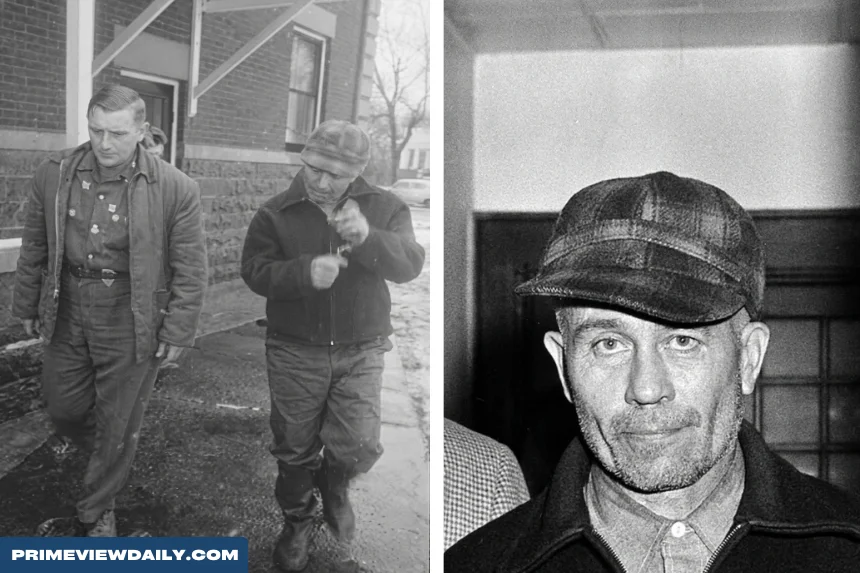
Henry Gein and Augusta
Augusta shaped both brothers’ lives. She reportedly isolated them socially and taught them that the outside world, sexual desire, and women represented moral danger.
Ed remained intensely attached to her. His later crimes and behavior led investigators and writers to examine that attachment in detail.
Henry appears to have responded differently as an adult. Later biographies describe him as questioning Augusta’s influence and seeking greater independence.
Some retellings add that Henry wanted to marry or leave the farm. Those details vary across sources, so writers should not present them as fully established facts.
The broad point is stronger than the specific stories: Henry seems to have become more critical of Augusta, while Ed remained devoted to her. Netflix transforms that contrast into the immediate cause of Henry’s death.
History does not provide enough direct evidence to confirm that motive.
How Did Ed Gein’s Brother Die?
The Ed Gein brother death occurred on May 16, 1944.
Henry and Ed were burning marsh or brush vegetation near the family farm. Controlled burning was a familiar rural practice, but the fire reportedly spread beyond their control.
The brothers lost sight of each other amid the smoke and activity. Firefighters or local responders helped contain the blaze, and Ed later reported that Henry was missing.
Searchers returned to the area. Henry’s body was found on ground affected by the fire.
Authorities concluded that fire conditions caused asphyxiation. They treated the death as accidental, and no homicide charge followed.
The event appeared to be a rural tragedy in 1944. Only after Ed’s later crimes became known did writers begin treating the fire as a possible cover story.
Henry Gein’s Official Cause of Death
Officials reported that Henry died from asphyxiation associated with the fire. Later accounts commonly use the phrase “asphyxiation leading to heart failure.”
Asphyxiation means that the body did not receive enough oxygen. Smoke, toxic gases, and heavy particulate matter can cause fatal oxygen deprivation even when flames do not badly burn the body.
The medical cause and legal manner are different concepts:
- Cause of death: The physical process that produced death.
- Manner of death: The broad category assigned to the event.
For Henry, the reported cause was asphyxiation, while the manner was accident.
Later suspicion did not formally change the death to homicide. No court, coroner, or prosecutor established that Ed caused it.
Was Henry Gein’s Body Burned?
Secondary sources disagree about how badly the fire damaged Henry’s body.
Some modern articles say he sustained severe burns. Others report that his body or clothing showed little external fire damage despite the scorched surroundings.
Researchers cannot accept both claims without qualification. The conflict may reflect different descriptions of soot, burned clothing, exposed skin, surrounding ground, or later retellings.
Moreover, smoke inhalation can kill without extensive external burns. Therefore, a relatively unburned body would not automatically disprove the official cause.
Likewise, significant burning would not eliminate the possibility of an earlier injury.
The most accurate wording is that later reports conflict. Without a complete accessible original file, modern summaries cannot reconstruct the degree of fire damage confidently.
Did Henry Gein Have Head Injuries?
Later biographies report bruises or marks on Henry’s head. This detail is central to the murder theory.
However, no surviving public autopsy establishes that blunt-force trauma killed him. In fact, available accounts report no autopsy at all.
The marks could theoretically have resulted from several causes:
- A fall in smoke or darkness.
- Contact with debris or a branch.
- A medical collapse.
- Firefighting or recovery conditions.
- An assault.
Only the last explanation would support murder, and the evidence does not identify it as the correct one.
Netflix solves the uncertainty by showing Ed strike Henry with a piece of wood. The historical record does not establish that weapon, action, or cause of death.
Was an Autopsy Performed on Henry Gein?
Available historical accounts report no autopsy.
That absence created an enduring evidence problem. A detailed postmortem examination might have helped determine whether Henry inhaled smoke while alive, whether the head marks were serious, and whether another medical condition contributed.
Nevertheless, an autopsy in 1944 would not necessarily have answered every question. Rural forensic practice differed from modern methods, and a fire scene can complicate medical interpretation.
The missing autopsy also does not prove a deliberate cover-up. Authorities apparently believed the scene and reported cause supported an accident.
Still, their decision limited future review. Later investigators could not return to a complete medical record when Ed’s 1957 crimes caused people to reconsider Henry’s death.
Why Did Ed’s Behavior Seem Suspicious?
Ed reportedly helped searchers locate Henry’s body after saying the brothers had become separated.
Later writers find that sequence suspicious. If Ed truly did not know where Henry was, they ask, how did he guide the search so effectively?
However, the farm itself offers an alternative explanation. Ed knew the land, the fire’s starting area, the brothers’ work route, and the likely places Henry might have gone.
Furthermore, later summaries may compress a longer search into the dramatic phrase “led them directly to the body.”
The behavior therefore supports questions, but not a conclusion. It becomes more troubling when combined with the head marks and later crimes, yet it remains circumstantial.
Did Ed Gein Kill His Brother?
No surviving public evidence proves that Ed killed Henry.
The case lacks the types of evidence that would support a confident murder finding:
- No documented eyewitness saw an attack.
- No autopsy established fatal blunt-force trauma.
- No preserved weapon linked Ed to the death.
- Ed never gave a documented confession.
- Prosecutors never charged him.
- Authorities classified the death as accidental.
Suspicion nevertheless remains understandable. The reported head marks, body-location story, family tension, and Ed’s later murders make the accident harder for modern readers to accept without questions.
However, each suspicious circumstance also has a possible noncriminal explanation. Therefore, the correct historical answer is “unproven,” not “yes.”
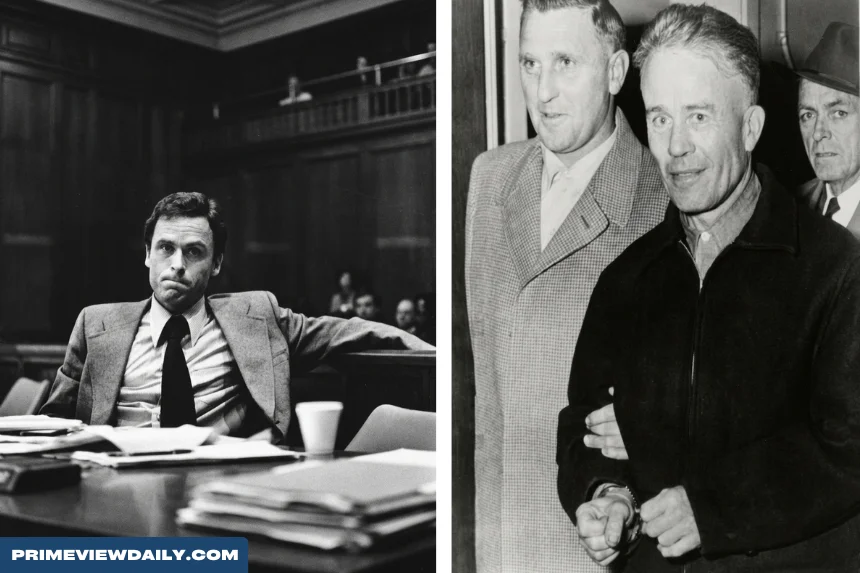
Evidence For and Against the Murder Theory
| Detail | Why it creates suspicion | Why it does not prove murder |
| Reported head marks | Could indicate a blow | Could result from a fall, debris, or recovery |
| No autopsy | Important medical questions remained open | Missing examination is not proof of homicide |
| Ed found the body | Could suggest prior knowledge | He knew the farm and fire area |
| Henry criticized Augusta | Offers a possible motive | No documented fatal argument survives |
| Ed later killed two women | Shows capacity for homicide | Later crimes do not prove an earlier act |
| Burn reports conflict | Suggests the record is incomplete | Conflicting secondary accounts are weak evidence |
| Official accident finding | Weighs against murder | The original investigation may have been limited |
| No confession | Removes direct evidence | A guilty person could remain silent |
| No charge | Shows authorities lacked a prosecutable case | Absence of a charge does not prove innocence |
| Long passage of time | Makes the theory difficult to test | Time does not resolve what happened |
A detailed review of Henry’s suspicious death reaches the same essential problem: several facts generate suspicion, but no conclusive evidence establishes murder.
What Does Monster: The Ed Gein Story Show?
The official Netflix series page presents Monster: The Ed Gein Story as a drama inspired by Ed’s life.
In the first episode, the show gives Henry’s death a definite cause. Henry expresses frustration with Augusta and a desire for greater freedom. Ed reacts emotionally and strikes him with a piece of wood.
The series then depicts Ed using the brush fire to hide the killing. Augusta’s grief and anger become major forces in the family story.
Netflix’s own explanation of Henry’s death in the show uses careful phrasing: “in the show,” Gein hits Henry and covers his tracks with a fire.
That phrasing describes the adaptation. It does not announce a new historical discovery.
Who Plays Ed Gein’s Brother in Monster?
Hudson Oz portrays Henry Gein in Monster: The Ed Gein Story. Charlie Hunnam plays Ed, while Laurie Metcalf portrays Augusta.
The series uses Henry as a key figure in its opening account of Ed’s development. Consequently, the character receives more dramatic attention than Henry’s limited historical record can support.
The official cast guide explains that the production combines real people with an effort to imagine Ed’s inner world.
That creative approach matters. An actor can portray a real person while performing invented dialogue, motives, and actions.
Therefore, Hudson Oz’s Henry should be understood as a dramatized character based on the real older brother, not as a documentary reconstruction of everything Henry said or did.
Netflix vs. Real Life
| Story element | Netflix | Historical status |
| Henry was Ed’s older brother | Shown | True |
| The family lived under Augusta’s control | Central theme | Broadly supported by biographies |
| Henry criticized Augusta | Shown clearly | Reported later, but exact conversations are unknown |
| Henry wanted to leave or marry | Used as immediate conflict | Inconsistently reported |
| A brush fire occurred | Shown | True |
| Ed struck Henry with wood | Shown directly | Unproven |
| The blow caused death | Shown directly | Official cause was asphyxiation |
| Ed staged the fire | Shown directly | Unproven |
| Henry had a head injury | Explained by the attack | Later marks are reported, but their cause is unresolved |
| Authorities treated the death as accidental | The cover succeeds | True |
| Ed confessed later | Not established historically | No documented confession |
| Henry is a confirmed victim | Implied by the show | Not supported by the official record |
The show selects one interpretation because drama requires a clear event. History remains uncertain because the evidence never reached that level.
Is Henry a Confirmed Ed Gein Victim?
No. The official record does not confirm Henry as a murder victim of Ed Gein.
The strongest confirmed murder record centers on Mary Hogan and Bernice Worden. Authorities also established extensive grave robbing.
The Wisconsin Historical Society profile summarizes the crimes that became public after Ed’s 1957 arrest.
A historical photograph from the 1957 investigation also documents Ed’s transfer to the Wisconsin State Crime Lab.
Henry’s death differs from those cases. No confession, charge, court finding, or forensic conclusion linked Ed to it.
Therefore, lists of confirmed victims should not include Henry. Writers may identify him as a possible or suspected victim only when they clearly state that the theory remains unproven.
How Henry’s Death Changed Ed’s Life
Henry’s death left Ed alone with Augusta. George had already died in 1940, and Augusta died the following year, in 1945.
That short sequence of family deaths increased Ed’s isolation. After Augusta died, he remained on the farm and reportedly kept parts of her living space closed or preserved.
A biography of Ed Gein connects this period with the isolation that preceded his grave robbing and later murders.
However, writers should not treat Henry’s death only as a psychological trigger for Ed. Henry was a real person whose life ended suddenly at 43.
The later crimes make his death historically important, but they do not provide a reliable explanation of exactly what happened in the fire.
Could Henry Gein’s Death Be Solved Today?
A definitive solution is unlikely.
More than 80 years have passed. Investigators cannot reconstruct the original fire scene; witnesses and officials have died, and no autopsy preserved detailed medical evidence for modern review.
Even an exhumation would face severe limits. Soft-tissue signs of smoke inhalation and bruising would no longer be available. Bone damage might reveal only certain kinds of severe trauma.
A newly discovered coroner report, photograph, letter, or eyewitness statement could clarify part of the story. Yet only unusually strong direct evidence could now prove both homicide and Ed’s responsibility.
The case will therefore probably remain historically suspicious but officially accidental.
Ed Gein Brother Timeline
| Year | Event |
| 1901 | Henry George Gein is born |
| 1906 | Edward Theodore Gein is born |
| 1910s | The family moves to an isolated farm near Plainfield |
| 1940 | George Gein dies |
| May 16, 1944 | Henry dies during a brush or marsh fire |
| 1945 | Augusta Gein dies |
| 1954 | Mary Hogan disappears and is later linked to Ed |
| November 1957 | Bernice Worden disappears; authorities arrest Ed and search the farm |
| 1957–1958 | Investigators examine Ed’s murders, grave robbing, and possible links to other cases |
| 1968 | A court finds Ed guilty of Worden’s murder but insane at the time of the crime |
| 1984 | Ed dies in psychiatric care |
| October 2025 | Netflix releases Monster: The Ed Gein Story |
| 2026 | Current reporting continues to treat Henry’s death as suspicious but unproven homicide |
Ed Gein Brother FAQ
1. Who was Ed Gein’s brother?
Ed Gein’s brother was Henry George Gein, his older and only sibling. Henry was born in 1901 and spent much of his life working around the family farm near Plainfield, Wisconsin.
2. How old was Henry Gein when he died?
Henry was 43 years old when he died on May 16, 1944. His younger brother Ed was 37.
3. What did Henry Gein do for work?
Public biographies describe Henry doing farm labor, property maintenance, and local odd jobs. No reliable evidence supports a more elaborate professional title or net-worth claim.
4. What was Henry’s relationship with Ed like?
The brothers shared an isolated childhood and later worked together. Later biographies suggest that Henry became more critical of Augusta, while Ed remained intensely attached to their mother.
5. How did Ed Gein’s brother die?
Henry died during a brush or marsh fire near the family farm. Officials reported asphyxiation associated with the fire and treated the death as accidental.
6. Did Henry Gein have head injuries?
Later accounts report bruises or marks on Henry’s head. However, no autopsy established whether they came from a blow, fall, debris, or another cause.
7. Was an autopsy performed on Henry Gein?
Available accounts report no autopsy. That missing examination left important questions about smoke inhalation and the head marks unresolved.
8. Did Ed Gein kill his brother?
No surviving public evidence proves it. Prosecutors never charged Ed, he never confessed, and no forensic finding established murder, although several circumstances generated later suspicion.
9. Is Henry a confirmed victim of Ed Gein?
No. Writers often describe Henry as a possible or suspected victim, but the official and legal record does not confirm that Ed killed him.
10. Who plays Henry Gein in Monster?
Hudson Oz plays Henry in Netflix’s Monster: The Ed Gein Story. The series depicts a specific murder theory that historical evidence does not prove.
Conclusion
The Ed Gein brother at the center of the 2025 Netflix storyline was Henry George Gein, a rural Wisconsin worker and Ed’s older sibling.
Henry died at age 43 during a May 1944 brush fire. Authorities treated the death as accidental asphyxiation, while later reports about head marks, Ed’s role in finding the body, family tension, and the missing autopsy created suspicion.
However, suspicion is not proof. Ed never confessed, prosecutors never charged him, and no forensic evidence established a fatal assault.
Netflix gives the mystery a dramatic answer by showing Ed kill Henry. The historical answer remains more limited: Henry’s death was officially accidental, and the theory that Ed murdered him remains unresolved and unproven.