


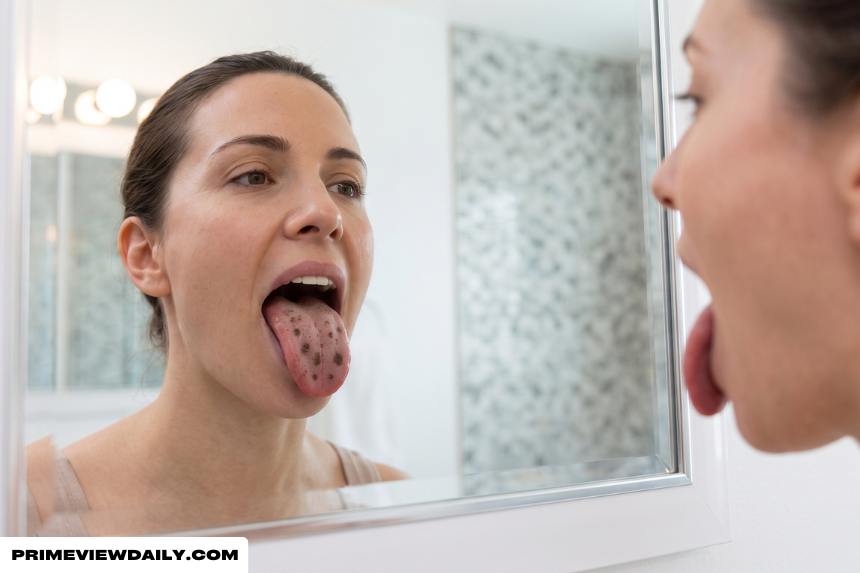
Noticing brown spots on your tongue can be unsettling, but the discoloration is often caused by something harmless and temporary. Coffee, tea, tobacco, certain medicines and a buildup of material on the tongue’s surface can all produce brown or dark areas. Some people also have naturally occurring pigmentation that does not require treatment.
Appearance alone, however, cannot confirm the cause. A removable brown coating is different from a flat spot within the tissue, a bruise after an injury or a sore that does not heal. The spot’s location, texture, duration and accompanying symptoms all matter.
Start by noting when the discoloration appeared and whether it changes after gentle tongue cleaning. Arrange a dental or medical examination when a spot is unexplained, persists for more than two weeks, changes in size or color, or occurs with pain, bleeding, a lump or difficulty swallowing.
Medical note: This guide provides general health information and cannot diagnose a tongue lesion. A dentist or healthcare professional must examine persistent or concerning changes.
What Do Brown Spots on the Tongue Usually Mean?
Brown discoloration can develop on the tongue’s surface or within the tongue tissue.
A surface coating may form when dead cells, bacteria, food particles or staining substances collect around the papillae—the small projections covering the tongue. It may look brown, yellow, green or black and can sometimes appear fuzzy.
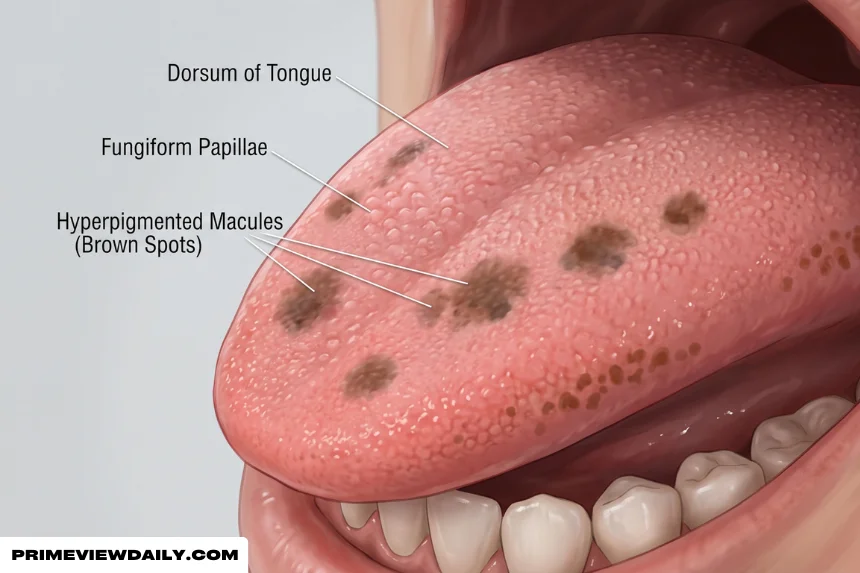
A true pigmented spot is usually flat and does not disappear when the tongue is gently brushed. It may represent natural pigmentation, a harmless melanotic macule, medication-related pigmentation or another condition requiring professional assessment.
The appearance offers clues, but it is not a reliable diagnosis by itself.
| What the area looks like | Possible explanation | Sensible next step |
|---|---|---|
| Brown or black fuzzy coating, mainly on top of the tongue | Hairy tongue or surface buildup | Improve gentle tongue cleaning and review possible triggers |
| Temporary dark coating after taking a bismuth medicine | Medication-related staining | Check the medicine label; the change is usually temporary |
| Brown stain after coffee, tea or tobacco use | External staining | Clean the tongue gently and reduce the source |
| Tender dark area after biting or burning the tongue | Minor injury or bruising | Monitor healing and remove ongoing irritation |
| Flat, stable brown spot with no pain | Natural pigmentation or a melanotic macule | Mention it at a dental visit, especially if it is new |
| Spot that grows, changes, bleeds or becomes ulcerated | Requires professional assessment | Arrange a prompt dental or medical examination |
Common Causes of Brown Spots on the Tongue
Black or Brown Hairy Tongue
Black hairy tongue is one of the most common explanations for a brown, dark or fuzzy-looking tongue. Despite its name, no hair is growing.
The condition develops when the filiform papillae on the top of the tongue become longer than usual because they are not shedding dead cells normally. Food, drinks, tobacco, bacteria, yeast and other materials can then collect between the papillae and stain them. The color may be brown, black, yellow, green or white.
Possible contributing factors include:
- Inadequate mouth and tongue cleaning
- Dry mouth
- Smoking or other tobacco use
- Frequent coffee or black tea consumption
- Recent antibiotic use
- A mostly soft-food diet
- Heavy alcohol consumption
- Regular use of irritating mouthwashes containing oxidizing ingredients such as peroxide
- Certain medical conditions or medicines
Hairy tongue is generally harmless and short-lived. Some people also notice bad breath, an altered or metallic taste, gagging or a tickling sensation.
Food and Drink Staining
Coffee, black tea, strongly colored foods and some beverages can stain material already present on the tongue. Staining may be more noticeable when the mouth is dry or the papillae are elongated.
This type of discoloration usually affects the tongue’s upper surface rather than forming a single sharply defined spot within the tissue. It may improve after drinking water and gently cleaning the tongue.
A mark that cannot be brushed away should not automatically be assumed to be a food stain, particularly when it is new or changing.
Tobacco Use
Smoking, chewing tobacco and other tobacco products can contribute to tongue discoloration by staining its surface and altering the oral environment. Tobacco use is also a major risk factor for cancers of the mouth and throat.
A persistent spot in someone who uses tobacco deserves a professional examination, even when it is painless. Quitting tobacco can improve oral health and reduce the risk of several serious diseases.
Bismuth-Containing Medicines
Bismuth subsalicylate, an ingredient in some over-the-counter medicines for nausea, diarrhea and indigestion, can temporarily darken the tongue. The color may appear brown, gray or black.
This change is usually harmless and disappears after the medicine is stopped. Follow the product directions and consult a pharmacist or clinician if you are unsure whether a medicine is causing the discoloration. Do not discontinue a prescribed treatment without speaking to the prescriber.
Other Medicines
Some medicines can contribute to hairy tongue by changing the normal balance of microorganisms in the mouth or causing dry mouth. Others may cause pigmentation within the oral tissues.
Tell your dentist or doctor about all prescription medicines, over-the-counter products, vitamins and supplements you use. The timing of a new medication can help identify a possible cause, but medication changes should be made only with professional guidance.
Minor Injury or Irritation
Biting your tongue, burning it on hot food or rubbing it against a sharp tooth, broken filling, denture or orthodontic appliance may leave a sore or bruised-looking area. Minor irritation is a common cause of tongue discomfort.
An injury should gradually improve once the source of irritation is removed. See a dentist when a sharp tooth or dental appliance repeatedly rubs the same area.
A lesion that does not heal should be examined rather than repeatedly attributed to trauma.
Natural Pigmentation
Natural variations in melanin can create brown or dark areas inside the mouth, including on the tongue. These areas may be more noticeable in people with naturally darker skin tones.
Physiologic pigmentation is generally flat, painless and stable. It does not need treatment. However, a person may not be able to distinguish normal pigmentation from another type of lesion without an examination, especially when the mark appeared recently.
Oral Melanotic Macule
An oral melanotic macule is a small, flat brown or black area caused by localized pigment. It can resemble a freckle and is typically harmless. Oral melanotic macules are more common on the lips and gums but can occur elsewhere in the mouth.
A clinician may recommend monitoring a typical, stable macule. A spot with an uncertain diagnosis may need additional assessment or a biopsy because several oral conditions can look similar.
Infection
Oral infections can alter the tongue’s appearance, although a single brown spot is not a classic sign of oral thrush. Thrush more commonly creates raised white or cream-colored patches that may resemble cottage cheese.
Do not use an antifungal medicine solely because the tongue is brown. Treatment should be based on a confirmed or clinically likely infection.
Less Common Medical Causes
Diffuse or multiple areas of oral pigmentation can occasionally be associated with medications, hormonal disorders, inherited syndromes or other systemic conditions. These causes are much less common than staining, hairy tongue or natural pigmentation.
A clinician may consider them when pigmentation appears in several parts of the mouth or occurs with changes elsewhere on the body. Medical history, medication review, blood tests or referral to a specialist may be needed.
Are Brown Spots on the Tongue a Sign of Cancer?
Most brown tongue spots are not cancer. Common oral cancers more often appear as a persistent sore, lump, thickened area, red patch, white patch or a combination of these changes. Other possible symptoms include unexplained bleeding, numbness, difficulty moving the tongue, trouble swallowing, ear pain or a neck lump.
Pigmented cancers of the mouth are uncommon, but a dark lesion cannot be judged safely from color alone. Seek an examination when a brown or black spot:
- Is new and has no clear cause
- Becomes larger or darker
- Develops an irregular shape or multiple colors
- Feels raised or firm
- Bleeds without an obvious injury
- Becomes painful, ulcerated or numb
- Remains present for more than two weeks
The National Institute of Dental and Craniofacial Research recommends seeing a dentist or doctor when concerning mouth symptoms last longer than two weeks. A clinician may monitor the area, refer you to an oral medicine specialist or recommend a biopsy when the diagnosis is uncertain.
What You Can Safely Do at Home
Home care may help when the discoloration is a removable surface coating or uncomplicated hairy tongue.
Clean Your Tongue Gently
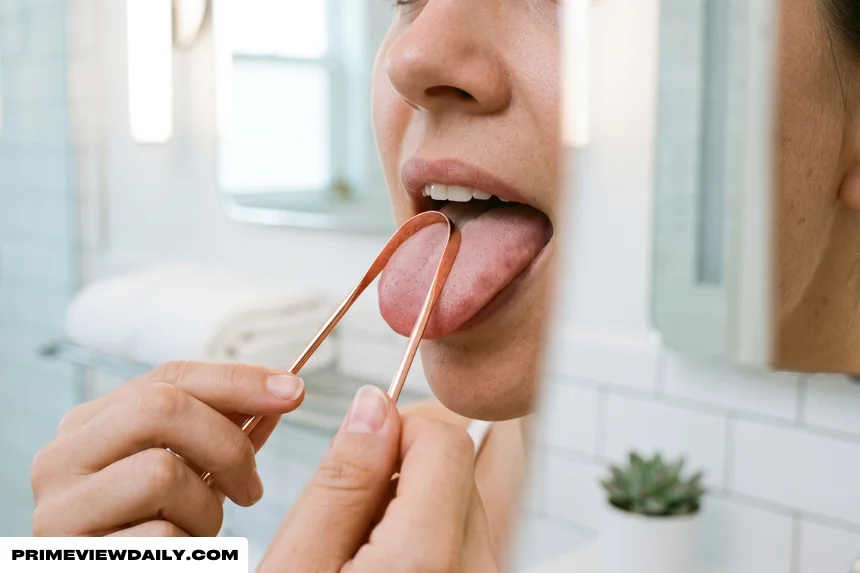
Brush your tongue with a soft-bristled toothbrush when brushing your teeth. A flexible tongue scraper can also remove trapped food, bacteria and dead cells.
Use light pressure. Aggressive scraping can injure the tongue, cause bleeding and make it harder to monitor the original spot.
Maintain Your Normal Oral-Care Routine
Brush your teeth at least twice daily with fluoride toothpaste and clean between your teeth each day. Regular dental examinations allow a dentist to identify changes that may not cause symptoms.
Drink Enough Water
Dry mouth can contribute to hairy tongue and bacterial buildup. Sip water regularly and speak with a dentist or clinician if dry mouth is persistent, particularly when it began after starting a medicine.
Reduce Staining and Irritating Substances
Temporarily reducing coffee, black tea, tobacco and irritating mouthwashes may help reveal whether the discoloration is superficial.
Avoid trying to bleach the tongue with peroxide, household chemicals or abrasive products. Some peroxide-containing mouthwashes can contribute to hairy tongue when used regularly.
Take a Clear Photograph
A dated photograph taken in consistent lighting can help you determine whether the spot is changing. It can also provide useful context for your dentist.
A photograph cannot rule out disease and should not replace an examination.
When Should You See a Dentist or Doctor?
Arrange a dental or medical appointment when:
- The discoloration lasts longer than two weeks
- Gentle cleaning does not improve a surface coating
- The spot is growing or changing color
- There is persistent pain, burning, numbness or swelling
- The area bleeds or develops an open sore
- You feel a lump in your mouth or neck
- You have difficulty chewing, swallowing, speaking or moving your tongue
- You use tobacco and develop a new oral lesion
- You have a weakened immune system
- You cannot identify a likely cause
Seek immediate medical assistance if your tongue suddenly swells or breathing becomes difficult. Sudden tongue swelling can occur during a serious allergic reaction and may obstruct the airway.

How Brown Tongue Spots Are Diagnosed
A dentist or doctor will usually begin by examining the tongue and asking questions about:
- When the spot first appeared
- Whether it has changed
- Pain, bleeding or swallowing problems
- Recent injuries or dental work
- Tobacco and alcohol use
- Coffee and tea consumption
- Dry mouth
- Prescription and nonprescription medicines
- Recent antibiotic use
- Other skin, nail or mouth changes
Hairy tongue and obvious staining can often be recognized during a physical examination. A clinician may gently check whether a coating can be removed.
Blood tests may be considered when the pattern suggests an underlying medical condition. A persistent or suspicious tissue change may require a biopsy, which remains the standard method for determining the exact nature of an uncertain oral lesion.
Treatment Depends on the Cause
There is no single treatment for every brown tongue spot.
For Hairy Tongue
Treatment generally includes gentle daily tongue cleaning, good oral hygiene, hydration and reducing contributing factors such as tobacco or excessive coffee. A dentist or doctor may also review medicines, mouthwash use and dry-mouth symptoms.
Hairy tongue usually improves without medical treatment once the cause is addressed.
For Medication-Related Discoloration
Temporary bismuth staining usually resolves after the medicine is no longer being taken. Pigmentation caused by other medicines may take longer to fade or may persist.
Do not stop a prescription medicine on your own. A clinician can assess whether an alternative is appropriate.
For Trauma
Treatment involves allowing the tissue to heal and removing the source of irritation. A dentist may smooth a sharp tooth, repair a damaged restoration or adjust a denture or appliance.
For Natural Pigmentation
Stable physiologic pigmentation and confirmed benign melanotic macules generally do not require treatment. Monitoring may be recommended.
For Infection
A confirmed fungal, bacterial or viral infection is treated according to its cause. Unnecessary antimicrobial treatment should be avoided.
For a Suspicious Lesion
A dentist may refer you to an oral and maxillofacial surgeon, oral medicine specialist, dermatologist or ear, nose and throat specialist. A biopsy may be needed before treatment is selected.
Frequently Asked Questions
Can coffee cause brown spots on the tongue?
Coffee and black tea can stain the papillae or a coating on the tongue, particularly when you have hairy tongue or dry mouth. The discoloration usually affects the surface and may improve with hydration and gentle cleaning.
Can dehydration make the tongue brown?
Dehydration itself does not usually create one isolated brown spot, but reduced saliva and dry mouth can contribute to buildup and hairy tongue. Persistent dry mouth should be discussed with a dentist or doctor.
Does a brown tongue mean I have oral thrush?
Not usually. Oral thrush typically produces raised white patches rather than a flat brown spot. A clinician should confirm the diagnosis before antifungal treatment is used.
Can vitamin B12 deficiency cause brown spots?
Vitamin B12 deficiency is more commonly associated with tongue soreness, inflammation or a smooth, red appearance than with isolated brown spots. A brown mark alone is not a reliable sign of vitamin deficiency.
Will brushing remove brown spots?
Gentle brushing may remove surface staining, food debris or a hairy-tongue coating. It will not remove pigment located within the tissue. Stop scrubbing if the tongue becomes sore or bleeds.
Can Pepto-Bismol turn the tongue brown?
Yes. Bismuth subsalicylate can temporarily make the tongue dark brown, gray or black. The color generally returns to normal after the medicine is stopped.
Which professional should examine a tongue spot?
A general dentist is a suitable first choice because dentists routinely examine the tongue and other oral tissues. A primary care clinician can also assess it. Depending on the findings, you may be referred to an oral medicine specialist, oral surgeon, dermatologist or ear, nose and throat doctor.
How long should I monitor a brown spot?
Do not leave an unexplained oral change unexamined indefinitely. Schedule an appointment when it persists for more than two weeks or sooner if it grows, bleeds, becomes painful or causes swallowing or speech problems.
Conclusion
Brown spots on the tongue are commonly caused by staining, a surface coating, hairy tongue, medicines, natural pigmentation or minor irritation. Many improve with gentle tongue cleaning, hydration and removal of contributing factors.
A flat spot that cannot be brushed away deserves closer attention, particularly when it is new. See a dentist or doctor if the discoloration lasts more than two weeks, changes, bleeds, becomes painful or occurs with a lump, numbness or difficulty swallowing. A brief examination is more reliable than trying to identify a tongue lesion from color or photographs alone.
Read more about Benefits of Oil of Oregano With Black Seed Oil