


Starting an escape room business can be exciting, creative, and profitable, but it is not a simple “build puzzles and open the doors” idea. You need a clear plan, safe rooms, enough money, good staff, strong marketing, and games that people will recommend.
The search phrase escape room business how to start one usually comes from someone who loves escape rooms but does not know where to begin. This guide gives you a practical roadmap. You will learn how to test demand, estimate costs, choose a location, design rooms, handle safety, set prices, and launch the business step by step.
If you are searching for escape room business how to start one, the first thing to know is this: the business works only when creativity and daily operations work together. A great puzzle idea is important, but rent, staff, safety, repairs, reviews, and bookings are just as important.
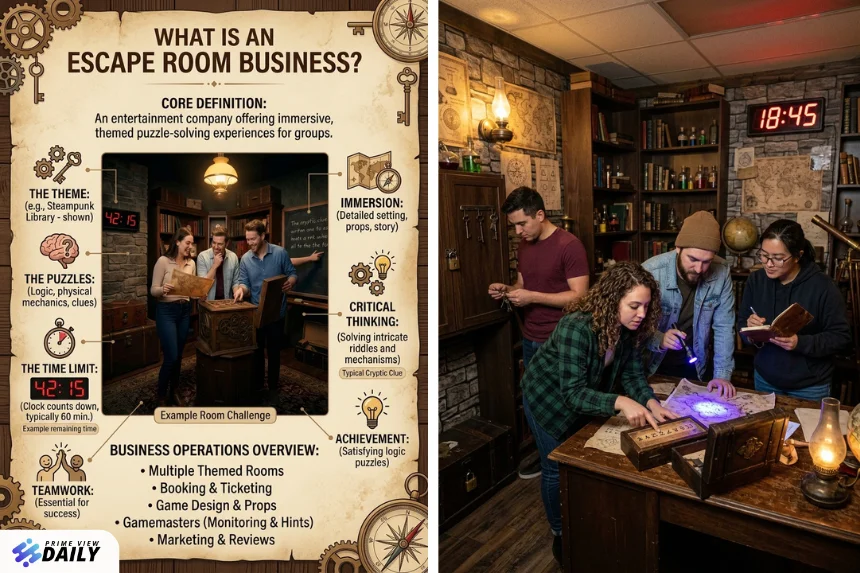
What Is an Escape Room Business?
An escape room business sells timed puzzle experiences to groups of people. Customers usually book a room, enter a themed space, solve clues, complete a mission, and try to finish before time runs out.
Most escape rooms last 45 to 90 minutes. The theme may be mystery, horror, adventure, history, science fiction, treasure hunting, detective work, or family-friendly fun. Some rooms focus on beginners, while others are built for experienced players who want harder puzzles.
If you searched escape room business how to start one, understand that this business is not just about puzzles. It is a local entertainment business. You need customer service, booking systems, safety rules, staff training, marketing, and room maintenance.
Main Ways Escape Rooms Make Money
Escape rooms usually earn money from:
- Game bookings
- Private group bookings
- Birthday parties
- Corporate team-building events
- Gift cards
- Mobile escape games
- Seasonal rooms
- Merchandise
- Photos or souvenirs
- Food and drink add-ons, where allowed
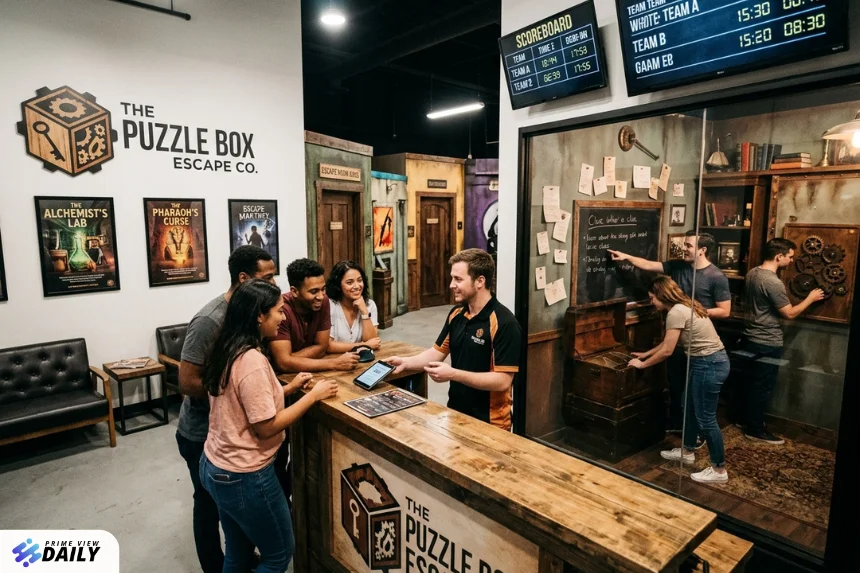
Room bookings are usually the main income source. Room Escape Artist reported that private bookings are now common in the US escape room market. Their 2025 report found that 78% of US escape rooms were always private bookings.
Simple Takeaway
An escape room business is a paid entertainment experience. It succeeds when the room is fun, the booking process is easy, the staff is helpful, and customers leave wanting to tell friends.
Is an Escape Room Business Still a Good Idea?
An escape room business can still work, but it is not as easy as it was when escape rooms were new. Today, customers expect better design, smoother stories, safer rooms, and better service.
For anyone searching escape room business how to start one, the real question is not “Are escape rooms still popular?” The better question is, “Can my local market support a well-run escape room with a clear theme and strong customer experience?”
What the Current Market Shows
Room Escape Artist reported that the US had just over 2,000 escape room facilities in December 2025. The report also counted about 7,800 physical escape rooms, with an average of 3.8 games per facility.
This means the market is not dead. But it is more serious than before. Many customers have already played escape rooms, so a basic locked-room idea is not enough.
Why Competition Is Stronger Now
There are more professional operators, better sets, stronger puzzle design, online booking systems, and more customer reviews. If your room feels cheap, confusing, unsafe, or poorly run, people will say so online.
To stand out, you need:
- A clear theme
- Fair puzzles
- Good customer service
- Safe design
- Strong local SEO
- Enough rooms to bring in steady revenue
- A reason for people to return
Simple Takeaway
Escape rooms can still be a good business, but only if you treat them like a real business. Passion helps, but planning keeps the doors open.
How Much Does It Cost to Start an Escape Room Business?
The cost depends on your location, rent, room count, build quality, permits, staff, and whether you build the rooms yourself or hire professionals.
A realistic answer to escape room business how to start one starts with budgeting. Many new owners fail because they only budget for props and puzzles. They forget rent, insurance, staff, repairs, marketing, permits, software, and working capital.
Budget by Category, Not by Guesswork
Do not rely on one random startup cost number. Build your budget by category.
| Cost Category | What It Includes | Why It Matters |
|---|---|---|
| Rent and deposit | First month, security deposit, lease costs | You pay this before earning money |
| Buildout | Walls, paint, floors, wiring, lobby, bathrooms | Usually one of the biggest costs |
| Game design | Story, puzzles, props, electronics, locks | Affects reviews and repeat bookings |
| Safety | exits, signs, alarms, inspections | Needed before opening |
| Technology | Cameras, microphones, screens, booking software | Helps staff monitor and manage games |
| Insurance | Liability, property, workers’ comp | Protects the business |
| Staff | Game masters, training, payroll | Needed for daily operations |
| Marketing | Website, SEO, launch ads, signage | Needed to bring customers |
| Working capital | Cash reserve for slow months and repairs | Helps you survive early problems |
Why One Room Can Be Risky
A one-room escape room can work as a test, pop-up, or side project. But it can be risky as a full-time business.
The reason is simple: rent, software, staff, utilities, insurance, and marketing still cost money even if you only have one room. One room gives you limited booking slots. If those slots do not fill, the business can struggle quickly.
For a stronger business, many owners aim for two to four rooms over time. Room Escape Artist reported an average of 3.8 games per US facility in 2025.
Simple Takeaway
The cost to start an escape room business is not just the cost of building puzzles. You need enough money to open safely, market properly, pay bills, and survive slow months.
How Do Escape Rooms Make Money?
Escape rooms make money by selling time slots. Each room can run a limited number of games per day. Your income depends on how many rooms you have, how many groups book, and how much each group pays.
If you are researching escape room business how to start one, you must understand booking capacity. A busy Saturday is helpful, but weekday bookings often decide whether the business makes enough money.
Basic Revenue Formula
Use this simple formula:
Number of rooms × sessions per day × average booking value = possible daily revenue
For example:
| Scenario | Rooms | Bookings Per Room Per Week | Average Booking Value | Weekly Revenue |
|---|---|---|---|---|
| Small one-room test | 1 | 12 | $120 | $1,440 |
| Two-room venue | 2 | 16 | $135 | $4,320 |
| Four-room venue | 4 | 20 | $150 | $12,000 |
These are example numbers only. Your real numbers will depend on your city, prices, room quality, and marketing.
Other Revenue Sources
You can also earn money from:
- Corporate team-building packages
- Birthday party packages
- Gift cards
- Private events
- School or university events
- Mobile escape games
- Seasonal games
- Merchandise
Corporate bookings can be especially useful because they often happen during weekdays, when normal customer bookings may be slower.
Simple Takeaway
Escape rooms make money from booked time slots. The more useful time slots you can sell, the stronger your business model can become.
Step 1 — Test Demand Before Signing a Lease
Before you sign a lease, test whether people actually want your escape room idea. This is one of the most important steps in escape room business how to start one because rent can quickly become your biggest pressure.
Study Local Competition
Start by checking your local market. Look at:
- How many escape rooms are nearby
- What themes they offer
- Their prices
- Their Google reviews
- Their weakest customer complaints
- Their busiest times
- Their corporate packages
- Their location and parking
The US Small Business Administration says market research helps business owners find customers, while competitor research helps a business stand out.
Test a Small Version First
You do not need to build a full venue right away. You can test demand with:
- A pop-up escape game
- A puzzle night at a café
- A small corporate event
- A festival booth
- A home prototype with strangers
- A mobile escape game
- A paid beta test
TimeTrap Escape Rooms shared that they started with pop-up games before moving into a permanent building. Their six-week pop-up helped them test demand and build confidence before taking a bigger risk.
Build a Waitlist
Before launch, collect emails from interested people. Offer early access, founder discounts, or soft-opening invitations. A waitlist helps you open with demand already forming.
Simple Takeaway
The cheapest time to learn is before you sign a lease. Test your idea first, then spend bigger money when you have proof that people want it.
Step 2 — Write an Escape Room Business Plan
A business plan turns escape room business how to start one from a broad idea into a real model. It helps you see your costs, risks, target customers, and launch steps before you spend too much money.
What to Include in the Plan
The SBA recommends that a business plan cover the company, market, service, marketing, funding, and financial projections.
For an escape room business, your plan should include:
- Target customers
- Local competition
- Room themes
- Startup budget
- Monthly costs
- Ticket prices
- Break-even number
- Staffing plan
- Safety plan
- Marketing plan
- Launch timeline
Choose Your Positioning
Decide what type of escape room you want to open. For example:
- Family-friendly
- Horror
- Historical
- Sci-fi
- Mystery
- Corporate team-building
- Premium immersive
- Beginner-friendly
- Expert-level rooms
Do not try to appeal to everyone. A clear concept is easier to market.
Plan Your Monthly Costs
List your regular monthly costs:
- Rent
- Payroll
- Utilities
- Insurance
- Booking software
- Loan payments
- Marketing
- Repairs
- Cleaning
- Supplies
Then calculate how many bookings you need each month to cover those costs.
Simple Takeaway
A business plan is not just paperwork. It is your reality check before you spend money on rent, rooms, staff, and marketing.
Step 3 — Choose the Right Location
The best location is not always the cheapest location. Your space must support safe exits, customer flow, game rooms, staff work, bathrooms, parking, and future growth.
For escape room business how to start one, location is one of the biggest decisions. A bad space can make a good idea hard to run.
What Makes a Good Location?
Look for:
- Easy parking or public transport
- Nearby restaurants or entertainment
- Good signage options
- Safe entry and exit routes
- Enough space for multiple rooms
- Space for a lobby
- Bathrooms
- Storage
- Staff area
- Control room
- Good electrical capacity
- Heating, cooling, and ventilation
Escape rooms do not always need heavy foot traffic because many customers book online before arriving. But nearby restaurants, bars, hotels, universities, and offices can help bring group bookings.
Check the Lease Carefully
Before signing, ask about:
- Buildout permission
- Wall changes
- Electrical work
- Signage
- Opening hours
- Noise rules
- Insurance requirements
- Fire safety requirements
- Restoration clauses
- Rent increases
- Lease length
Have a contractor, attorney, or business advisor review the lease if possible.
Simple Takeaway
Choose a location based on safety, layout, access, and long-term business needs. Cheap rent can become expensive if the space does not work.
Step 4 — Handle Permits, Safety, Insurance, and Accessibility
Safety is one reason escape room business how to start one should never be treated like a simple hobby project. You are inviting the public into a themed space, so safety must come before decoration.
This is general information, not legal or fire-code advice. Always speak with your local city office, fire marshal, insurance broker, attorney, and qualified contractor before opening.
Start With Local Rules
Rules vary by city and state, but you may need:
- Business registration
- Occupancy approval
- Fire inspection
- Building permits
- Sign permits
- Sales tax registration
- Insurance
- Accessibility review
Do not build first and ask questions later. It is cheaper to design correctly from the start than to rebuild after an inspection problem.
Make the Locked-Room Effect Theatrical, Not Literal
Escape rooms should feel locked for the game, but players should always be able to leave safely in an emergency.
OSHA says exit routes must allow people to leave promptly during emergencies. OSHA also says exit doors should open from the inside without keys, tools, or special knowledge in most workplace situations
In an escape room, props, darkness, fog, puzzle locks, and scenic walls should never block emergency exits.
Plan for Accessibility
ADA.gov says most businesses that serve the public must follow the Americans with Disabilities Act. Businesses should give people with disabilities equal access to goods and services.
For escape rooms, accessibility may affect:
- Entrance access
- Bathroom access
- Website information
- Booking instructions
- Service animal policies
- Communication options
- Room design
- Staff training
Get Proper Insurance
Talk to an insurance broker about:
- General liability insurance
- Property insurance
- Workers’ compensation
- Business interruption insurance
- Equipment coverage
- Event insurance for mobile games
Simple Takeaway
The “locked in” feeling should be part of the story, not a real danger. Customers must always be able to exit safely.
Step 5 — Decide Whether to Build, Buy, or Franchise
Another key part of escape room business how to start one is deciding how you will create the rooms. You can build them yourself, hire a company, buy prebuilt games, or join a franchise.
Compare Your Options
| Option | Best For | Benefits | Downsides |
|---|---|---|---|
| Build yourself | Skilled founders | More control, lower cash cost | Takes more time and skill |
| Hire builders | Funded founders | Better finish, faster build | Higher upfront cost |
| Buy prebuilt rooms | Faster launch | Saves design time | Less unique |
| Franchise | Beginners wanting support | Brand, systems, training | Fees and less freedom |
DIY Build
DIY can work if you have skills in carpentry, electronics, theater, design, or puzzle building. But you must also plan for repairs and resets. A clever puzzle that breaks every week is bad for business.
Professional Build
A professional design/build company can create a more polished room. This can save time, but it costs more. Always check their past work, support process, and repair options.
Franchise
A franchise may give you training, branding, games, and operating systems. But you will pay fees and may have less creative control.
Simple Takeaway
Choose the model that matches your money, skills, timeline, and risk level. The cheapest option is not always the best option.
Step 6 — Design an Escape Room People Recommend
A good escape room is not just a list of hard puzzles. It should feel fair, exciting, clear, and fun. Players recommend rooms that make them feel smart, not confused.
For people searching escape room business how to start one, room design is often the most exciting part. But it is also where many owners make mistakes.
Start With the Player
Decide who the room is for:
- Beginners
- Families
- Horror fans
- Expert players
- Corporate teams
- Tourists
- Kids and teens
- Date-night groups
A room for beginners should not feel impossible. A room for experts should not feel too easy. A corporate room should encourage teamwork.
Build the Puzzle Flow
Plan how players move through the game. The flow may be:
- Linear: one puzzle leads to the next
- Non-linear: teams can solve several things at once
- Mixed: some parts are linear and some are open
Avoid puzzle bottlenecks where everyone gets stuck on one unclear clue.
Playtest Before Launch
Test the room with different people before opening. Watch where they get stuck, what they misunderstand, and which props break. Use this feedback to fix the room before real customers pay.
Design for Reset and Repair
Staff should be able to reset the room quickly and accurately. Props should be strong enough for repeated use. Electronics should be easy to access and repair.
Simple Takeaway
A good escape room is not about beating the players. It is about giving them a fair, fun, and memorable challenge.
Step 7 — Set Up Operations, Staff, and Booking Systems
Escape room operations must be smooth. A great room can still fail if staff are not trained, rooms are not reset properly, or customers have a bad booking experience.
This is a major part of escape room business how to start one because daily operations decide whether customers leave happy.
Train Game Masters Well
A game master usually:
- Welcomes guests
- Explains the rules
- Gives the story intro
- Watches the game
- Gives hints
- Handles safety
- Resets the room
- Debriefs customers
- Asks for reviews
This role is part host, part safety monitor, part actor, and part problem solver.
Create Checklists
Use checklists for:
- Opening
- Closing
- Room reset
- Prop checks
- Cleaning
- Repairs
- Emergency steps
- Customer complaints
- Review requests
Checklists reduce mistakes and help new staff learn faster.
Choose Booking Software
Your booking system should handle:
- Online bookings
- Private rooms
- Payments
- Gift cards
- Waivers
- Email reminders
- Refund rules
- Corporate bookings
- Calendar management
- Reports
Room Escape Artist reported that US escape room venues use different booking systems, with no single platform fully dominating the market.
Simple Takeaway
Operations turn your creative idea into a repeatable business. Clear systems help staff deliver the same good experience every time.
Step 8 — Set Prices and Estimate Break-Even
Pricing should not be random. You need to know how many bookings you must sell each month to cover your costs.
For escape room business how to start one, this step is very important because many founders focus on ticket price but forget monthly break-even numbers.
Simple Break-Even Formula
Use this formula:
Monthly fixed costs ÷ profit per booking = bookings needed to break even
Example:
- Monthly fixed costs: $18,000
- Average booking revenue: $140
- Variable cost per booking: $25
- Profit before fixed costs: $115
$18,000 ÷ $115 = about 157 bookings per month to break even.
This is only an example. Your real numbers may be higher or lower.
Pricing Options
You can price by:
- Per person
- Private room
- Peak and off-peak times
- Corporate packages
- Birthday packages
- Group size
- Special events
Private-room pricing is simple for customers. Per-person pricing can work better for smaller groups.
Simple Takeaway
Do not set prices only by copying competitors. Set prices based on your costs, room quality, local demand, and break-even point.
Step 9 — Market the Escape Room Before Opening
Marketing should start before opening day. If you wait until the doors open, you may lose money while trying to build awareness.
A good escape room business how to start one plan includes marketing from the beginning, not just after launch.
Build Local SEO Early
Create a website with pages for:
- Your city
- Each room
- Pricing
- Booking
- FAQs
- Birthdays
- Corporate events
- Accessibility
- Contact information
Claim your Google Business Profile when eligible. Add photos, opening hours, services, and updates. Ask happy customers for reviews after soft opening.
Create Pre-Launch Interest
Before launch, share:
- Behind-the-scenes photos
- Theme teasers
- Build updates
- Founder story
- Puzzle previews without spoilers
- Email signup offers
- Early-bird discounts
Build Local Partnerships
Reach out to:
- Hotels
- Restaurants
- Bars
- Universities
- Tourism boards
- HR teams
- Event planners
- Birthday party venues
- Local influencers
Corporate bookings can help fill weekday slots, which are often harder to sell.
Simple Takeaway
Do not wait for customers to find you. Start building attention, partnerships, and reviews before launch.
Common Mistakes When Starting an Escape Room Business
The biggest mistake in escape room business how to start one is thinking passion alone is enough. Passion is useful, but the business needs money, systems, safety, repairs, marketing, and customer service.
Mistakes to Avoid
Avoid these common problems:
- Starting with too little cash
- Signing a lease too early
- Ignoring fire and safety rules
- Building only one room with high rent
- Making puzzles too confusing
- Designing only for expert players
- Forgetting reset time
- Underestimating repairs
- Hiring staff without training
- Waiting too long to market
- Ignoring bad reviews
- Not testing the room before opening
Why These Mistakes Hurt
Small problems can quickly become expensive. A broken prop can ruin a game. A confusing puzzle can create bad reviews. Weak marketing can leave rooms empty. Poor safety planning can delay your opening or create serious risk.
Simple Takeaway
Escape rooms reward creativity, but they punish weak planning. The business works only when the game and the operations are both strong.
A Practical 90-Day Launch Plan
A 90-day plan helps you move carefully instead of rushing into a lease. For anyone searching escape room business how to start one, this plan gives a safer starting path.
Days 1–30: Research and Test the Idea
During the first month:
- Study local competitors
- Check prices and reviews
- Choose your target audience
- Estimate startup costs
- Test a small puzzle idea
- Talk to potential customers
- Build a simple landing page
- Start collecting emails
Days 31–60: Build the Business Plan
During the second month:
- Create a full budget
- Estimate monthly costs
- Calculate break-even bookings
- Shortlist locations
- Check lease terms
- Speak with local authorities
- Talk to an insurance broker
- Choose your room concept
Days 61–90: Prototype and Pre-Launch
During the third month:
- Build a rough puzzle flow
- Test with strangers
- Fix confusing clues
- Start social media content
- Contact local partners
- Plan soft opening
- Review safety needs
- Decide whether to build, buy, or franchise
Simple Takeaway
The first 90 days should reduce risk. If the idea, numbers, location, or safety plan is weak, slow down before spending more money.
Final Checklist Before You Start
Before opening, use this checklist to make sure your escape room business how to start one plan is ready.
Business Checklist
- Clear target customer
- Local competitor research
- Tested demand
- Startup budget
- Monthly cost estimate
- Break-even number
- Cash reserve
- Pricing plan
- Marketing plan
Safety Checklist
- Local rules checked
- Fire safety reviewed
- Exit routes clear
- Emergency exits working
- No real lock-in risk
- Staff trained
- Insurance arranged
- Accessibility reviewed
Game Checklist
- Clear theme
- Fair puzzles
- Tested puzzle flow
- Hint system
- Reset checklist
- Repair plan
- Durable props
- Strong ending
Launch Checklist
- Website ready
- Booking software ready
- Google Business Profile ready
- Staff trained
- Soft opening planned
- Reviews requested
- Partnerships started
- Opening promotion ready
Simple Takeaway
Do not open just because the room looks finished. Open when the business, safety plan, staff, marketing, and customer experience are ready.
FAQs
How much does it cost to start an escape room business?
The cost depends on rent, buildout, room count, staff, safety work, permits, insurance, and marketing. A small pop-up costs much less than a full multi-room venue, so founders should build a detailed budget instead of trusting one fixed number.
Are escape rooms profitable?
Escape rooms can be profitable, but profit depends on bookings, room count, rent, payroll, repairs, marketing, and customer reviews. A venue can be busy on weekends and still struggle if weekday bookings are weak.
Can I start an escape room business with one room?
You can start with one room as a test or pop-up, but a one-room full-time venue can be risky. Fixed costs such as rent, staff, insurance, and software may be too high for one room to cover.
How many rooms should an escape room venue have?
Many venues work better with multiple rooms because more rooms create more booking slots and more reasons for customers to return. Room Escape Artist reported an average of 3.8 games per US facility in 2025.
Do I need permits to open an escape room?
Most owners need business registration, local permits, occupancy approval, fire review, and possibly construction permits. Rules vary by location, so check with your city before building.
Do escape rooms need insurance?
Yes, escape room businesses usually need insurance because they serve the public. Common coverage may include general liability, property insurance, workers’ compensation, and business interruption insurance.
Can players really be locked inside an escape room?
Players should not be locked in a way that blocks emergency exit. The locked-room feeling should be part of the game story, but customers must always be able to leave safely.
Should I build my own escape room or buy one?
Build your own room if you have the skills, time, and repair ability. Buy a prebuilt room or hire professionals if you need faster setup, stronger finish, and more support.
How long does it take to open an escape room business?
A small pop-up can launch faster, but a full venue may take months because of planning, permits, buildout, playtesting, hiring, inspections, and marketing.
What skills do escape room owners need?
Escape room owners need planning, budgeting, customer service, marketing, staff training, safety awareness, repair skills, and problem solving. Puzzle creativity helps, but business skills are just as important.
Is an escape room franchise better than starting independently?
A franchise can offer branding, systems, training, and support. Starting independently gives more freedom, but you must build the brand, rooms, marketing, and operations yourself.
How do escape rooms get customers?
Escape rooms get customers through local SEO, Google Business Profile, reviews, referrals, social media, partnerships, corporate outreach, gift cards, and repeat customers.
What is the biggest risk when starting an escape room business?
The biggest risk is spending too much money before proving demand. A founder who signs a lease, builds too few rooms, ignores safety, and opens without marketing can run out of cash quickly.
Conclusion
The best answer to escape room business how to start one is simple: test the idea first, plan the numbers, choose a safe location, build rooms people recommend, train staff well, and market before opening.
Starting an escape room business can work, but it needs more than puzzle ideas. You need a real business plan, safe rooms, steady bookings, strong customer service, and enough cash to handle slow months. Start small, test demand, learn from feedback, and grow only when the business model is strong.
Discover more on our website about china kitchen