


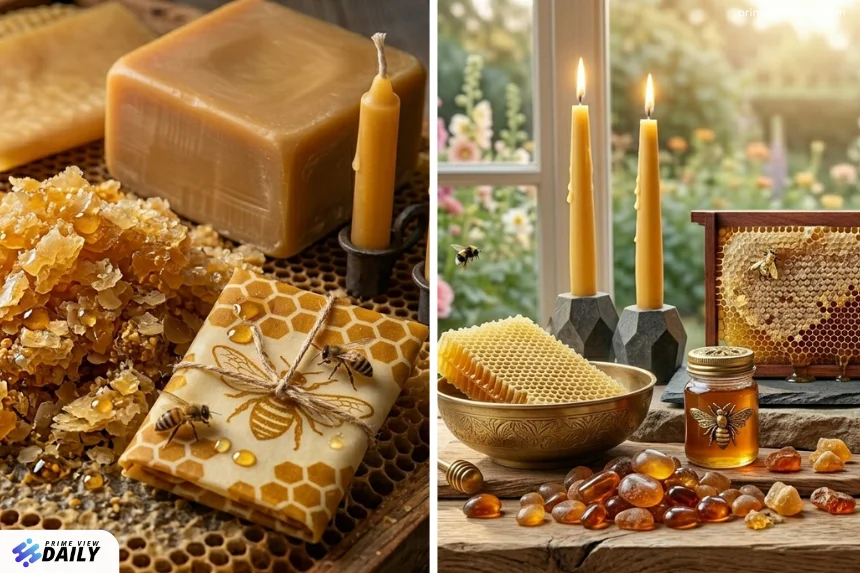
Beeswax has shown up in skin creams, lip balms, hair pomades, and even food for thousands of years — and for good reason. As a natural substance produced by honeybees, it offers a genuine range of benefits backed by both traditional use and a growing body of research. The three most established uses are skin barrier protection, hair moisture retention, and mild cholesterol support when consumed as part of honeycomb. This guide breaks each one down clearly, separates what the evidence actually supports from what it doesn’t, and gives you practical guidance on how to use beeswax safely.
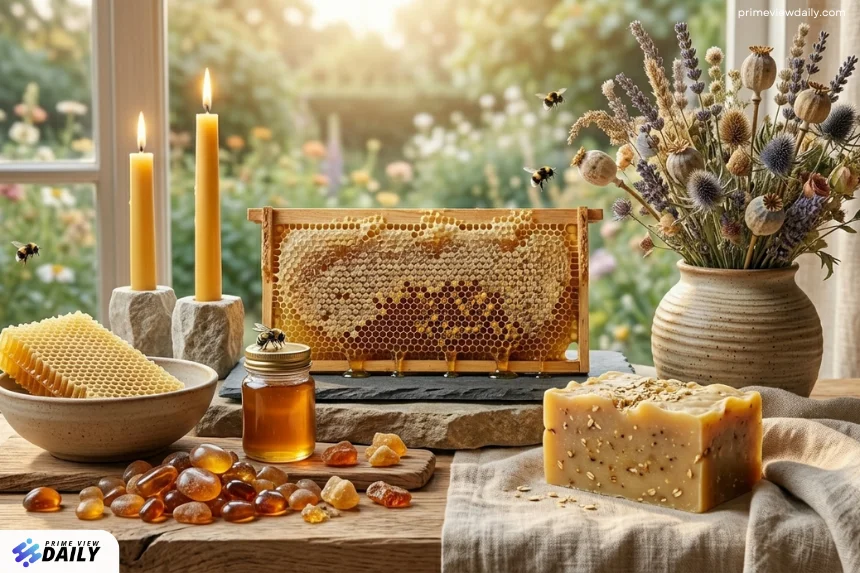
What Is Beeswax?
Beeswax, known scientifically as Cera alba, is a natural wax that worker honeybees secrete to build the walls of their honeycomb. Chemically, it consists primarily of fatty acids, long-chain alcohols, and hydrocarbons, along with trace amounts of vitamin A. Those compounds are central to almost every benefit beeswax offers.
Two forms exist in commerce. Yellow beeswax is raw and unprocessed, retaining its natural color and honey-like scent. White beeswax undergoes bleaching through exposure to sunlight or air, which removes the color and much of the scent. Both work effectively in skincare and hair products; yellow beeswax carries slightly more intact natural compounds.
Why Composition Matters
Because beeswax is rich in fatty compounds, it behaves differently from water-based skincare ingredients. Rather than absorbing into the skin, it sits on top of it and forms a protective film. That distinction drives the majority of its skin and hair benefits, as the sections below explain.
Beeswax Benefits for Skin
Beeswax functions as an occlusive agent in skincare — meaning it creates a semi-permeable barrier on the skin’s surface that slows water evaporation without completely sealing the skin off. A 2023 narrative review published in the Journal of Cosmetic Dermatology confirmed that beeswax acts as an occlusive, a humectant to lock in hydration, and an emollient to soften and soothe the skin. That triple role makes it unusually versatile compared with single-function synthetic alternatives.
Moisture Retention and Skin Hydration
The barrier beeswax forms on the skin significantly reduces transepidermal water loss — the process by which skin loses moisture to the air. In turn, skin stays hydrated longer after application. Because beeswax also contains vitamin A, it supports skin cell regeneration, which helps skin recover from dryness and minor damage more quickly.
For people with dry, sensitive, or mature skin, this combination of barrier protection and vitamin A content offers a meaningful advantage over purely synthetic moisturizers. Furthermore, beeswax is non-comedogenic, meaning it does not clog pores, so even those with oily skin types can typically use products formulated with it without triggering breakouts.
Antimicrobial and Anti-Inflammatory Properties
Beeswax inhibits the growth of several common pathogens, including Staphylococcus aureus, Salmonella enterica, Candida albicans, and Aspergillus niger. Researchers at the Dubai Specialized Medical Center found that a mixture of honey, beeswax, and olive oil inhibited growth of both S. aureus and Candida albicans isolated from human specimens. Those antibacterial effects help explain why beeswax has featured in wound-care preparations for centuries.
On top of that, beeswax carries mild anti-inflammatory properties. As a result, it helps calm redness and irritation when applied to reactive or sensitized skin, making it a useful ingredient in formulations for conditions like contact dermatitis.
Eczema, Psoriasis, and Dermatitis — What the Studies Show
The most-cited clinical evidence for beeswax in skin conditions involves a mixture of natural honey, beeswax, and olive oil in equal parts. In one partially controlled, single-blinded study, 8 out of 10 patients with atopic dermatitis saw significant improvement within two weeks of applying the mixture. Among patients with psoriasis, 50% showed marked improvement and reduced their corticosteroid usage as a result of treatment with the same mixture.
One important caveat: most of these studies test beeswax as part of a combination, not beeswax alone. So while beeswax clearly contributes to these outcomes — particularly through its occlusive and antimicrobial properties — the evidence does not yet prove beeswax alone can treat eczema or psoriasis independently. That distinction matters when choosing a product or approach.
A 2018 study also found that natural products containing beeswax outperformed synthetic skincare products in managing sensitive skin, specifically by minimizing irritation while still delivering soothing benefits.
Wound Healing
In wound healing, beeswax contributes by reducing epithelization initiation time — in other words, it helps the skin begin repairing itself sooner. Studies on second-degree burns found that beeswax-containing formulations accelerated wound closure, reduced infection rates, and shortened hospital stays compared with control groups. Researchers attributed the reduced infection rates to the antioxidant, antibacterial, and anti-inflammatory properties that beeswax brings to a formulation.
Beyond initial wound closure, beeswax also appears to reduce post-burn itching (pruritus), which commonly affects burn patients during recovery.
Lip Care and Sensitive Skin
Because beeswax is firm at room temperature but melts on contact with skin, it works particularly well in lip balms and barrier-protection products. It seals moisture into lips, protects against wind and cold, and holds other beneficial ingredients — like shea butter or coconut oil — in place during use. For that reason, it remains one of the most common active ingredients in lip care products across the market.
Beeswax Benefits for Hair
Beeswax delivers similar barrier and moisture-sealing benefits to hair that it offers skin. Because it coats the hair shaft rather than penetrating it, beeswax works best for certain hair types and purposes — and understanding those boundaries helps avoid common mistakes like product buildup.
Moisture Sealing for Dry and High-Porosity Hair
High-porosity hair — which loses moisture quickly through gaps in the cuticle — benefits most from beeswax. By sealing the hair cuticle, beeswax slows moisture loss and helps strands stay hydrated for longer. This mechanism explains why beeswax became a staple in natural hair care for African American hair types, which tend toward high porosity and dryness.
The vitamin A naturally present in beeswax supports hydration further, both at the scalp level and along the hair shaft. Together, these properties make beeswax a practical ingredient for deeply dry or brittle hair.
Frizz Control and Styling Hold
Beeswax physically coats each hair strand, which helps smooth the cuticle surface and reduce frizz caused by humidity. Because of this coating action, beeswax also provides firm hold for braids, locs, and styled edges. That hold comes without alcohol — which dries hair — making it a gentler alternative to many synthetic styling products.
However, daily use is not advisable. Since beeswax does not dissolve in water, it builds up on the hair shaft over time and can weigh hair down or clog the scalp if applied too frequently. Using it 2–3 times per week at most, and clarifying with a sulfate-based shampoo every 1–2 weeks, helps prevent buildup.
Scalp Health — Dandruff and Inflammation
Studies show that topical applications containing beeswax, combined with honey and oils, can soothe scalp issues including dandruff, eczema, and scalp inflammation. The antimicrobial properties of beeswax limit the growth of Candida and bacteria on the scalp, while its anti-inflammatory action reduces irritation and redness that accompany flare-ups.
How to Use Beeswax on Hair
For dry hair and frizz control, warm a small amount of beeswax between your palms until it softens slightly, then work it through the mid-lengths and ends. Avoid applying it directly to the scalp unless treating a specific scalp condition, since excess product near the roots contributes to buildup fastest. For braids and locs, apply sparingly along the braid line to smooth flyaways without weighing down the style.
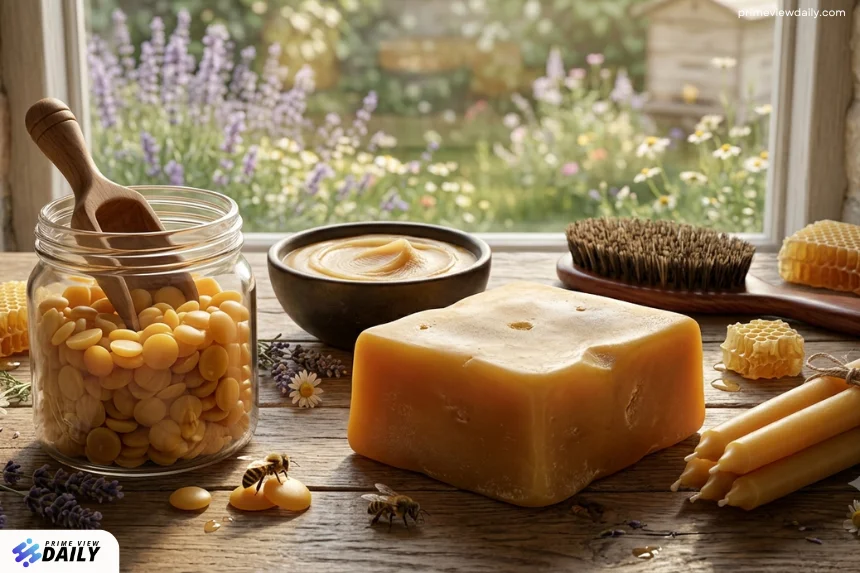
Eating Beeswax Benefits
People most often consume beeswax by eating raw honeycomb — the wax cells and all. The question of what eating beeswax actually does in the body deserves a straightforward answer, because most sources either dismiss it entirely or overstate its benefits.
The short answer: beeswax is safe to eat, but the human digestive system cannot fully break it down. Because it passes through largely unchanged, it functions more like dietary fiber than a nutrient. That said, it does contain trace amounts of long-chain fatty alcohols and antioxidants that may produce mild benefits.
Cholesterol — What the Research Actually Shows
Several sources claim that eating beeswax lowers cholesterol. The true picture is more nuanced. One review found that beeswax alcohols — long-chain aliphatic alcohols extracted from beeswax — may lower LDL cholesterol by up to 29% and raise HDL cholesterol by 8–15%. A 2025 study published in PMC found that beeswax alcohol supplementation reversed elevated oxidative markers in zebrafish on a high-cholesterol diet and improved HDL/LDL ratios significantly.
However, those studies used isolated, concentrated beeswax alcohol extracts at high doses — not the small amount of beeswax present in a piece of honeycomb. So while the mechanism is real and promising, eating a few bites of honeycomb will not reliably replicate those cholesterol outcomes. Anyone managing cholesterol should speak with a physician before relying on beeswax as a treatment.
Antibacterial Properties When Ingested
Because beeswax inhibits pathogens like E. coli, Staphylococcus aureus, and Salmonella in lab settings, researchers believe it may offer mild antibacterial protection in the gut when consumed. Ancient cultures used beeswax and honey to coat wounds precisely because of this property, and traditional medicine practitioners used it to help prevent infections when consumed. Human clinical trials to confirm this effect remain limited, so current evidence is mainly preliminary and observational.
Stomach and Digestive Protection
WebMD notes that beeswax may help protect the stomach from ulcers caused by NSAIDs (non-steroidal anti-inflammatory drugs like ibuprofen). Furthermore, because beeswax passes through the digestive tract largely intact, it acts as a mild bulking fiber, which may support gut regularity in some individuals. Neither effect has strong clinical trial data behind it in humans yet.
How People Eat Beeswax
The most common way to consume beeswax is by eating raw honeycomb — simply cut a piece and chew. The wax softens, releases the honey inside, and you can either swallow the remaining wax or spit it out. Both are safe. Beeswax is also used as a food coating and stiffening agent in commercial food manufacturing, so many people consume trace amounts without realizing it.
Beeswax Benefits: What Lacks Strong Evidence
Honest information on beeswax includes what the evidence does not yet support. Several commonly cited uses currently rest on early-stage research or preliminary studies only:
- Hemorrhoids and anal fissures — Early research on beeswax, honey, and olive oil mixtures shows reduced pain and bleeding, but larger controlled trials have not confirmed this.
- Ringworm and fungal infections — Lab studies show inhibitory effects on fungi, but human trials specific to ringworm remain limited.
- Oral mucositis — Some research explores beeswax for mouth sores, particularly in chemotherapy patients, but evidence is not yet sufficient to recommend it.
- Hair growth — Propolis (a related bee product) shows some hair-growth properties in combination with seed oils, but beeswax alone does not carry this evidence.
If you want to use beeswax for any of these conditions, consult a healthcare provider first. This is especially true for YMYL (health) purposes where existing medical treatments have stronger evidence.
How to Use Beeswax Safely
For most people, beeswax is safe both topically and when eaten as food. That said, a small number of individuals experience allergic reactions. Before applying beeswax to a larger area of skin for the first time, complete a patch test: apply a small amount to your inner wrist or elbow and wait 24–48 hours. If you notice swelling, redness, itching, or a burning sensation, discontinue use and consult a doctor.
For pregnant or breastfeeding individuals, WebMD advises caution given insufficient safety data. While beeswax in food amounts is generally considered safe, medicinal or concentrated topical use during pregnancy warrants a conversation with your healthcare provider before starting.
One practical note for facial use: because beeswax does not dissolve in water, an oil-based cleanser works best to remove it fully from the skin after use. Leaving beeswax on the face overnight is generally fine for dry skin, but thorough removal helps the skin breathe and prevents unnecessary buildup.
Frequently Asked Questions
What does beeswax do for your skin exactly?
Beeswax primarily forms a protective occlusive barrier on the skin’s surface, which slows water loss and keeps skin hydrated longer. Beyond that, its antimicrobial and anti-inflammatory properties help calm irritation, and its vitamin A content supports faster skin cell regeneration. In short, it protects, moisturizes, and helps skin recover more efficiently.
Is beeswax good for all skin types?
Generally yes — beeswax is non-comedogenic and hypoallergenic, so it suits most skin types including oily and sensitive skin. However, because it does form a barrier film, those with extremely acne-prone skin should introduce it carefully and patch-test first. Products that combine beeswax with heavy occlusive oils may feel too rich for very oily complexions.
Can you eat beeswax from honeycomb?
Yes, beeswax is safe to eat. Because the human digestive system cannot fully break it down, it passes through mostly intact and acts more like dietary fiber. Chewing honeycomb releases the raw honey inside, and you can either swallow the remaining wax or discard it — both options are safe for most adults.
Does beeswax really lower cholesterol?
Isolated beeswax alcohol extracts do show cholesterol-lowering effects in studies, with some research suggesting LDL reductions of up to 29% and HDL increases of 8–15%. However, those findings come from high-dose concentrated extracts, not from eating honeycomb. As a result, eating beeswax in everyday amounts will not reliably replicate those outcomes. Anyone with high cholesterol should work with a physician rather than relying on beeswax as a primary treatment.
Is beeswax good for natural hair?
Yes, particularly for dry, high-porosity, or coily hair types. Beeswax seals the hair cuticle, locks in moisture, reduces frizz, and provides styling hold without alcohol. That said, daily use can lead to buildup that weighs hair down. Using it 2–3 times per week and clarifying regularly prevents that problem.
What’s the difference between yellow and white beeswax for skin?
Yellow beeswax is raw and unprocessed, retaining more of its natural compounds and a mild honey scent. White beeswax undergoes bleaching to remove color and scent, making it a cleaner base for cosmetics and products where fragrance control matters. Both work effectively in skincare; yellow beeswax marginally retains more of its intact natural properties.
Can beeswax cause allergic reactions?
Yes, in rare cases. People with bee-related allergies or sensitivities to honey may react to beeswax. Reactions can include skin redness, itching, swelling, or a burning sensation. A 24–48 hour patch test on the inner wrist or elbow before full application helps identify any sensitivity before it becomes a problem.
Is beeswax safe during pregnancy?
Beeswax in food amounts — such as eating honeycomb — is generally considered safe. However, there is insufficient clinical data on concentrated medicinal or topical use during pregnancy. As a precaution, pregnant and breastfeeding individuals should check with their healthcare provider before using beeswax medicinally or in large topical applications.
Discover more on our website about roaring river state park