


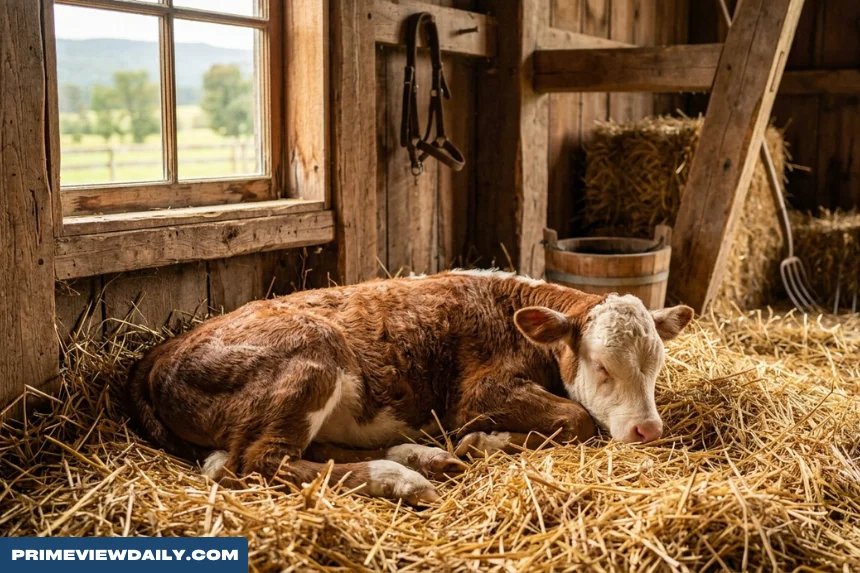
What is a heifer? A heifer is a female bovine that has not yet delivered her first calf. She may be young, fully grown, open, or pregnant, but she stays in this category until the first birth occurs.
The term depends mainly on reproductive history rather than a fixed age. Farmers may describe a young female as a calf, a pregnant first-time female as bred, and one near delivery as springing. After the first calf is born, livestock professionals generally classify her as a cow.
This distinction matters because people often use “cow” for all cattle. In everyday conversation, that is common. In agriculture, veterinary care, livestock sales, breeding records, and dairy management, however, each term has a more exact meaning.
What Is a Heifer? Quick Answer
| Question | Answer |
|---|---|
| Basic definition | A female bovine that has not produced her first calf |
| Sex | Female |
| Fixed age limit | No |
| Can she be pregnant? | Yes |
| Pregnant term | Bred heifer |
| Near-delivery term | Springing heifer |
| When does she become a cow? | After delivering her first calf |
| Can she be beef or dairy cattle? | Yes |
| Does she normally produce milk? | Regular lactation begins after calving |
| Pronunciation | HEF-er |
| Plural | Heifers |
| Best classification method | Calving history rather than appearance alone |
The USDA cattle-market terminology defines a heifer as a young female bovine that has not had her first calf. That is the clearest technical definition.
Meaning in Simple Terms
In simple terms, this animal is a future cow.
That description is easy to understand, although farmers use more precise language. A cow has already produced at least one calf, while a young female in this earlier stage has not.
The word bovine refers broadly to animals in the cattle group. The USDA agricultural thesaurus lists cattle as domesticated bovine animals raised for meat, milk, breeding, or work.
A young female may be:
- Recently weaned.
- Around one year old.
- Old enough to breed.
- Pregnant with her first calf.
- Close to delivery.
- Kept for a future dairy herd.
- Selected for a beef breeding herd.
- Raised for beef rather than reproduction.
Therefore, the name does not reveal an exact age or farm purpose. It mainly tells you that the animal is female and has not calved.
Why Reproductive History Matters
Farm terminology often combines sex, age, reproduction, and purpose.
Age alone can be misleading. One female may give birth at about two years old, while another may remain unbred for longer. The second animal is still classified by her lack of calving, even if she is older than most females in the same group.
Body size can also mislead. A large breed may produce a tall young female that looks mature, while a small mature cow may appear younger.
Pregnancy does not change the classification either. A first-time pregnant female remains in the pre-calving category until delivery.
This is why farm records are more reliable than casual visual judgment. Breeding dates, pregnancy checks, ear tags, registration papers, and calving records provide the most accurate information.
Difference From a Cow
The main difference is whether the female has delivered a calf.
| Feature | Before first calving | After first calving |
| General livestock term | Heifer | Cow |
| Sex | Female | Female |
| Has given birth | No | Yes |
| Can be pregnant | Yes | Yes |
| Udder development | Small or developing | Usually more developed after lactation |
| Regular milk production | Normally begins after first birth | May be lactating |
| Typical farm role | Future breeder, future milker, or beef animal | Breeding, milk, or beef production |
| Age | Often young, but not fixed | Usually older, though first-time mothers may still be young |
A pregnant animal carrying her first calf is still a heifer. Pregnancy alone does not make her a cow.
The change happens at delivery. Nevertheless, producers often use the expression first-calf heifer for a young female after her first birth.
That phrase may sound contradictory because she has technically become a cow. Farmers keep using it because first-time mothers need different management from mature females. They are still growing, beginning their first lactation, recovering from delivery, and preparing to breed again.
Related Cattle Terms
Livestock vocabulary becomes easier when each word is connected with sex, age, or farm use.
| Term | Sex | Meaning |
| Cattle | Male or female | General group name |
| Bovine | Male or female | Scientific or broad animal-group term |
| Calf | Male or female | Young bovine |
| Female calf | Female | Young female before maturity |
| Heifer | Female | Has not produced a calf |
| Cow | Female | Has produced at least one calf |
| Bull calf | Male | Young intact male |
| Bull | Male | Intact breeding male |
| Steer | Male | Castrated male |
| Ox | Usually male | Cattle trained for draft work |
| Yearling | Male or female | Animal around one year old |
A calf can also belong to the female pre-calving group. The words describe different features:
- Calf describes youth.
- Female describes sex.
- Heifer describes sex plus calving history.
- Yearling describes an approximate age.
- Replacement describes intended herd use.
The beef cattle producer guide from Mississippi State University uses these distinctions in practical herd management.
Age and Growth Stages
There is no single birthday when a female automatically leaves this category.
She remains a heifer until her first calf is born. Therefore, an unbred female may retain the label beyond the age when most animals in a commercial herd would already have calved.
Common age-related descriptions include:
- Female calf: From birth through the calf stage.
- Weaned female: After separation from the dam’s milk.
- Yearling female: Around one year old.
- Breeding-age female: Being prepared for first breeding.
- Pregnant first-time female: Carrying the first calf.
- Close-up female: Near the expected delivery date.
Cattle often reach puberty around 10 to 12 months, although breed, body weight, nutrition, genetics, health, and season can shift the timing. The cattle reproductive cycle in the Merck Veterinary Manual provides general puberty and cycling information.
University of Nebraska breeding-age guidance explains that many beef females reach puberty around 12 to 14 months, while producers wait until suitable body development before breeding.
Age should never be the only factor. The animal also needs enough size, skeletal development, body condition, health, and nutritional support.
Can a Heifer Be Pregnant?
Yes. A heifer can be pregnant.
Farmers call a female carrying her first calf a bred heifer. She keeps that status throughout the pregnancy because she has not delivered yet.
Other related terms include:
- Open: Not pregnant.
- Exposed: Has been placed with a bull or inseminated, but pregnancy may not be confirmed.
- Bred: Confirmed or believed to be pregnant.
- Springing: Close to first delivery.
- Close-up: A dairy-management term for a female near calving.
Pregnancy testing may involve palpation, ultrasound, blood testing, or herd records. The choice depends on the farm, stage of pregnancy, veterinary program, and available facilities.
A first-time pregnant animal needs careful nutrition because she supports fetal development while continuing her own growth. However, excess feeding can also cause management problems. Producers therefore balance body condition, forage quality, expected mature size, and calving goals.
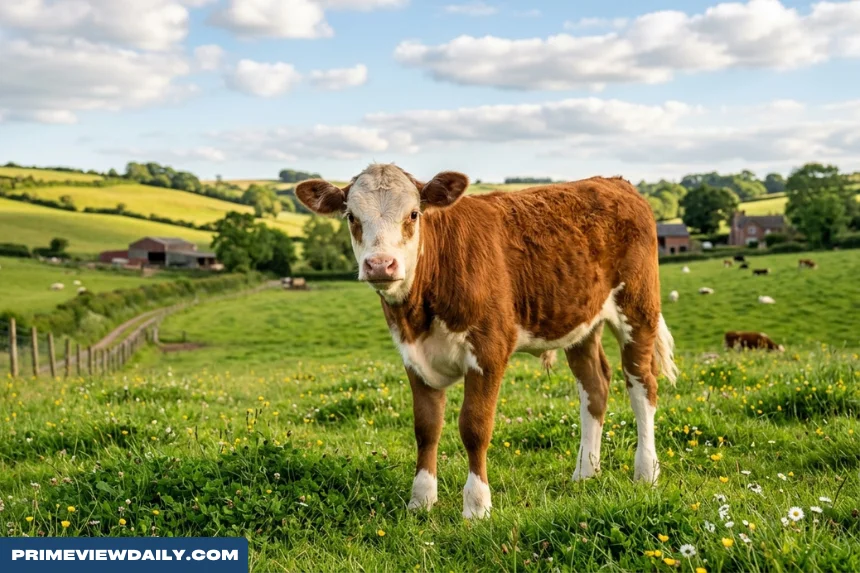
When the Animal Becomes a Cow
The transition occurs after the first calf is delivered.
The biological term for giving birth is parturition. Once parturition occurs, the young female enters the cow category under strict livestock usage.
A simple sequence looks like this:
- Female calf.
- Weaned growing female.
- Yearling.
- Open breeding female.
- Pregnant first-time female.
- Close to calving.
- First delivery.
- Cow.
In casual speech, people may call a pregnant first-time female a cow. Farm records often preserve the technical difference because reproductive status affects value, feeding, management, and calving risk.
The first birth is especially important. Younger animals may need closer observation because they have never delivered before and may have less pelvic capacity than mature cows.
The Merck Veterinary Manual’s heifer breeding programs notes that well-managed beef females often calve around 22 to 24 months when breeding and development goals are met. This is a management target, not a universal rule.
Milk Production After First Calving
A young female does not normally enter regular commercial milk production until she calves.
During pregnancy, the udder and mammary tissue develop. Near delivery, the animal begins preparing to produce colostrum. Colostrum is the first thick secretion that supplies the newborn with concentrated nutrients and antibodies.
After birth, normal lactation begins. Under strict terminology, the animal has now become a cow.
On a dairy farm, people may call her:
- A first-lactation cow.
- A first-parity cow.
- A fresh female.
- A first-calf heifer.
The final expression remains common because first-time milkers require different management from mature cows.
Rare hormonal conditions may cause mammary secretion before normal calving. However, the practical answer for most readers is that regular milk production starts after the first birth.
Role in a Dairy Herd
A dairy heifer is raised to enter the milking herd after calving.
Her growth and health affect future fertility, milk output, longevity, and farm costs. For that reason, dairy operations treat youngstock development as a long-term investment rather than simply a waiting period.
Management usually focuses on:
- Good colostrum intake after birth.
- Disease prevention.
- Clean housing and ventilation.
- Balanced nutrition.
- Steady skeletal growth.
- Proper breeding size.
- Hoof and leg soundness.
- Pregnancy care.
- Calving preparation.
- Entry into first lactation.
The goal is efficient growth without underdevelopment or excessive body fat. Slow growth may delay puberty and calving, while excess condition can create other health and production concerns.
University of Minnesota guidance on dairy calf and heifer care notes that good management often prepares dairy youngstock to freshen around 22 to 24 months. “Freshen” means to calve and begin lactation.
Role in a Beef Herd
A beef heifer may be kept for breeding or raised for meat production.
Producers generally divide suitable females into two broad paths:
- Replacement breeding stock: Selected to enter the cow herd.
- Feeder or finishing stock: Raised for beef rather than reproduction.
Replacement candidates may be evaluated for:
- Fertility.
- Sound feet and legs.
- Appropriate growth.
- Calm temperament.
- Maternal genetics.
- Structural soundness.
- Calving ease.
- Ability to maintain body condition.
- Adaptation to local climate and forage.
- Herd health history.
Not every female becomes a breeding cow. Farms keep only the number needed to maintain or expand the herd.
The others may enter normal beef-production systems. Therefore, meat from young females is a routine part of the beef supply.
Common Farm Categories
Farmers use additional terms to describe age, pregnancy, and intended use.
Young female calf
This is a female during the calf stage, usually before or shortly after weaning.
As she grows, people may shorten the description to heifer.
Yearling female
This animal is around one year old and has not calved.
She may be entering a breeding-development program or may continue growing before first breeding.
Open breeding female
“Open” means not pregnant.
The animal may never have been bred, or she may have failed to conceive after exposure.
Exposed female
This animal has been placed with a bull or inseminated, but pregnancy has not necessarily been confirmed.
“Exposed” does not mean conception definitely occurred.
Bred heifer
This term means pregnant with the first calf.
The animal remains in the pre-calving category until delivery.
Springing heifer
This is a bred female that is close to first calving.
The exact time window varies by operation, but the farm expects delivery soon.
Replacement female
A farm keeps or purchases this animal to become part of the future breeding herd.
She replaces older, infertile, unhealthy, or culled cows. Penn State discusses the economic importance of replacement-heifer management.
Feeder female
This animal is being grown or finished for beef instead of joining the breeding herd.
She may move through livestock markets, backgrounding operations, feedlots, or direct farm sales.
First-calf female
This animal has delivered her first calf.
Technically she is now a cow, but many producers continue using the transitional expression first-calf heifer because she still needs special feeding, calving, and rebreeding management.
Heiferette
This is a specialized market term.
USDA market language may use it for a young female showing cow-like characteristics that has not calved or has recently lost a first calf. Definitions vary by market context, so most beginners rarely need the term.
How Farmers Identify the Correct Category
Farmers rely on records first and appearance second.
Reliable methods include:
- Birth records.
- Ear tags.
- Electronic identification.
- Registration papers.
- Breeding dates.
- Pregnancy results.
- Calving records.
- Brands or tattoos.
- Herd-management software.
- Veterinary examination.
Physical signs can help, but they are not final proof.
A young female often has a smaller udder than a mature cow. She may also have a lighter frame and less evidence of previous lactation.
However, breed differences can make visual clues unreliable. A large beef female may outweigh a small mature cow. A pregnant animal may have a large abdomen. A dairy breed may naturally look more angular.
Therefore, reproductive records provide the best answer.
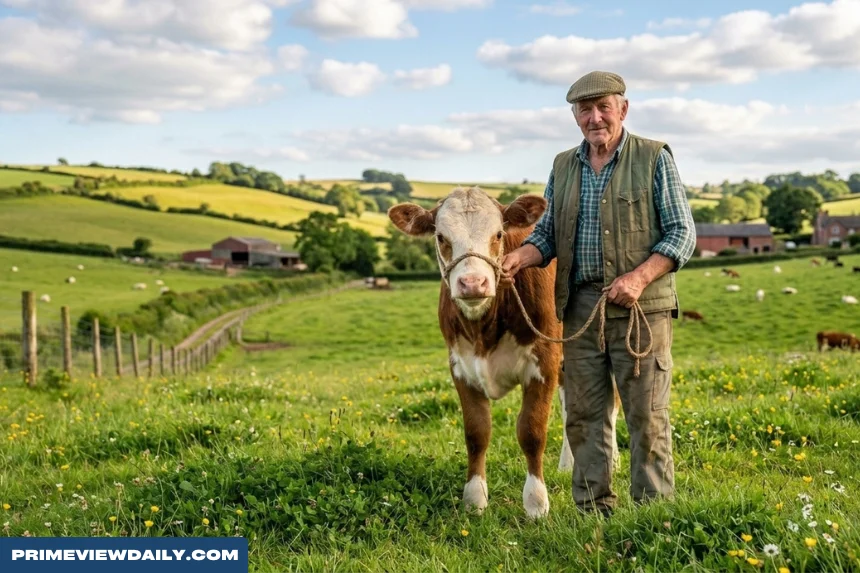
Horns Do Not Reveal Sex or Reproductive Status
Females can have horns.
Horn development depends on breed, genetics, and management rather than sex alone. Bulls, steers, young females, and mature cows may all grow horns.
Some breeds naturally lack horns. Farmers call such cattle polled. Angus is a familiar polled breed, while Texas Longhorn cattle may develop prominent horns in both sexes.
Farmers may also disbud calves or remove horns for management and safety.
Remember:
- Horned does not mean male.
- Hornless does not mean female.
- Horns do not reveal whether a female has calved.
Reproductive history remains the deciding factor.
Why These Animals Matter on a Farm
Young females represent the future of a cattle herd.
A replacement animal may eventually produce calves or milk for many years. The farm invests feed, labor, housing, health care, breeding, and time before receiving a calf crop or full lactation.
In a beef operation, replacement females shape future maternal genetics and calf performance.
In a dairy operation, youngstock replaces cows that leave because of age, fertility, health, or production concerns.
Good development can improve:
- Reproductive success.
- Calving ease.
- Milk performance.
- Herd longevity.
- Genetic progress.
- Labor efficiency.
- Herd health.
- Farm profitability.
Poor management can delay first calving, increase disease, reduce lifetime production, or cause early removal from the herd.
Selecting Replacement Females
Selection depends on farm goals and production conditions.
Common factors include:
- Healthy calfhood records.
- Suitable growth.
- Early reproductive development.
- Fertility.
- Sound legs and feet.
- Appropriate mature size.
- Calm temperament.
- Maternal traits.
- Breed or crossbreeding plan.
- Genetic information.
- Calving-ease background.
- Adaptation to local forage and weather.
Farmers may avoid keeping an animal with chronic illness, poor structure, unsuitable growth, or dangerous behavior.
Bigger is not always better. The ideal replacement fits the environment. A low-input grazing farm may prefer moderate mature size, while another operation may prioritize different traits.
Feeding and Nutrition
Diet depends on age, breed, body size, growth target, forage quality, and production system.
Common feeds include:
- Pasture.
- Hay.
- Silage.
- Grain.
- Protein supplements.
- Mineral mixes.
- Total mixed rations.
- Crop residues.
- By-product feeds.
- Clean water.
Young calves begin life on milk or milk replacer and gradually develop the rumen needed to digest forage.
After weaning, managers aim for steady growth. The diet must provide enough energy, protein, vitamins, and minerals without creating excessive fat.
Pregnant first-time females need nutrition that supports both body growth and fetal development.
Farm advisers, nutritionists, or veterinarians should design specific rations because feed quality and animal requirements vary greatly.
Pregnancy Length
Cattle gestation lasts about nine months.
A commonly used average is around 283 days, but actual length varies with:
- Breed.
- Calf sex.
- Genetics.
- Individual animal.
- Twin pregnancy.
- Environment.
- Nutrition.
- Management.
A first-time mother may need closer observation near birth because she has never calved before.
Farmers watch for:
- Udder development.
- Relaxation around the tail head.
- Vulval swelling.
- Mucus discharge.
- Restlessness.
- Isolation from the herd.
- Changes in appetite or behavior.
These signs do not predict the exact hour perfectly. Therefore, farms combine breeding records with close observation.
Reaching Breeding Readiness
Puberty begins when a young female starts normal reproductive cycling.
Age matters, but body weight and development often matter more. Breed differences also influence maturity.
Smaller or earlier-maturing breeds may cycle sooner than large, later-maturing breeds. Poor nutrition, disease, stress, or slow growth can delay puberty.
Many beef programs breed suitable females around 12 to 15 months so they calve near two years old. However, managers should evaluate body weight, pelvic development, condition, health, and farm goals.
A female that reaches puberty is biologically capable of pregnancy. That does not always mean she is ready for planned breeding.
For that reason, farms use production targets and veterinary advice rather than age alone.
Common Misunderstandings
Several myths create confusion.
Myth: Every heifer is a baby.
A heifer may be a calf, yearling, mature unbred female, or pregnant animal.
Myth: Pregnancy makes her a cow.
No. The first delivery creates the technical change.
Myth: Horns mean the animal is a bull.
No. Both sexes can have horns.
Myth: Every young female joins the breeding herd.
No. Some become replacements, while others are raised for beef.
Myth: Age alone defines the category.
No. Calving history matters most.
Myth: Young females cannot be used for beef.
They are commonly raised and marketed for meat.
Myth: Udder development proves she is a cow.
The mammary system develops during pregnancy before the first calf is born.
Myth: Cow means every cattle animal.
That usage is common in conversation, but technical farm language is narrower.
Pronunciation and Word History
Pronounce heifer as HEF-er.
The first syllable sounds like “heff,” not “high.”
- Singular: heifer.
- Plural: heifers.
- Example: “The ranch retained ten replacement females.”
- Example: “The bred heifer is expected to calve in March.”
The word has a long history in English. Dictionaries trace it through Middle English to Old English terms for a young female bovine.
Slang Use
In agriculture, heifer is a neutral and correct livestock term.
However, people have also used the word as an insulting label for a woman or girl, often targeting body size or appearance.
That slang is disrespectful and should be avoided. A legitimate farm meaning does not make the insult acceptable.
Context therefore matters. On a cattle farm, the word is ordinary and precise. When directed at a person, it is usually demeaning.
What Is a Red Heifer?
A red heifer is literally a young female bovine with a red or reddish coat that has not calved.
It is not a separate species, and the phrase does not identify one single cattle breed. Many breeds and crosses can produce red-coated females.
The term also appears in the Hebrew Bible and Jewish religious tradition, where it has a specific ritual meaning. From an agricultural perspective, the definition remains simple: female, uncalved, and red-coated.
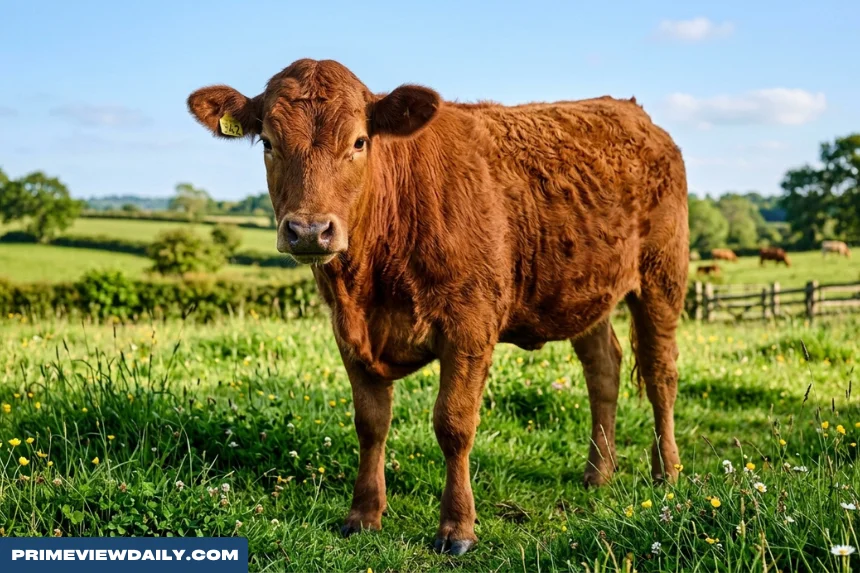
What Is a Heifer FAQ
1. What is a heifer?
A heifer is a female bovine that has not yet delivered her first calf. She may be young, mature, open, or pregnant.
2. How is she different from a cow?
A cow has produced at least one calf, while the younger female has not. Calving history, not age alone, creates the technical difference.
3. Can the animal be pregnant?
Yes. Farmers call a pregnant first-time female a bred heifer, and she keeps that status until delivery.
4. When does she enter the cow category?
She generally becomes a cow immediately after delivering her first calf. Producers may still use the transitional phrase first-calf heifer for management purposes.
5. Does she produce milk?
Regular milk production usually begins after first calving. During pregnancy, the udder develops and prepares to produce colostrum.
6. Is there a fixed age limit?
No. Many managed females calve around 22 to 24 months, but breed, nutrition, growth, health, and farm goals create variation.
7. What does “bred” mean?
A bred female is pregnant with her first calf. The term describes reproductive status rather than age.
8. What is a replacement female?
This is an animal selected or purchased to enter the breeding herd and replace cows that leave.
9. Is she the same as a calf?
Not exactly. A calf is any young bovine, male or female. A young female may be both a calf and a heifer.
10. Can females have horns?
Yes. Horns depend on breed, genetics, and management rather than sex or calving history.
Conclusion
So, what is a heifer? It is a female bovine that has not yet produced her first calf.
She may be young or mature, open or pregnant, dairy or beef. Pregnancy does not change the category; the first birth does.
Understanding that rule also makes the rest of cattle vocabulary easier. Calf describes youth, bull and steer describe male status, cow describes a female that has calved, and cattle is the broad group. The most reliable rule is simple: age and appearance may offer clues, but reproductive history determines the correct term.
Read more Prime View Daily