


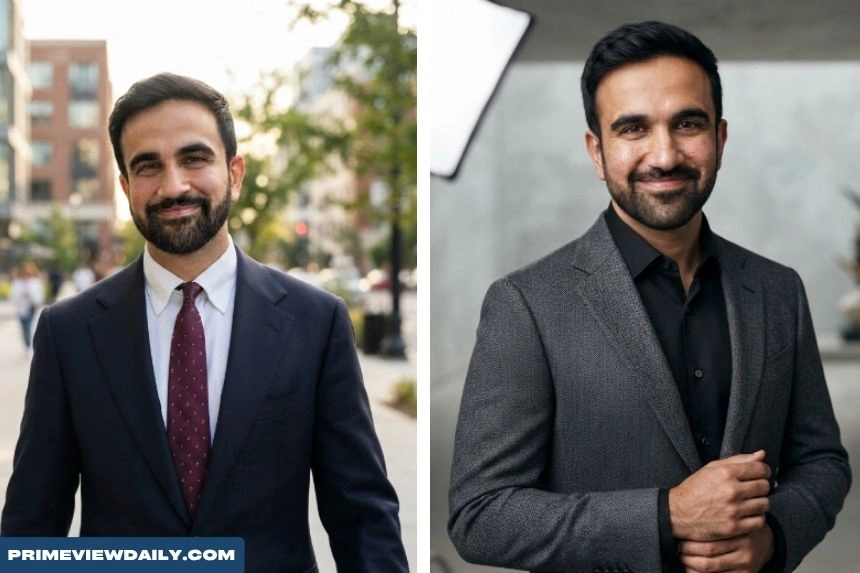
No, Zohran Mamdani cannot become president under the current U.S. Constitution. He completed U.S. naturalization in 2018 rather than holding citizenship from birth, so he does not meet Article II’s natural-born-citizen requirement.
Mamdani’s age is only a temporary issue. Born on October 18, 1991, he is 34 as of August 3, 2026, and will turn 35 later this year. He has also lived in the United States since childhood, so the 14-year residence requirement does not appear to be a barrier.
Therefore, the lasting constitutional obstacle is citizenship at birth. Turning 35, winning another election, or becoming more nationally influential cannot remove it. Only a constitutional amendment could change the rule.
Can Mamdani Become President? Quick Answer
| Question | Answer |
|---|---|
| Can Mamdani become president under current law? | No |
| Current office | 112th mayor of New York City |
| Sworn in | January 1, 2026 |
| Born | October 18, 1991 |
| Birthplace | Kampala, Uganda |
| Current age | 34 as of August 3, 2026 |
| U.S. citizenship | Naturalized in 2018 |
| Natural-born citizen | No |
| Age requirement | He turns 35 on October 18, 2026 |
| Residence requirement | He appears to satisfy it |
| Can he run in 2028? | He would meet age and residence rules, but not the natural-born rule |
| Can he become vice president? | No |
| Could Congress pass a law making him eligible? | No |
| Could an amendment make him eligible? | Yes, in theory |
| Has he announced a presidential campaign? | No |
| Can he influence national politics? | Yes |
Can Mamdani Become President Under Current Law?
The answer is no.
The Article II presidential qualifications require a president to be a natural-born citizen, at least 35 years old, and a United States resident for at least 14 years.
Zohran Mamdani is a U.S. citizen. However, public biographies and contemporary reporting place his U.S. naturalization in 2018.
That distinction matters because the presidential clause does not say that any citizen may hold the office. It specifically uses the narrower term “natural born Citizen.”
Under the prevailing constitutional interpretation, a naturalized citizen does not meet that requirement. Therefore, Mamdani cannot qualify for the presidency unless the Constitution changes.
This conclusion does not depend on whether voters support his political platform. It would apply to a naturalized citizen from any political party.
Who Is Zohran Mamdani Today?
Zohran Kwame Mamdani serves as the 112th mayor of New York City. The official city biography says he took office on January 1, 2026, after previously representing parts of Queens in the New York State Assembly.
An Associated Press profile reports that he moved to New York at age seven and completed naturalization in 2018. Those facts explain how an immigrant can become the elected leader of the nation’s largest city while remaining ineligible for one specific federal office.
His mayoral victory does not alter Article II. Local and state offices use different eligibility rules, and most do not require citizenship from birth.
Likewise, political popularity cannot convert naturalized citizenship into natural-born citizenship. The Constitution evaluates the candidate’s legal qualifications separately from the election result.
This distinction also explains why Mamdani’s career can continue in many directions. He may seek reelection, support federal candidates, influence his party, or pursue offices whose rules permit naturalized citizens. The presidency and vice presidency remain the exceptions.

What Does the Constitution Require for a President?
Article II contains three basic qualifications.
| Constitutional requirement | General meaning | Mamdani’s status |
| Natural-born citizen | A person who was a U.S. citizen at birth and did not need later naturalization | Does not qualify |
| At least 35 years old | The person must reach the constitutional age threshold | Turns 35 in October 2026 |
| Resident in the United States for at least 14 years | The person must have sufficient U.S. residence | Appears to qualify |
The Constitution does not require a college degree, military service, prior elected office, wealth, or membership in a political party.
It also does not require 14 years of citizenship. The wording refers to residence.
Therefore, Mamdani’s years in the United States can satisfy the residence rule even though he was not yet a citizen during all of them.
Why Mamdani Does Not Meet the Natural-Born Requirement
Mamdani was born in Kampala, Uganda, in 1991. He later moved to New York City with his family and completed American naturalization in 2018.
The important fact is not simply that he was born abroad. Instead, the decisive point is that he acquired U.S. citizenship later through naturalization.
The congressional Qualifications for the Presidency explanation notes that constitutional commentators generally understand a natural-born citizen to be someone who held U.S. citizenship from birth and did not need a later naturalization proceeding.
Mamdani’s public citizenship history places him outside that category.
Naturalization does not operate backward in time. It makes a person a citizen from the date the process becomes legally effective, but it does not turn the person into a citizen at birth.
Therefore, his 2018 citizenship cannot satisfy a constitutional requirement based on birth status.
Is Zohran Mamdani a U.S. Citizen?
Yes. Zohran Mamdani is a U.S. citizen.
He completed naturalization in 2018. Through the naturalization process, an eligible noncitizen obtains American citizenship after birth.
Naturalized citizens hold nearly all the central rights of citizenship. They can:
- Vote in federal elections.
- Obtain a U.S. passport.
- Hold most elected offices.
- Serve in Congress if they meet the applicable requirements.
- Serve as governors or mayors when state and local rules permit.
- Work in government positions.
- Receive constitutional protections.
- Participate fully in civic and political life.
The presidency is a narrow constitutional exception. The vice presidency is another because the Twelfth Amendment links its eligibility to presidential eligibility.
Therefore, saying Mamdani is ineligible for president does not mean he is less American under ordinary law or lacks full citizenship rights generally.
Does Being Born Outside the U.S. Always Prevent a Presidential Run?
No.
A person born outside the United States may be a citizen at birth under federal law. This may occur when one or both parents are U.S. citizens and meet the applicable residence or physical-presence requirements.
USCIS explains forms of citizenship acquired after birth, while federal law also recognizes citizenship at birth for certain children born abroad.
That means birthplace alone cannot answer presidential eligibility.
Two people may both be born outside the United States but have different constitutional positions:
- One may have been a U.S. citizen from birth through a parent.
- The other may have become a citizen years later through naturalization.
The first person may fall within the prevailing understanding of “natural born,” while the second does not.
Mamdani belongs to the second category because he naturalized in 2018.
Therefore, headlines saying he is disqualified merely because he was born in Uganda are incomplete.
What Does “Natural-Born Citizen” Mean?
The Constitution uses the phrase but does not provide a separate definition.
This has created debate around difficult cases, especially people born abroad who were U.S. citizens from birth.
However, Mamdani’s case does not depend on resolving every edge case. His citizenship history is much clearer because he became a citizen through naturalization.
The prevailing interpretation distinguishes between:
- Citizenship held from birth.
- Citizenship obtained later.
A natural-born citizen is generally understood to belong to the first group.
A naturalized citizen belongs to the second.
No constitutional amendment or controlling court decision has erased that distinction for presidential eligibility.
Therefore, the uncertainty surrounding some foreign-born citizens at birth does not make Mamdani eligible.
Does Mamdani Meet the Age Requirement?
Not yet as of August 3, 2026, but he will meet it soon.
Mamdani was born on October 18, 1991. Therefore, he turns 35 on October 18, 2026.
By the 2028 presidential election, he would be 37. He would also be 37 when the next presidential term began in January 2029.
Consequently, age would not prevent him from seeking the presidency in 2028 if age were the only issue.
However, the citizenship-at-birth rule would still apply.
A candidate must satisfy all constitutional qualifications, not merely two of the three.
Therefore, turning 35 will not make him eligible.
Does Mamdani Meet the 14-Year Residence Requirement?
He appears to meet it.
Mamdani moved to New York City as a child and has lived in the United States for well over 14 years.
The Constitution’s language refers to residence, not continuous citizenship. Therefore, years lived in the United States before naturalization can still matter to the residence calculation.
This makes residence different from the natural-born requirement.
Residence develops over time. Age also changes over time.
Citizenship at birth, however, is a status fixed by the circumstances and law existing when the person was born.
Therefore, Mamdani can age into the 35-year requirement and accumulate enough residence, but he cannot age into natural-born status.
Can Mamdani Run for President in 2028?
Under the Constitution as it currently exists, he cannot become president in 2028.
By that election, he would meet the age requirement. He also appears to meet the residence requirement.
However, he would remain a naturalized citizen.
Some readers distinguish between “running” and “serving.” Technically, an ineligible person might attempt to file campaign paperwork, raise money, seek ballot access, or create a political organization.
Nevertheless, those actions would not create constitutional eligibility.
State election officials, courts, political parties, Congress, and the Electoral College could all face disputes if an ineligible candidate pursued a serious campaign.
The Twentieth Amendment also addresses situations in which a president-elect fails to qualify.
Therefore, winning votes would not override Article II. The correct practical answer remains that Mamdani cannot run a valid campaign that ends with him lawfully becoming president under current rules.
Can Mamdani Become Vice President?
No.
The Twelfth Amendment says that a person constitutionally ineligible to be president is also ineligible to be vice president.
This prevents a simple workaround.
A presidential candidate could not place Mamdani on the ticket as vice president and later transfer presidential power to him.
The rule applies because the vice president may need to become president.
Therefore, the natural-born-citizen requirement blocks both offices.
Could Mamdani Become President Through Succession?
No constitutional office provides an easy succession loophole.
The presidential succession system includes the vice president, Speaker of the House, president pro tempore of the Senate, and eligible cabinet officers.
However, a person must still satisfy the Constitution to become president.
When an officer in the succession line lacks constitutional eligibility, the succession process skips that officer.
Therefore, Mamdani could not reach the presidency by becoming:
- Speaker of the House.
- Secretary of state.
- Another cabinet secretary.
- A different officer in the succession line.
This does not necessarily prevent him from holding every one of those underlying positions. It prevents him from assuming the presidency through them.
Could Congress Pass a Law Making Mamdani Eligible?
No.
Congress cannot remove a constitutional qualification through an ordinary statute.
The Constitution is superior to federal and state legislation. A law saying that naturalized citizens may become president would conflict directly with Article II.
Likewise, a president could not change the rule through an executive order.
A state could not change it through state law.
New York City could not change it through a charter amendment.
A political party could not change it through its nomination rules.
Therefore, only a constitutional amendment can remove or rewrite the natural-born-citizen requirement.
Could the Constitution Be Amended?
Yes, in theory.
Article V provides the constitutional amendment process for changing the Constitution.
The country may propose an amendment in either of two ways:
- Two-thirds of both the House and Senate approve it.
- Two-thirds of state legislatures apply for a convention to propose amendments.
After proposal, three-fourths of the states must ratify the amendment. That currently means 38 states.
The process is intentionally difficult.
A proposal could:
- Remove the natural-born-citizen requirement entirely.
- Replace it with a minimum number of years of citizenship.
- Allow naturalized citizens after a specified period.
- Create another citizenship standard.
However, no such amendment has taken effect.
Any proposal would also need wording and an effective date that actually covered Mamdani.
Therefore, it is legally possible but politically remote.
Has Mamdani Asked for the Rule to Change?
No public evidence shows that Mamdani has made changing the rule a personal campaign.
During a June 2026 national interview, a journalist asked him about the Constitution and his presidential ineligibility. He indicated that he did not want the rule changed for him and expressed acceptance of the current text.
That response matters because speculation about his presidential future has largely come from commentators, supporters, critics, and discussions of the “Mamdani effect.”
He has not announced a 2028 presidential campaign.
He has not launched an amendment organization.
He has not presented himself as a legally eligible presidential candidate.
Therefore, an article should distinguish public speculation from his stated position.
Why Is Mamdani Discussed in 2028 Politics?
Mamdani’s name appears in 2028 discussions because his political influence has expanded beyond New York City.
The official New York City mayor biography identifies him as the city’s 112th mayor, sworn in on January 1, 2026.
By mid-2026, candidates he endorsed had won significant Democratic primary contests. Supporters argued that his emphasis on affordability, rent, public services, labor, and economic inequality could shape national Democratic strategy.
This influence can matter even though he cannot become president.
He can act as:
- A major surrogate.
- An endorser.
- A fundraiser.
- A policy advocate.
- A coalition builder.
- A convention speaker.
- A critic of party leadership.
- A supporter of aligned presidential candidates.
Political parties often change because of mayors, governors, lawmakers, activists, donors, labor groups, and ideological movements, not only presidential candidates.
Therefore, Mamdani can help shape a presidential election without appearing on the ballot.
What Does the “Mamdani Effect” Mean?
The phrase refers to his broader influence on progressive and democratic-socialist politics.
It may include:
- Greater focus on housing affordability.
- Support for rent regulation.
- Expansion of public services.
- Higher taxes on wealthy residents or corporations.
- Greater labor influence.
- Opposition to centrist Democratic leadership.
- Stronger organizing among younger voters.
- New attention to democratic-socialist candidates.
- More conflict over Israel and Palestine policy.
- Debate about whether urban progressive policies can win nationally.
The phrase does not mean Mamdani is constitutionally eligible.
It means that his political style, endorsements, policy agenda, and electoral coalition may influence people who are eligible.
Therefore, a 2028 “Mamdani effect” could be real even without a Mamdani campaign.
Does Mamdani’s Political Ideology Affect Eligibility?
No.
Mamdani identifies as a democratic socialist. Critics have used labels such as communist, while supporters describe him as a progressive or left-wing populist.
None of those descriptions changes the constitutional analysis.
Article II does not require a candidate to support capitalism, socialism, conservatism, liberalism, or any other ideology.
A natural-born citizen with the required age and residence may be eligible regardless of political philosophy, subject to other constitutional restrictions.
A naturalized citizen remains ineligible regardless of ideology.
Therefore, arguments about whether Mamdani is too far left, too influential, or politically popular are separate from the legal question.
What Offices Can a Naturalized Citizen Hold?
A naturalized citizen can hold many of the most powerful offices in American government.
Depending on age, residence, and other applicable rules, a naturalized citizen may serve as:
- Mayor.
- City council member.
- State legislator.
- Governor.
- U.S. representative.
- U.S. senator.
- Federal judge.
- Cabinet secretary.
- Ambassador.
- Agency head.
- Party leader.
- Campaign official.
The Constitution requires seven years of citizenship for the House and nine years for the Senate, but neither chamber requires natural-born status.
Therefore, Mamdani could pursue congressional office if he met the relevant requirements.
The presidency and vice presidency remain the main citizenship-at-birth exceptions.
Could Mamdani Serve in Congress?
Yes, if elected and otherwise qualified.
The House requires a member to be at least 25, a U.S. citizen for at least seven years, and an inhabitant of the state represented at the time of election.
The Senate requires a member to be at least 30, a citizen for at least nine years, and an inhabitant of the state represented.
Because Mamdani completed naturalization in 2018, election officials would calculate the citizenship-duration rule for the particular congressional election.
He has already held state and city office.
Therefore, presidential ineligibility does not prevent a broader federal career.
Could the Natural-Born Rule Be Challenged in Court?
A lawsuit could challenge how officials applied the rule, but a court cannot casually erase explicit constitutional text.
Courts might need to decide:
- Whether a person was a citizen at birth.
- Whether a ballot challenge is timely.
- Which party has legal standing.
- Whether a state official may exclude a candidate.
- How Congress handles electoral votes.
- Whether a dispute is ripe for review.
However, Mamdani’s naturalization history makes the central citizenship fact relatively straightforward.
The difficult cases usually involve foreign-born people claiming citizenship from birth through a parent.
Mamdani does not make that claim. Public records identify him as naturalized in 2018.
Therefore, litigation would be unlikely to transform his status into natural-born citizenship.
Can Mamdani’s Citizenship Be Revoked Because of Politics?
Not merely because of his politics.
Naturalized citizenship carries strong legal protection. Political disagreement, controversial policy views, or election to office does not automatically permit denaturalization.
Government efforts to revoke naturalization generally require a legal basis connected to the naturalization process, such as material fraud or unlawful procurement, and involve judicial procedures.
There is no public evidence in the sources used for this article establishing that Mamdani obtained citizenship unlawfully.
Therefore, claims that opponents can simply revoke his citizenship and deport him because of political conflict are misleading.
This question is separate from presidential eligibility. Mamdani holds valid naturalized citizenship while the Constitution still excludes him from the presidency.
Can Mamdani Become President FAQ
1. Can Mamdani become president?
No. Zohran Mamdani cannot become president under the current Constitution because he became a U.S. citizen through naturalization in 2018 rather than holding citizenship from birth.
2. Why is Zohran Mamdani not a natural-born citizen?
He was born in Uganda and later obtained U.S. citizenship through naturalization. Natural-born citizenship generally refers to citizenship held from birth without a later naturalization process.
3. Is Zohran Mamdani a U.S. citizen?
Yes. Mamdani is a naturalized U.S. citizen. Presidential ineligibility does not cancel or weaken his citizenship in other areas of law.
4. Does being born outside America always disqualify a candidate?
No. Some people born abroad are U.S. citizens at birth through their parents. The important question is whether the person held citizenship from birth or acquired it later.
5. Will Mamdani be old enough to run in 2028?
Yes. He turns 35 on October 18, 2026, so he would satisfy the age requirement in 2028. However, the natural-born-citizen requirement would still disqualify him.
6. Does Mamdani meet the 14-year residency rule?
He appears to meet it because he has lived in the United States since childhood. The residence requirement is separate from citizenship at birth.
7. Can Mamdani become vice president?
No. The Twelfth Amendment bars anyone constitutionally ineligible for president from serving as vice president.
8. Could Congress change the rule by passing a law?
No. An ordinary law cannot override Article II. Changing the natural-born-citizen rule requires a constitutional amendment.
9. Could a constitutional amendment make Mamdani eligible?
Yes, in theory. An amendment could change the citizenship qualification, but it would require proposal through Article V and ratification by three-fourths of the states.
10. Can Mamdani influence a presidential election without running?
Yes. He can endorse candidates, raise money, organize voters, shape policy debates, support a party platform, and act as a national political leader.
Conclusion
So, can Mamdani become president? Not under the Constitution as it currently stands.
Zohran Mamdani completed U.S. naturalization in 2018. He will soon meet the 35-year age requirement and already appears to meet the 14-year residence requirement.
However, those qualifications cannot replace the natural-born-citizen requirement.
He also cannot use the vice presidency or presidential succession as a workaround. Congress cannot solve the issue through an ordinary law.
Only a constitutional amendment could make a naturalized citizen in Mamdani’s position eligible. Until that happens, his national role can be influential, but it cannot include lawfully becoming president.