


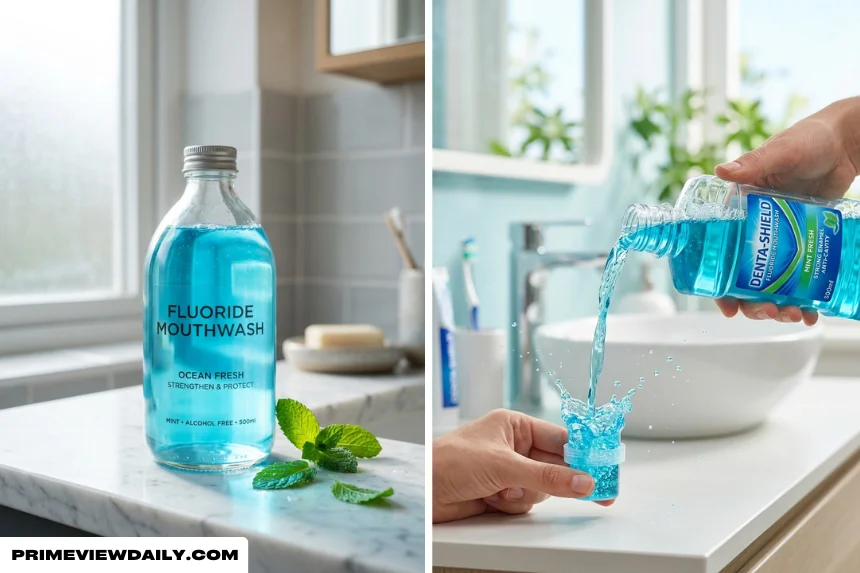
The best fluoride mouthwash depends on your risk of tooth decay, age and specific oral-health needs. For general cavity protection, an alcohol-free daily rinse containing around 225 to 230 parts per million fluoride offers a practical starting point. However, people with dry mouth, sensitive teeth or gum problems may benefit from a more specialised formula.
Fluoride mouthwash adds another layer of protection, but it cannot replace fluoride toothpaste, brushing or interdental cleaning. In addition, you should normally use mouthwash at a different time from brushing. Otherwise, the rinse may wash away the more concentrated fluoride that toothpaste leaves on your teeth.
UK dental guidance particularly supports fluoride rinses for people who face a higher risk of decay. For example, people with braces, exposed tooth roots, reduced saliva flow or recurring cavities may gain more from daily rinsing than someone with a low decay risk.
Best Fluoride Mouthwashes at a Glance
| Product | Fluoride level | Alcohol-free | Best for | Main consideration |
|---|---|---|---|---|
| Colgate FluoriGard Daily Rinse | 225 ppm | Yes | General cavity protection | Follow the age guidance on the current label |
| Listerine Total Care Mild Taste | 450 ppm | Yes | Higher-fluoride general care | Not suitable for children under 12 |
| Corsodyl Active Gum Health Daily Mouthwash | 225 ppm | Yes | Gum care and cavity protection | Cannot replace plaque removal |
| Oralieve Alcohol-Free Mouthrinse | 225 ppm | Yes | Dry or sensitive mouths | Contains milk proteins |
| Endekay Daily Fluoride Mouthrinse | 0.05% sodium fluoride | Check label | Simple daily fluoride use | Availability may vary |
| Sensodyne Pronamel Daily Mouthwash | Check label | Check label | Sensitive teeth and enamel care | Confirm the current formulation |
Manufacturers sometimes change ingredients, age limits and instructions. Therefore, check the bottle before you buy or use any mouthwash.
Which Fluoride Mouthwash Is Best Overall?
Colgate FluoriGard Daily Rinse
Best for: straightforward daily cavity protection
Colgate FluoriGard Daily Rinse offers the most balanced option for people who mainly want additional fluoride protection.
The formula contains 0.05% sodium fluoride, which provides 225 ppm fluoride. This concentration closely matches the level discussed in UK preventive dental guidance for daily rinsing. Furthermore, the alcohol-free formula may suit people who dislike the burning sensation that some stronger mouthwashes cause.
The manufacturer states that children over six can use the product. However, UK public-health guidance generally discusses fluoride rinses for children aged eight and over. Parents should therefore check the current packaging and ask a dentist before giving it to a younger child.
Advantages
- Contains a clearly stated fluoride concentration
- Uses an alcohol-free formula
- Focuses primarily on cavity prevention
- Works well as a simple daily rinse
Possible drawback: People with a low risk of tooth decay may not need an additional fluoride rinse if they already brush effectively with fluoride toothpaste.
Best Higher-Fluoride Alcohol-Free Mouthwash
Listerine Total Care Mild Taste Alcohol Free
Best for: adults and teenagers over 12 who want broader everyday protection
Listerine Total Care Mild Taste Alcohol Free contains 450 ppm fluoride. Therefore, it provides twice as much fluoride as many standard 225 ppm daily rinses.
The formula also targets plaque bacteria, bad breath and general oral hygiene. In addition, the mild-taste version avoids alcohol, which may make it more comfortable than traditional Listerine formulas.
However, a higher fluoride figure does not automatically make a mouthwash better for every person. Your cavity risk, age and daily routine matter just as much. You should also follow the frequency and quantity shown on the product label.
Advantages
- Contains 450 ppm fluoride
- Avoids alcohol
- Supports several aspects of everyday oral care
- Offers a milder taste than stronger Listerine formulas
Possible drawback: The brand may tell users to rinse after brushing, while NHS guidance recommends using mouthwash at another time. For instance, you could use it after lunch instead.
Best Fluoride Mouthwash for Gum Care
Corsodyl Active Gum Health Daily Mouthwash
Best for: people who want fluoride protection alongside gum-care support
Corsodyl Active Gum Health Daily Mouthwash contains 225 ppm fluoride and uses an alcohol-free formula. It also targets plaque bacteria associated with gum problems.
However, this daily product differs from intensive Corsodyl treatments that contain chlorhexidine. Dentists often recommend chlorhexidine for a specific problem and a limited period because long-term use can cause staining or changes in taste.
The daily gum-health rinse may complement a good cleaning routine. Nevertheless, it cannot remove established plaque or tartar. A toothbrush and interdental brush must physically disrupt plaque around the teeth and gumline.
Advantages
- Contains 225 ppm fluoride
- Uses an alcohol-free formula
- Combines cavity protection with gum-care support
- Suits routine use better than an intensive treatment rinse
Possible drawback: Mouthwash alone will not resolve persistent bleeding, swelling or gum recession. Therefore, arrange a dental assessment when symptoms continue.
Best Fluoride Mouthwash for Dry Mouth
Oralieve Alcohol-Free Mouthrinse
Best for: people with a dry, sore or easily irritated mouth
Saliva protects teeth by neutralising acids, clearing food particles and supplying minerals to enamel. As a result, persistent dry mouth can significantly raise the risk of tooth decay.
Oralieve Alcohol-Free Mouthrinse contains 225 ppm fluoride. It also avoids alcohol, sodium lauryl sulphate and strong flavours. Consequently, people with a sensitive or dry mouth may find it gentler than an intense mint rinse.
The formula also contains xylitol and ingredients that support moisture and comfort. However, it contains milk proteins, so people with a milk allergy should not use it.
Advantages
- Contains 225 ppm fluoride
- Avoids alcohol and strong flavours
- Suits dry or easily irritated mouths
- Supports cavity prevention and mouth comfort
Possible drawback: The brand generally recommends the product for people aged 12 and over unless a healthcare professional advises otherwise.
Persistent dry mouth may result from medicines, dehydration, mouth breathing or an underlying health condition. Therefore, speak to a dentist, pharmacist or doctor rather than relying only on mouthwash.
Best Simple Daily Fluoride Rinse
Endekay Daily Fluoride Mouthrinse
Best for: people who want a straightforward fluoride product
Endekay Daily Fluoride Mouthrinse contains 0.05% sodium fluoride and supports daily cavity prevention. Unlike multipurpose formulas, it focuses mainly on fluoride protection.
Because of its simple purpose, Endekay may suit someone who does not need additional gum, whitening or sensitivity claims. It can also provide an alternative when larger supermarket brands do not appeal.
Advantages
- Contains 0.05% sodium fluoride
- Offers a straightforward daily formula
- Supports enamel remineralisation
- Commonly appears in UK pharmacies
Possible drawback: Shops may stock it less consistently than larger brands. In addition, you should check the current bottle for alcohol content, age limits and instructions.
Best Fluoride Mouthwash for Sensitive Teeth
Sensodyne Pronamel Daily Mouthwash
Best for: people concerned about tooth sensitivity or enamel wear
Sensodyne Pronamel Daily Mouthwash fits naturally into a routine that already includes sensitivity toothpaste. The range focuses on protecting weakened enamel and reducing the discomfort associated with sensitive teeth.
However, product formulations can change. Therefore, check the back of the bottle for the current fluoride concentration, alcohol content and age restriction before buying it.
A sensitivity mouthwash may reduce discomfort in some situations. Nevertheless, it cannot repair a cracked tooth, decayed area or failing filling. New or severe sensitivity needs professional assessment, especially when it affects only one tooth.
Advantages
- Complements a sensitivity-focused routine
- Supports enamel and cavity care
- Comes from an established sensitive-teeth range
- May feel gentler than an intense general mouthwash
Possible drawback: The front label may not display the precise fluoride concentration clearly, so check the ingredients panel.
What Fluoride Strength Should Mouthwash Contain?
Manufacturers usually display fluoride strength as parts per million, shortened to ppm, or as a percentage of sodium fluoride.
A standard daily mouthwash commonly contains:
- 0.05% sodium fluoride
- Approximately 225 to 230 ppm fluoride
UK preventive guidance discusses a daily rinse containing about 230 ppm fluoride for people aged eight and over who face a higher risk of tooth decay. In addition, the guidance recommends brushing twice daily with toothpaste containing at least 1,350 ppm fluoride.
Some mouthwashes provide 450 ppm fluoride. However, a stronger concentration does not necessarily suit everyone. Consider your age, cavity risk and the manufacturer’s directions before choosing one.
Does Fluoride Mouthwash Help Prevent Cavities?
Fluoride makes enamel more resistant to acid attacks. It also supports remineralisation, which returns minerals to areas of enamel that acids have started to weaken.
A Cochrane review found that supervised fluoride mouthrinsing reduced decay in the permanent teeth of children and teenagers. However, many of the studies examined school programmes rather than unsupervised home use. Therefore, the results may not apply equally to every household routine.
UK guidance treats fluoride mouthwash as an additional preventive tool, especially for people with an increased cavity risk. Even so, the following habits remain more important:
- Brush twice daily with fluoride toothpaste.
- Spit out the toothpaste without rinsing with water.
- Clean between the teeth every day.
- Reduce how often you consume sugary foods and drinks.
- Attend dental appointments at the interval your dentist recommends.
Who May Benefit Most From Fluoride Mouthwash?
A dentist may recommend a fluoride rinse when someone has:
- Active or recurring tooth decay
- Braces or another orthodontic appliance
- Exposed tooth roots
- Reduced saliva flow
- Persistent dry mouth
- Difficulty cleaning around bridges or dental work
- A medical condition or medicine that increases cavity risk
For example, braces create extra areas where plaque and food can collect. A fluoride rinse can provide additional protection, although careful brushing remains essential.
Similarly, dry mouth reduces the natural protection that saliva provides. Therefore, a gentle fluoride rinse may offer more value to someone with dry mouth than to a person with low decay risk.
When Should You Use Fluoride Mouthwash?
Use fluoride mouthwash at a different time from brushing.
Toothpaste normally contains much more fluoride than mouthwash. Therefore, rinsing immediately after brushing can dilute or remove the concentrated fluoride left on the teeth.
The NHS recommends choosing another time, such as after lunch. It also advises avoiding food or drink for 30 minutes after using fluoride mouthwash.
A practical daily routine could look like this:
- Brush with fluoride toothpaste after breakfast.
- Use fluoride mouthwash after lunch.
- Avoid food and drink for 30 minutes.
- Brush again before bed.
- Spit out the toothpaste without rinsing.
Always follow the amount and rinsing time stated on the bottle. Most importantly, do not swallow mouthwash.
Should You Choose an Alcohol-Free Mouthwash?
Alcohol does not prevent cavities; fluoride provides that protection.
An alcohol-free formula may suit you when:
- Mouthwash causes burning or discomfort.
- You have a dry or sensitive mouth.
- You avoid alcohol for personal or religious reasons.
- You need a gentler everyday formula.
- An older child will use the product under appropriate supervision.
However, products from the same brand can contain different ingredients. For example, Listerine Total Care Mild Taste avoids alcohol, while some other Total Care formulas contain it. Therefore, always check the exact product rather than relying on the brand name alone.
How to Choose the Best Fluoride Mouthwash
Check the fluoride level
First, look for sodium fluoride in the ingredient list. A daily rinse often contains around 225 to 230 ppm fluoride.
Match the formula to your needs
Next, consider the main problem you want to address. Someone with dry mouth may prefer a mild, alcohol-free rinse, while someone with gum concerns may choose a daily gum-care formula.
Check the age restriction
Manufacturers set different minimum ages. Therefore, never assume that every fluoride mouthwash suits children.
Consider taste and comfort
A product will only help when you use it consistently. As a result, choose a flavour and intensity that you can tolerate.
Follow the label
Finally, use the stated quantity and frequency. Using more mouthwash than the label recommends will not necessarily provide greater protection.
Common Mistakes to Avoid
Using mouthwash immediately after brushing
This can remove the concentrated fluoride left by toothpaste. Instead, rinse at another time of day.
Replacing brushing with mouthwash
Mouthwash cannot physically remove plaque as effectively as a toothbrush and interdental cleaner. Therefore, continue brushing twice daily.
Buying a fluoride-free product by mistake
Some products focus only on breath, whitening or botanical ingredients. Consequently, you should check for sodium fluoride and a stated ppm level.
Giving adult mouthwash to a young child
Age limits vary between products. Children must also know how to rinse and spit without swallowing.
Using an intensive treatment rinse for too long
Daily fluoride mouthwash and short-term medicated mouthwash serve different purposes. Therefore, follow your dentist’s instructions when using chlorhexidine or another treatment product.
Frequently Asked Questions
What is the best fluoride mouthwash for everyday use?
Colgate FluoriGard Daily Rinse offers a balanced everyday option because it contains 225 ppm fluoride and avoids alcohol. Endekay also provides a simple 0.05% sodium fluoride formula.
Is 225 ppm fluoride enough in mouthwash?
Yes, 225 to 230 ppm represents a common concentration for daily fluoride rinses. UK guidance discusses this strength as an additional option for people with a higher risk of decay.
Is 450 ppm fluoride mouthwash better?
Not necessarily. Although 450 ppm provides more fluoride per rinse, your age, cavity risk and frequency of use also matter. Therefore, follow the product directions or ask your dentist.
Can I use fluoride mouthwash every day?
Many fluoride mouthwashes support daily use. However, some labels recommend a different frequency. Always follow the current packaging.
Should I rinse with water afterwards?
No. Spit out the mouthwash without rinsing with water. In addition, avoid eating or drinking for 30 minutes.
Can children use fluoride mouthwash?
UK guidance discusses daily fluoride mouthwash from age eight for children who face a higher risk of decay. However, product age limits vary, and children must be able to spit reliably.
Can fluoride mouthwash replace fluoride toothpaste?
No. Toothpaste contains more fluoride, while brushing physically removes plaque. Therefore, use mouthwash as an addition rather than a replacement.
Do dentists recommend fluoride mouthwash?
Dentists may recommend it for people with a higher risk of cavities. However, someone with a low decay risk and an effective brushing routine may not need it.
Conclusion
Colgate FluoriGard Daily Rinse offers the best balance for general cavity protection because it combines 225 ppm fluoride with an alcohol-free formula. Meanwhile, Listerine Total Care Mild Taste provides a higher fluoride concentration, Corsodyl supports gum care, and Oralieve suits people with dry or sensitive mouths.
Whichever product you choose, use it correctly. Check the fluoride level, follow the age restrictions and rinse at a different time from brushing.
This guide provides general oral-health information and does not replace advice from a dentist. Seek professional help for persistent pain, swelling, bleeding gums, dry mouth, broken teeth or recurring decay.
Discover more on our website about kristine saryan