


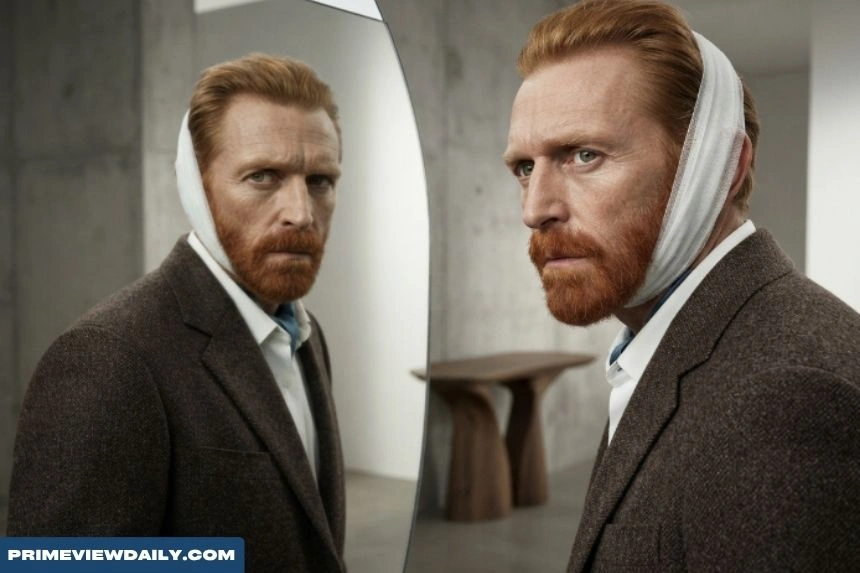
Vincent van Gogh cut off part of his left ear on December 23, 1888, during an acute mental crisis in Arles, France. The episode followed severe tension with fellow painter Paul Gauguin, but historians cannot identify one proven cause.
The famous story is therefore more complicated than “Van Gogh lost an argument.” His declining mental state, fear of isolation, intense working habits, and Gauguin’s impending departure all form part of the historical context.
The Ear Incident at a Glance
| Question | Best-Supported Answer |
| When did it happen? | December 23, 1888 |
| Where? | Arles, southern France |
| Which ear? | Left ear |
| Did he remove the whole ear? | Evidence supports a substantial part; popular descriptions vary |
| What did he use? | A razor |
| What happened beforehand? | Serious conflict with Paul Gauguin |
| What happened afterward? | Van Gogh took the severed tissue to a woman at a brothel |
| Hospitalized? | Yes, the following morning |
| Exact medical diagnosis? | Unknown |
| Was Gauguin responsible? | No conclusive evidence proves that |
The Van Gogh Museum describes the episode as occurring during a state of severe confusion after Gauguin left following a quarrel. Contemporary documentation also records Van Gogh’s hospitalization.
So, Why Did Vincent van Gogh Cut Off His Ear?
There is no single proven explanation.
The strongest historical interpretation is that Van Gogh mutilated his ear during an acute psychological breakdown. That crisis occurred after months of emotional strain and immediately after serious conflict with Gauguin.
Gauguin had joined Van Gogh at the Yellow House in October 1888. However, their personalities and artistic ideas frequently clashed. By December, Gauguin was considering leaving. The Van Gogh Museum notes that Gauguin left their house after a quarrel on December 23. Van Gogh subsequently cut his ear while in severe confusion.
Therefore, the argument matters. Yet historians cannot responsibly reduce the incident to that argument alone.

What Happened on December 23, 1888?
The sequence is easier to understand as a timeline.
| Period | What Happened |
| October 1888 | Gauguin joined Van Gogh in Arles |
| Early December | Their relationship became increasingly tense |
| December 23 | The two artists had a serious quarrel |
| Later that evening | Van Gogh cut his left ear with a razor |
| Late evening | He brought the severed tissue to a local brothel |
| December 24 | Police found him and he entered hospital |
| December 25 | His brother Theo visited him |
| January 7, 1889 | Van Gogh returned to the Yellow House |
| Following months | Further breakdowns occurred |
| May 1889 | He voluntarily entered the asylum at Saint-Rémy |
The timeline matters because it shows that the ear incident was not an isolated eccentric act. It became the first major documented crisis in a longer period of recurring mental breakdowns.
The Gauguin Conflict Was Probably a Trigger
Paul Gauguin arrived in Arles in October 1888. Van Gogh hoped their collaboration might become the beginning of an artistic community he called the “Studio of the South.”
Reality proved much harder.
The two men lived and worked together, but disagreements grew. Their artistic philosophies differed, while their personalities created further tension. The Metropolitan Museum of Art notes that Gauguin’s stay ended abruptly after Van Gogh’s breakdown and ear injury.
For Van Gogh, Gauguin’s departure also threatened something larger. His dream of building a community of artists in Arles was effectively collapsing.
That gives the argument deeper significance. Van Gogh was potentially facing another period of isolation at the same moment his mental state deteriorated.
Did Van Gogh Cut Off His Entire Ear?
This seemingly simple question has caused years of debate.
Popular culture often depicts Van Gogh slicing off his whole ear. Other accounts say he removed only the earlobe.
The Van Gogh Museum uses careful language, describing him as cutting off a piece of his left ear. Historical documentation collected by the Van Gogh Letters project records that he removed his ear with a razor, although descriptions of the exact extent have varied.
Therefore, “Van Gogh cut off his ear” remains useful shorthand. However, claims about the precise amount removed should acknowledge the historical uncertainty.
What Did Van Gogh Do With the Ear?
This is one of the strangest parts of the documented story.
After injuring himself, Van Gogh went to a local brothel and gave the severed tissue to a woman identified in contemporary reporting as Rachel.
A local newspaper, Le Forum Républicain, reported the episode on December 30, 1888. The historical notes preserved by the Van Gogh Letters project reproduce the report and document the subsequent police response.
The woman’s exact identity remains uncertain. Later accounts introduced another name, “Gaby.” Researchers have consequently debated who she actually was.
This is a useful example of how the famous story mixes strong documentation with unresolved details.
Was Van Gogh Diagnosed With a Mental Illness?
Van Gogh clearly experienced serious episodes of mental disturbance. However, assigning him a modern retrospective diagnosis is much harder.
His doctors did not have today’s psychiatric knowledge or diagnostic standards. The Van Gogh Museum says his physician believed he suffered from a form of epilepsy involving acute mania. Van Gogh himself used terms relating to nervous or mental illness when describing his condition.
Over subsequent generations, researchers have proposed numerous explanations for his symptoms. None can now be established with complete medical certainty.
A responsible answer is therefore simple:
Van Gogh suffered recurring severe mental crises, but his precise diagnosis remains unknown.
What Happened Immediately Afterward?
Police found Van Gogh at home the next morning in extremely poor condition. He was taken to the hospital in Arles.
His brother Theo quickly travelled from Paris after receiving news of the crisis. Gauguin, meanwhile, left Arles and did not resume living with Vincent.
Doctor Félix Rey became involved in Van Gogh’s treatment. In a surviving January 2, 1889 letter, Rey added a note intended to reassure Theo about Vincent’s recovery.
The improvement did not last.
Van Gogh suffered further breakdowns during the following months. Eventually, fearing another crisis, he voluntarily entered the Saint-Paul-de-Mausole asylum near Saint-Rémy in May 1889. The Metropolitan Museum notes that he produced roughly 150 canvases during the following year there.
Myth vs. Evidence
| Common Claim | What the Evidence Supports |
| Van Gogh simply became angry and cut his ear | Too simplistic |
| Gauguin definitely caused it | Unproven |
| Van Gogh definitely removed his entire ear | Extent has been debated |
| It happened after tension with Gauguin | Strongly supported |
| He used a razor | Supported by historical records |
| He gave the tissue to a woman | Supported by contemporary reporting |
| Her identity is completely certain | No |
| Doctors know his exact diagnosis today | No |
| This was his only breakdown | False |
| He stopped painting afterward | False |
Did Gauguin Cut Off Van Gogh’s Ear?
An alternative theory has attracted attention in modern discussions. It suggests that Gauguin may have injured Van Gogh during a confrontation and that both men concealed what happened.
However, this remains a theory rather than established historical fact.
The mainstream account maintained by the Van Gogh Museum is that Van Gogh cut his own ear after Gauguin left following their quarrel.
Gauguin later claimed Van Gogh had followed him while carrying a razor. Yet Gauguin’s later recollections cannot independently establish every detail of that night.
Consequently, it is reasonable to discuss competing theories. It is not reasonable to present Gauguin attacking Van Gogh as proven fact.
The Detail Often Lost in the Famous Story
The ear has become so famous that it can overshadow what happened afterward.
Van Gogh continued creating art.
His mental crises were serious, yet periods of illness alternated with periods when he could work. After entering Saint-Rémy, he produced a substantial body of paintings rather than abandoning art.
This context changes how the episode should be understood. The ear incident was neither a quirky artistic stunt nor the endpoint of his career. It was part of a devastating period of illness during an exceptionally productive artistic life.
The Metropolitan Museum notes that Van Gogh created more than 800 paintings and over 1,100 works on paper during roughly a decade of artistic activity.
Why Is Van Gogh Often Painted With a Bandaged Right Ear?
Another famous misconception comes from his self-portraits.
In Self-Portrait with Bandaged Ear, the bandage can appear to cover Van Gogh’s right side. Yet historical evidence identifies the injured ear as the left.
Why the apparent contradiction?
Van Gogh painted his self-portraits using a mirror. As a result, the image reverses his appearance. A viewer can therefore mistakenly conclude that the opposite ear suffered the injury.
This small detail demonstrates why visual evidence needs context.
Was the Ear Incident Connected to His Art?
There is no good evidence that Van Gogh injured himself as an artistic performance.
Instead, his art became one way he continued functioning between episodes of illness.
Before his breakdown, Arles had already transformed his work. He experimented with intense color, landscapes, portraits, orchards, interiors, and his celebrated sunflower paintings. The Metropolitan Museum describes the Arles period as crucial to the development of his mature artistic language.
After hospitalization, painting continued.
Therefore, the relationship between illness and creativity should not be romanticized. His suffering did not simply “create genius.” Van Gogh worked despite severe personal difficulties, not because self-harm was somehow necessary for his art.

Why the Story Still Fascinates People
Few moments in art history combine such powerful elements: two famous painters, a bitter disagreement, a razor, a mysterious recipient, hospitalization, and unanswered questions.
Yet the mystery can encourage exaggeration.
The surviving evidence gives us a solid framework. Van Gogh experienced a severe crisis on December 23, 1888. His relationship with Gauguin had deteriorated. Gauguin was leaving. Van Gogh then mutilated his left ear and required hospital treatment.
What history cannot provide is a single sentence explaining exactly what passed through his mind.
That uncertainty is not a weakness in the story. It is the most accurate conclusion the evidence allows.
Frequently Asked Questions
Why did Vincent van Gogh cut off his ear?
Van Gogh cut his left ear during an acute mental breakdown in December 1888. Severe tension with Paul Gauguin immediately preceded the incident, but no single cause has been conclusively established.
When did Van Gogh cut off his ear?
The incident occurred on December 23, 1888, in Arles, France.
Which ear did Van Gogh cut off?
He injured his left ear.
Did Van Gogh cut off his whole ear?
Accounts differ over the precise extent of the injury. The Van Gogh Museum carefully describes him as cutting off a piece of his left ear.
Did Van Gogh give his ear to someone?
Yes. Contemporary reporting states that he brought the severed tissue to a woman at a local brothel.
Who was Rachel?
“Rachel” was the name given in contemporary reporting for the woman who received the tissue. Her exact identity remains uncertain.
Did Paul Gauguin cut Van Gogh’s ear?
There is no conclusive historical evidence proving Gauguin did so. The standard account holds that Van Gogh injured himself.
Were Van Gogh and Gauguin friends?
They were fellow artists who lived and worked together briefly. However, their relationship became increasingly difficult during Gauguin’s stay in Arles.
Did Van Gogh continue painting afterward?
Yes. He returned to painting and later produced roughly 150 canvases during his year at Saint-Rémy.
Do historians know exactly why he did it?
No. The immediate circumstances are reasonably well documented, but Van Gogh’s precise motivation and medical diagnosis remain uncertain.
Final Answer
So, why did Vincent van Gogh cut off his ear?
The evidence points toward an acute mental breakdown during a period of extreme emotional instability. A serious conflict with Paul Gauguin, combined with Gauguin’s impending departure and Van Gogh’s growing isolation, formed the immediate background. Still, historians cannot prove one definitive psychological cause.
The most accurate version is therefore less sensational than the legend: Van Gogh injured his left ear during a severe mental crisis on December 23, 1888, after his relationship with Gauguin reached a breaking point.
Read More At Prime View Daily