


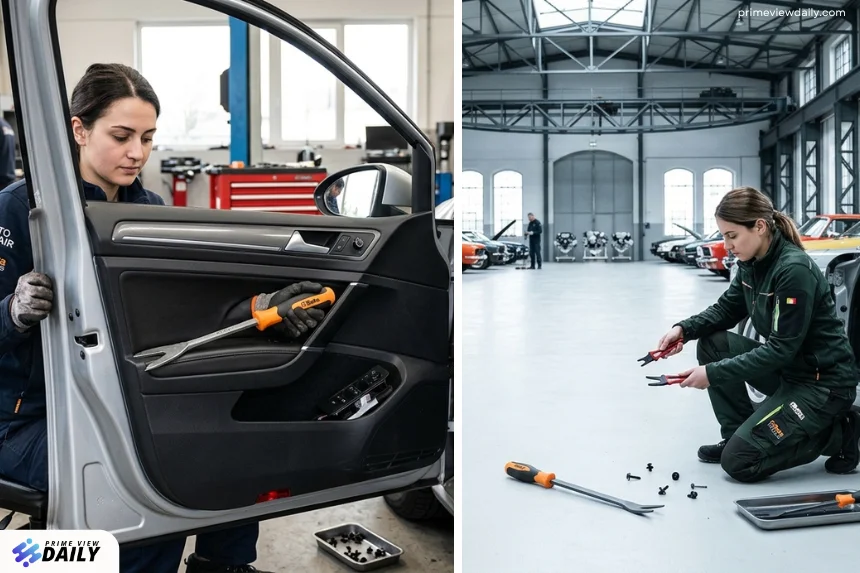
Levapioli are tools used to remove pins, clips, fasteners, trim pieces, gaskets and plastic components during auto body repair, vehicle maintenance or interior disassembly. In simple terms, they help you apply controlled leverage when a screwdriver would be too aggressive or likely to scratch the surface.
Because of that, a good levapioli tool is useful for more than professional body shops. Mechanics, detailers, accessory installers and DIY car owners also use these tools when they need to remove door panels, covers, mouldings, retaining clips or small interior parts. However, not every levapioli tool works the same way. Some are made from nylon, some have stainless steel blades, and others are made from metal or shaped like clip-removal pliers.
This guide explains how to choose the right type, when to use a nylon levapioli, when a stainless steel blade makes more sense, and what to check before buying a Beta 1479 kit or a similar trim-removal tool online.
Quick Answer
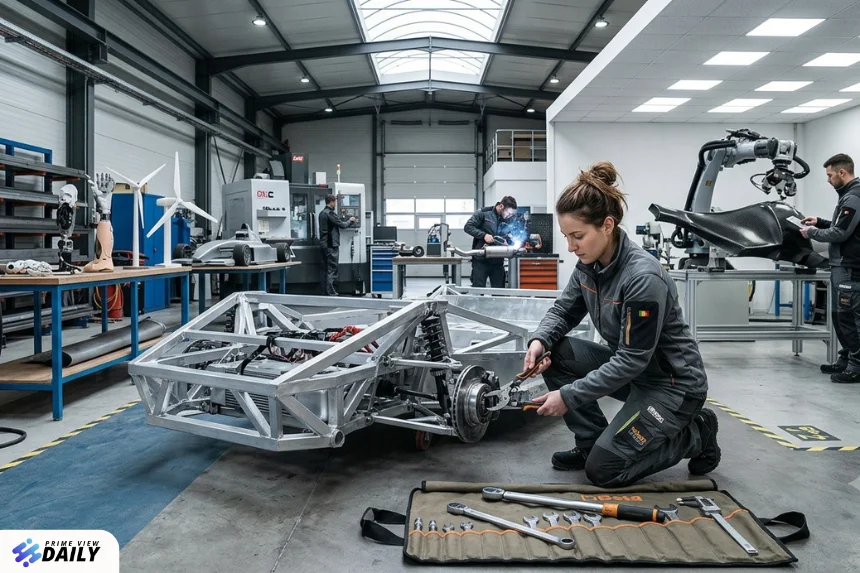
Levapioli are trim and clip-removal tools used to remove pins, clips, plastic parts, gaskets and mouldings without damaging the surrounding surfaces. In general, nylon is safer for delicate surfaces, while stainless steel or metal provides more rigidity when stronger leverage is needed. Therefore, anyone who works on different cars should consider a mixed kit with several shapes and sizes.
What Are Levapioli?
A levapioli is a tool designed to lift, release or extract small fasteners. It is commonly used on plastic clips, push pins, retaining tabs, mouldings, covers and gaskets. In auto body work, it can help remove pressure-fitted parts without prying directly with sharp improvised tools.
The main advantage over a screwdriver is control. A screwdriver can concentrate too much pressure on a small point and leave visible marks. A levapioli, on the other hand, is shaped to distribute force and follow the profile of the clip or plastic part more safely.
Naturally, the right tool depends on the job. For example, a dashboard panel or glossy moulding needs more care. By contrast, a hard or dirty clip may need a more rigid blade or dedicated clip-removal pliers.
What Is a Levapioli Used For?
A levapioli is mainly used when a part is held by clips, pins or snap-fit fasteners. Moreover, it reduces the risk of breaking fasteners and makes the job cleaner. Common uses include:
- removing plastic clips and push pins;
- removing door panels and interior trim;
- lifting gaskets and small mouldings;
- releasing exterior covers and trim pieces;
- working on dashboards, center consoles and delicate panels;
- extracting retaining clips without damaging the mounting point.
In addition, a levapioli can be useful outside automotive repair in some assembly or maintenance jobs where snap-fit parts need to be separated. However, its main use remains auto body repair, vehicle interiors and workshop work.
Types of Levapioli Tools
Nylon Levapioli Tools
Nylon levapioli tools are usually the safest choice for delicate surfaces. Since nylon is softer than metal, it reduces the risk of scratches on plastics, dashboards, painted mouldings and interior finishes.
For example, Fershop describes the Beta 1479/B27 as a 27-piece nylon kit for pegs, plastics and gaskets. This type of kit is useful when you need several shapes for different components instead of forcing one tool into every job.
As a result, nylon should usually be the first choice for vehicle interiors and precision work. If the clip still will not move, you can then switch to a more rigid tool, but only with proper surface protection.
Stainless Steel Blade Levapioli Tools
A levapioli with a stainless steel blade is thinner and more rigid. Therefore, it can fit into tighter gaps and apply stronger leverage. However, it must be used more carefully on painted parts or visible plastics.
Beta Tools lists models such as 1479U/13 and 1479U/32 in its auto repair and bodywork category. The official Beta page lists 1479U/13 with reference 014790010 and a weight of 100 g, while 1479U/32 is listed with reference 014790015 and a weight of 160 g.
In practice, a stainless steel blade is useful when you need a thin, stable edge. However, if the priority is protecting a delicate finish, nylon remains the safer starting point.
Metal Levapioli Tools
Metal levapioli tools provide strength and durability. In addition, they are helpful when clips are stiff, dirty or tightly fitted. On the other hand, they also carry a higher risk of scratching or marking the surface.
For this reason, a metal set is better suited to professional use or jobs where the finish is not fragile. If the work is on visible trim, use thin protective material or choose a nylon tool first.
Clip-Removal Pliers
Clip-removal pliers do not work like a flat pry tool. Instead, they are useful when a pin or clip needs to be gripped and pulled out with a more vertical, controlled movement.
They are especially helpful for some plastic rivets, pressure clips or fasteners where pulling is better than prying from one side. In addition, they can reduce the chance of breaking the head of the fastener.
Nylon vs Stainless Steel Levapioli: Which Should You Choose?
The best choice depends on the surface, available space and amount of force needed. In general, start with the least aggressive tool and move to a more rigid one only when necessary.
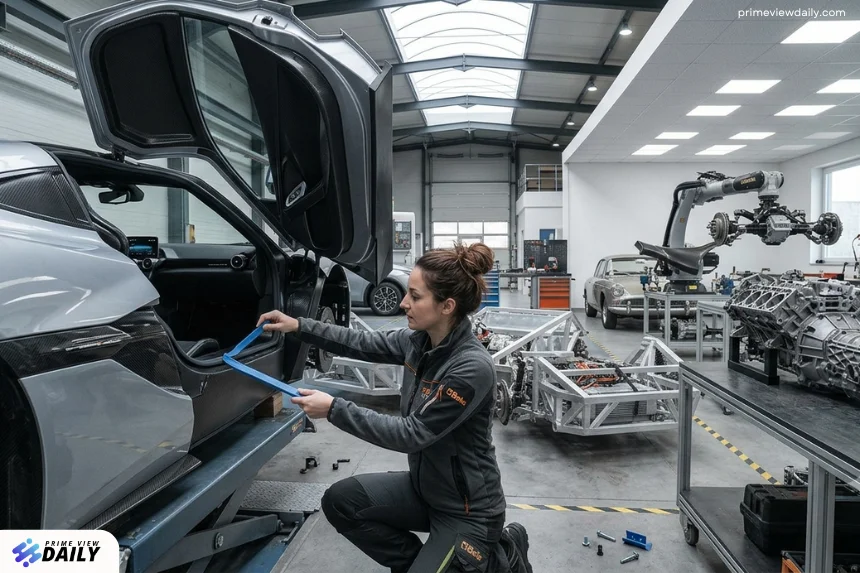
| Situation | Recommended Choice | Why |
| Interior plastic and dashboard trim | Nylon | Lower risk of visible scratches. |
| Delicate mouldings | Wide nylon tip | Distributes pressure more evenly. |
| Narrow gap access | Thin stainless steel blade | Fits more easily into tight spaces. |
| Stubborn clip | Stainless steel or metal | Provides more rigidity and leverage. |
| Push pins | Clip-removal pliers | Allows more controlled extraction. |
| Professional workshop use | Mixed kit | Covers interiors, exteriors, clips and gaskets. |
Beta 1479: Popular Models to Compare
The Beta 1479 line appears often in levapioli search results. However, each model is designed for a different type of job. Therefore, check the product code, material and kit format before buying.
| Model | Type | Best For | Verified Note |
| Beta 1479U/13 | Stainless steel blade levapioli | Smaller jobs and tighter spaces | Beta Tools lists ref. 014790010 and weight 100 g. |
| Beta 1479U/32 | Stainless steel blade levapioli | More leverage and bodywork use | Beta Tools lists ref. 014790015 and weight 160 g. |
| Beta 1479/B27 | 27-piece nylon kit | Pins, plastics and gaskets | Fershop describes it as a 27-piece nylon kit. |
| Beta 1479N/S5 | 5-piece nylon kit | DIY use or light plastic trim work | Common in marketplace and retailer listings. |
| Beta 1479L/K4 | Small lever set | Dashboards and delicate parts | Listed in retailer Beta levapioli categories. |
| Beta 1478 / 1478T | Clip-removal pliers | Pins and clips that need pulling | Useful when pulling works better than prying. |
How to Use a Levapioli Without Causing Damage
Using a levapioli looks simple, but technique matters. In fact, most damage comes from rushing, choosing a tool that is too hard or prying in the wrong place.
- Identify the type of clip or pin before applying force.
- Choose a nylon levapioli first if the part is visible or delicate.
- Insert the tip near the fastener, not in the middle of the plastic panel.
- Pry slowly and increase pressure gradually.
- Protect paint with tape or a thin barrier if you use metal or stainless steel.
- If the clip does not move, change the angle instead of forcing it.
- Replace broken or worn clips instead of reinstalling them under pressure.
Practical tip: if you do not know where to start, work from a hidden or less visible edge first. That way, even a small mark will be less noticeable.
Levapioli vs Dent Pullers vs Sheet-Metal Pulling Tools
The term levapioli should not be confused with dent-removal or sheet-metal pulling tools. Although all of them may appear in auto body repair contexts, they do different jobs.
A levapioli removes clips, pins, mouldings and plastic parts. A dent puller, by contrast, is used to repair small dents. A sheet-metal pulling tool is used to pull or straighten metal panels using different repair methods.
Therefore, if you need to remove a door panel or release a gasket, you need a levapioli. If you need to repair a dent in the body panel, you are looking for a different type of tool.
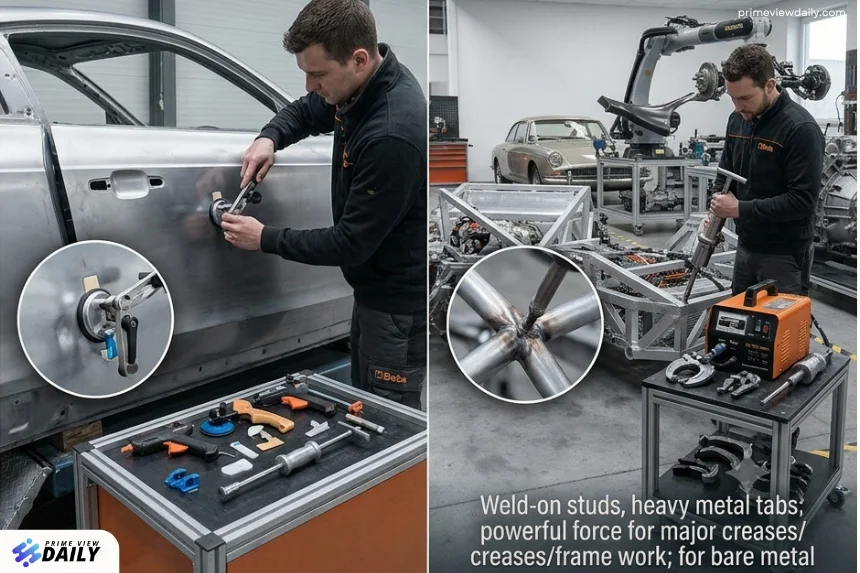
| Tool | Used For | Not Used For |
| Levapioli | Removing clips, pins, plastics, mouldings and gaskets | Repairing dents |
| Dent puller | Working on small body dents | Removing clips and panels |
| Sheet-metal pulling tool | Pulling or straightening metal panels | Delicate dashboard or trim work |
How Much Does a Levapioli Cost?
Price depends on the brand, material, number of pieces and retailer. Moreover, online prices change often, so they should be treated as temporary examples only.
During the 29 June 2026 check, Fershop showed the Beta 1479/B27 kit at EUR 59.97 including VAT. Graziano Tools showed examples such as 1479U/13 at EUR 17.70 and 1479U/32 at EUR 21.00. In addition, one eBay listing showed a 1479N/S5 kit at EUR 45.17, but the same page also showed a generic-brand detail in the item specifics.
Therefore, when buying from a marketplace, do not look only at the title. Check brand, MPN, EAN, product code, photos, condition, seller details and return policy.
Should You Buy a Levapioli Kit or a Single Tool?
A single tool makes sense if you do the same task repeatedly. For example, a 1479U/13 or 1479U/32 can be enough if you specifically need a stainless steel blade for bodywork.
However, a kit is more useful if you work on interiors, door panels, dashboards, gaskets and clips of different sizes. In addition, a nylon kit lowers the risk of using the wrong tool just because it is the only one available.
For a workshop, the best choice is often a mixed setup: nylon for delicate parts, stainless steel or metal for tougher fasteners, and clip-removal pliers for push pins.
What to Check Before Buying
Before buying a levapioli tool, check the following points. After all, two tools with similar names can behave very differently in real use.
- Material: nylon, stainless steel or metal.
- Tip shape: flat, curved, wide, narrow or forked.
- Official product code and reference number.
- EAN or manufacturer code when available.
- Number of pieces in the kit.
- Bag, pouch or storage case.
- Suitability for the intended job.
- Seller reliability.
- Condition: new, used or refurbished.
- Return policy and warranty.
Common Mistakes to Avoid
- Using a metal tool on glossy plastics without protection.
- Forcing a clip before understanding how it is fixed.
- Buying a kit only because it is cheap, without checking material and codes.
- Confusing levapioli with dent-repair tools.
- Reusing broken or deformed clips.
- Using a screwdriver on visible parts when a nylon levapioli would be safer.
- Trusting a marketplace listing without checking brand, MPN and EAN.
Verified Product Facts
| Claim | Status | Source Note |
| Beta 1479U/32 is a stainless steel blade levapioli | Verified | Beta Tools official product page. |
| Beta 1479U/32 has ref. 014790015 and weight 160 g | Verified | Beta Tools reference table. |
| Beta 1479U/13 has ref. 014790010 and weight 100 g | Verified | Beta Tools official product page. |
| Beta 1479/B27 is a 27-piece nylon kit | Supported | Fershop product description. |
| Beta 1479/B27 has manufacturer code 014790407 and EAN 8014230774718 | Supported | Fershop product data. |
| Graziano lists Beta 1479U/13 and 1479U/32 with price examples | Supported | Graziano category page snapshot. |
| Every marketplace listing with Beta in the title is automatically official | Not safe | Check item specifics, MPN, EAN and seller. |
Quick Buying Recommendations
| Need | Best Option | Why |
| Delicate interior trim | Nylon levapioli | Safer on visible plastic. |
| Strong leverage | Stainless steel blade | More rigid and thinner. |
| Many different jobs | 27-piece nylon kit | More shapes and sizes. |
| Plastic pins | Clip-removal pliers | Better controlled extraction. |
| Occasional DIY | Small nylon kit | Lower cost and lower scratch risk. |
| Professional body shop | Mixed set | Covers nylon, stainless steel, metal and pliers. |
Quick Facts About Levapioli
| Fact | Detail |
| Keyword | Levapioli |
| English meaning | Trim pin removers / clip removal tools |
| Main use | Remove clips, pins, trims, gaskets and plastic fasteners |
| Main sector | Auto body repair, car repair, detailing and workshop use |
| Common materials | Nylon, stainless steel and metal |
| Popular brand in search results | Beta Tools |
| Popular product line | Beta 1479 |
| Main buying risk | Wrong material, wrong product code or unclear marketplace listing |
| Best safety tip | Start with nylon on delicate surfaces |
FAQs
What are levapioli tools?
Levapioli are tools used to remove pins, clips, fasteners, mouldings, gaskets and plastic parts, mainly in auto body repair and vehicle maintenance.
What are levapioli used for?
They are used to pry, lift or extract fasteners in a controlled way. As a result, they help reduce scratches and breakage compared with screwdrivers or improvised tools.
Is nylon or stainless steel better for levapioli?
For delicate visible plastics, nylon is usually better. However, for tight gaps or more stubborn clips, a stainless steel blade can provide more rigidity.
Which levapioli should I use for a dashboard?
For dashboard work, use a nylon levapioli or a small lever designed for delicate parts. Also, work slowly and start from a less visible edge.
Can levapioli scratch car bodywork?
Yes, they can scratch if the material is too hard or too much force is used. However, nylon tools, protective tape and gradual pressure reduce the risk.
What is the difference between levapioli and dent pullers?
A levapioli removes clips and pressure-fitted parts. A dent puller, on the other hand, is used to repair small dents in body panels.
What is the difference between Beta 1479U/13 and 1479U/32?
Both are stainless steel blade levapioli tools. However, Beta lists different references and weights: 1479U/13 has ref. 014790010 and weighs 100 g, while 1479U/32 has ref. 014790015 and weighs 160 g.
When should I buy a levapioli kit?
A kit is useful when you work on many different parts, such as door panels, dashboards, gaskets, clips and mouldings. This gives you more shapes and sizes for different jobs.
How much does a levapioli cost?
The price depends on brand, material and kit size. Therefore, online prices should always be checked again before buying.
What should I check before buying levapioli online?
Check the material, product code, EAN, brand, number of pieces, condition, seller and return policy. Also, make sure the listing title and item specifics match.